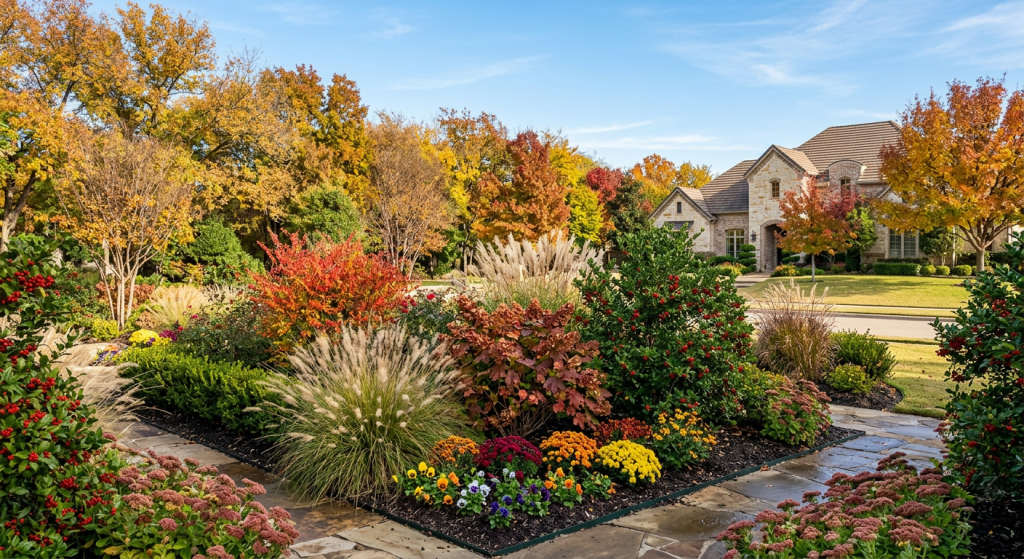
Strategic plant selection ensures your Texas garden displays color and interest in every season. By combining spring bulbs, summer perennials, fall bloomers, and winter-interest plants, you can create a landscape that never looks bare.
Spring Color (March – May)
Spring-Blooming Stars
- Texas Redbud: Purple-pink blooms on bare branches, March
- Mexican Plum: Fragrant white flowers, early spring
- Bluebonnets: Iconic Texas wildflower, March-April
- Indian Paintbrush: Brilliant orange-red, spring
- Phlox: Pink and purple clusters, April-May
Spring Bulbs for Texas
- Daffodils: Plant in December for February blooms
- Amaryllis: Bold flowers, naturalize well
- Rain Lilies: Bloom after rain, summer through fall
Summer Color (June – August)
Heat-Loving Bloomers
- Crape Myrtle: Summer-long blooms in pink, red, white, purple
- Lantana: Butterfly magnet, blooms until frost
- Salvia: Drought-tolerant, continuous summer color
- Black-eyed Susan: Golden yellow, June-September
- Purple Coneflower: Native perennial, long blooming
Tropical Accents
- Elephant Ears: Dramatic foliage, summer drama
- Cannas: Bold leaves and flowers
- Caladiums: Colorful shade foliage
Fall Color (September – November)
Autumn Bloomers
- Fall Aster: Purple clouds of blooms, October
- Goldenrod: Native yellow plumes, September-October
- Mexican Bush Sage: Purple spikes, fall through frost
- Autumn Sage: Red and pink blooms, reliable fall color
Fall Foliage
- Chinese Pistache: Brilliant orange-red fall color
- Red Maple: Classic scarlet autumn display
- Sumac: Native shrub with fiery fall color
Winter Interest (December – February)
Evergreen Structure
- Live Oak: Majestic evergreen shade tree
- Holly: Red berries against green foliage
- Yaupon: Native evergreen with winter berries
- Italian Cypress: Vertical evergreen accent
Winter Bloomers
- Witch Hazel: Fragrant yellow flowers, January-February
- Camellias: Pink and white blooms, December-March
- Winter Jasmine: Yellow flowers on bare branches
Year-Round Foliage Plants
These plants provide consistent color through foliage:
- Purple Heart: Purple trailing foliage
- Variegated Flax Lily: Striped green and white
- Coral Nymph Salvia: Burgundy foliage
- Dusty Miller: Silvery gray accent
- Artemisia: Soft silver foliage
Designing for Continuous Color
Layering Strategy
- Plant multiple species with overlapping bloom times
- Include evergreen backbone plants
- Add seasonal annuals for guaranteed color
- Group plants by bloom season for impact
Maintenance Calendar
- January: Prune dormant plants, plan changes
- March: Plant summer bloomers, fertilize
- May: Add heat-loving annuals
- September: Plant fall/winter bloomers
- November: Mulch, protect tender plants
Native Plant Benefits
Native Texas plants offer advantages for year-round gardens:
- Adapted to local climate extremes
- Support native pollinators year-round
- Lower water and maintenance needs
- Natural resistance to local pests
Explore more drought-resistant native plants for your garden.
Conclusion
A year-round colorful garden in Texas is achievable with thoughtful plant selection. By combining seasonal bloomers, evergreen structure, and heat-tolerant varieties, you can enjoy beautiful outdoor spaces every month of the year.
Ready to plan your four-season garden? Contact Groundhogs Services for expert plant selection and landscape design services.