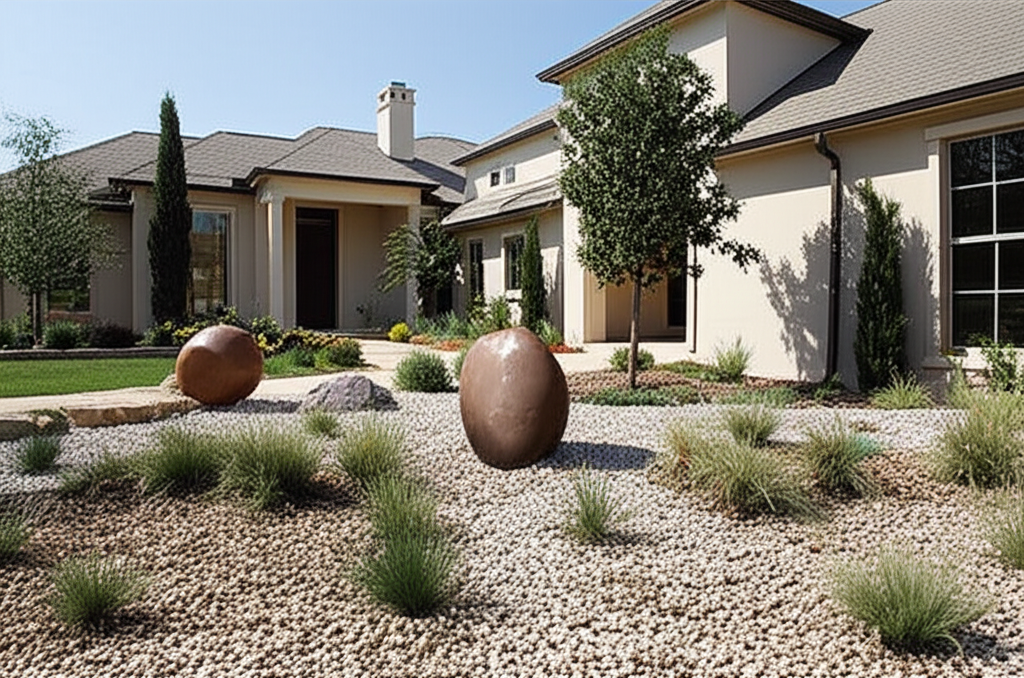
Modern xeriscaping creates stunning, resort-quality landscapes that reduce water costs 40-60% while maintaining the sophistication expected at luxury DFW properties. Far from the gravel-and-cactus stereotypes, today’s water-wise design combines native Texas plants, elegant hardscaping, and contemporary aesthetics for landscapes that thrive through drought restrictions without sacrificing beauty.
Principles of Luxury Xeriscaping
Plant Selection: Native & Adapted Species
Texas native plants provide beauty without demanding irrigation after establishment.
Ornamental Grasses:
- Gulf Muhly: Spectacular pink fall plumes, 3-4 feet, stunning massed
- Lindheimer Muhly: Silvery foliage, 4-5 feet, movement in breeze
- Bamboo Muhly: Ethereal fine texture, 6-8 feet, dramatic vertical
Flowering Perennials:
- Texas Sage: Purple blooms after rain, silver foliage, sculptural form
- Mexican Bush Sage: Purple spikes fall-blooming, hummingbird magnet
- Russian Sage: Lavender blooms, silvery foliage, 3-4 feet
- Coneflower: Summer-long color, pollinator support
Evergreen Structure:
- Yaupon Holly: Native evergreen, red berries winter, formal hedge capable
- Texas Mountain Laurel: Fragrant purple blooms, specimen tree
- Dwarf Palmetto: Tropical texture, shade tolerant
Hydrozoning
Strategic water zone grouping:
- Zone 1 (No irrigation): Established native grasses and perennials
- Zone 2 (Minimal): Low-water shrubs and trees
- Zone 3 (Moderate): Limited turf areas, seasonal color
Efficient Irrigation
Technology minimizes supplemental water:
- Drip irrigation for targeted root zone watering
- Smart ET-based controllers
- Seasonal adjustment protocols
Soil & Mulch
Foundation for plant health:
- Organic soil amendment during planting
- 3-4 inch mulch layer reducing evaporation
- Decomposed granite paths replacing high-water turf
Design Approaches for Luxury Properties
Contemporary Xeriscape
Clean lines with sculptural plant forms:
- Agave and yucca as architectural specimens
- Gravel and stone mulch
- Geometric planting beds
- Steel or concrete edging
- Minimal, high-impact plant palette
Naturalistic Xeriscape
Prairie-inspired meadows and drifts:
- Massed native grasses creating movement
- Drifts of wildflowers for seasonal color
- Dry creek beds for drainage and aesthetics
- Informal, flowing bed shapes
- Boulder groupings for structure
Mediterranean Xeriscape
European sophistication with water-wise plants:
- Olive and citrus trees in containers
- Lavender and rosemary for fragrance
- Travertine or limestone hardscaping
- Fountain water features (recirculating)
- Formal parterres with drought-tolerant species
Addressing Common Concerns
“Will it look like a desert?”
Modern xeriscaping uses hundreds of non-cactus plants. Strategic design creates lush, green appearances with appropriate plant selection and density.
“What about property value?”
Water-wise landscaping enhances value by:
- Reducing future buyer maintenance concerns
- Demonstrating sustainability consciousness
- Providing drought restriction compliance
- Creating distinctive, memorable landscapes
“Can I still have some lawn?”
Functional turf reduction—not elimination:
- Limited lawn areas where used (play, entertaining)
- Drought-tolerant Bermuda varieties
- Turf alternatives (artificial, groundcovers) where appropriate
Implementation Timeline
Phase 1: Hardscape Foundation
- Patios, paths, walls creating structure
- Drainage integration
- Irrigation infrastructure
Phase 2: Tree and Shrub Installation
- Structural plantings establish first
- 1-2 year establishment watering
Phase 3: Perennial and Grass Installation
- Fill plantings around structural elements
- Mulch application
Phase 4: Establishment to Independence
- 2-year irrigation tapering
- Transition to rainfall-only for established natives
Investment Comparison
Initial costs: Xeriscaping typically costs 10-20% more than traditional landscaping due to hardscape emphasis and mature plant sizes.
Ongoing savings:
- Water costs: 40-60% reduction
- Maintenance: 30% less mowing, pruning
- Replacement: Lower plant mortality
Payback period: 3-5 years through operational savings
Conclusion
Xeriscaping delivers sophisticated, sustainable landscapes that honor Texas climate realities while maintaining luxury standards. Groundhogs Services designs water-wise estates for discerning clients throughout Highland Park, Preston Hollow, and Southlake.
Explore luxury landscape design: Luxury Residential Landscape Design Guide