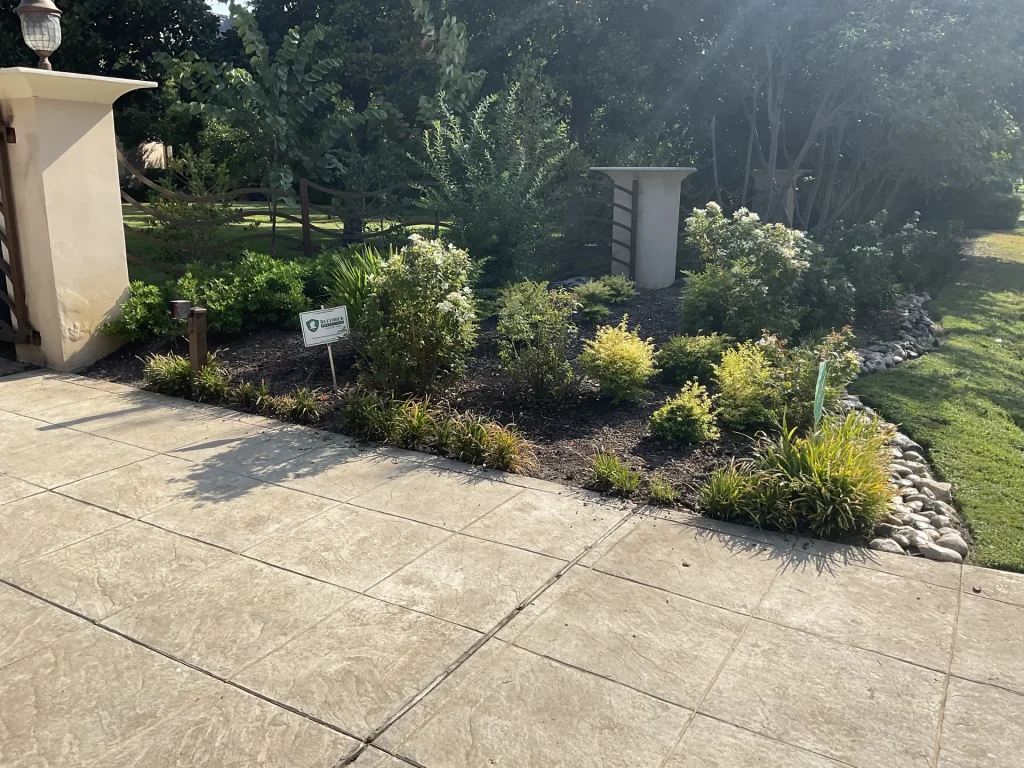
During peak Texas summers, residential outdoor watering accounts for over 50% of monthly household water consumption across the Dallas-Fort Worth metroplex. Between escalating municipal water utility tier rates and stage-1 or stage-2 drought restrictions, maintaining traditional high-thirst turfgrass lawns has become both financially unsustainable and environmentally exhausting. Enter xeriscaping: a strategic landscaping methodology engineered to create lush, vibrant, low-maintenance outdoor spaces that cut exterior water consumption by 40% to 60%.
Contrary to the persistent myth that xeriscaping means a barren expanse of gravel and spiky cacti, true Texas xeriscaping celebrates the rich diversity of North Texas native flora, natural flagstone patios, rich hardwood mulches, and sculptural ornamental grasses. At Groundhogs Services, we design and install custom water-wise landscapes across Dallas, Plano, Frisco, and Garland that dramatically increase curb appeal while eliminating constant lawn maintenance.
The 7 Core Principles of Texas Xeriscaping
Developed originally by landscape architects and water conservation authorities, these seven fundamental principles govern every successful xeriscape transformation in North Texas:
1. Planning and Comprehensive Site Design
Every xeriscape project starts with an accurate base map detailing your property’s topography, sun-and-shade microclimates, drainage patterns, and functional zones. By mapping sun tracking against window reflections and roof downspouts, we position shade trees to naturally cool living areas while channeling storm runoff into designated planting beds rather than city storm drains.
2. Soil Improvement for Expansive Blackland Clay
North Texas is dominated by heavy, alkaline “Blackland Prairie” clay. When dry, clay contracts and cracks; when soaked, it compacts and suffocates root systems. Improving the soil involves incorporating expanded shale (a porous kiln-fired clay gravel that permanently aerates dense soil) paired with composted organic matter to build soil biological life, encourage root infiltration, and maximize moisture retention.
3. Hydrozoning: Practical Turf & Plant Grouping
Hydrozoning is the practice of grouping plants with identical water and sun requirements together within dedicated irrigation zones. Rather than spraying a flowerbed and lawn on the same timer, your yard is divided into three distinct zones:
- Oasis Zone (High Water): Small, highly visible entry areas, potted container gardens, or foundational focal points.
- Transition Zone (Moderate Water): Shaded perennial beds, established shrubs, and low-traffic turf areas.
- Arid Zone (Very Low Water): Perimeter boundaries, native grasses, succulents, and naturalized prairie beds requiring zero supplemental water after establishment.
4. Lawn Right-Sizing
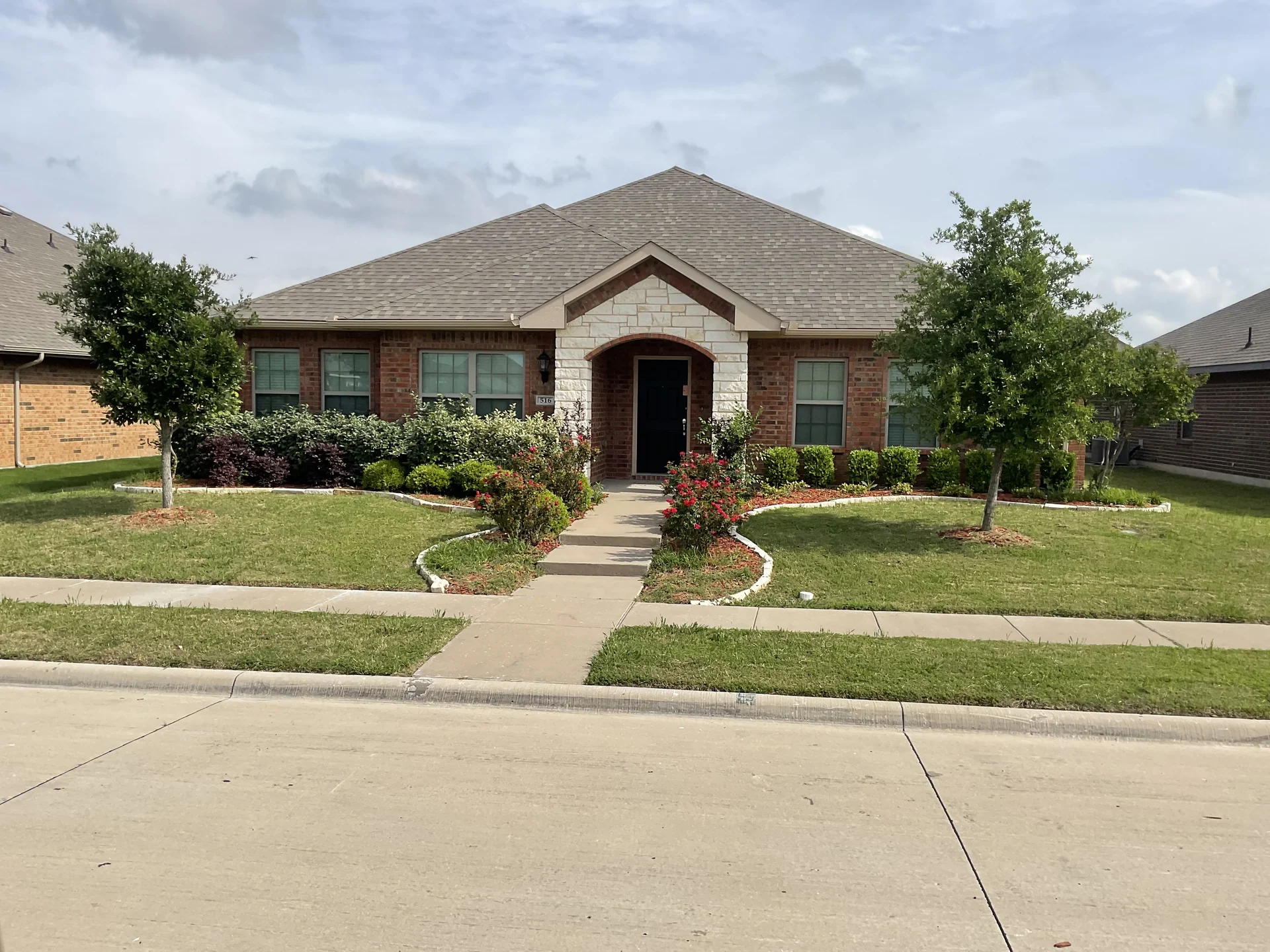
Xeriscaping does not require eliminating turfgrass entirely. Instead, it advocates for lawn right-sizing: restricting thirsty grass to functional zones where children or pets actively play, while converting sloped, high-heat, or deep-shade areas into native garden beds, stone walkways, or permeable paver entertaining areas. Furthermore, replacing thirsty St. Augustine grass with drought-adapted TifTuf Bermuda or fine-bladed Zoysia reduces lawn irrigation demands by up to 35%.
5. Selection of Adapted & Native Plants
Native plants have evolved over thousands of years to withstand our climate extremes—from 105°F summer heatwaves to sub-zero winter arctic blasts. Excellent performers include Texas Sage, Autumn Sage, Red Yucca, Blackfoot Daisy, Gulf Muhly, and Desert Willow. These species require minimal supplemental irrigation, zero chemical fertilizer, and naturally resist common local fungal blights.
6. Organic Mulch and Stone Buffering
A 3-inch layer of double-shredded native hardwood mulch is the unsung hero of water conservation. Mulch protects soil from baking in direct sun, suppresses opportunistic weeds that steal moisture, moderates soil temperature by 15°F, and slowly breaks down into rich humus. Decomposed granite and river stone provide permanent weed suppression and clean texture in arid zones and drip lines.
7. Smart Irrigation Design and Subsurface Drip
Traditional spray heads lose up to 40% of their water output to wind drift and midday evaporation. Xeriscape irrigation relies on subsurface pressure-compensating drip tubing installed directly beneath the mulch layer. Water is delivered directly to the root zone at low pressure, ensuring 95% efficiency and zero pavement overspray.
Water Savings Breakdown: Traditional Lawn vs. Xeriscape
The numbers speak for themselves. Below is an average comparison for a 5,000 sq ft North Texas residential landscape over an active 8-month irrigation season (April through November):
| Landscape Metric | Standard Turfgrass Lawn | Groundhogs Xeriscape Design | Net Savings |
|---|---|---|---|
| Weekly Summer Water Depth | 1.5 – 2.0 inches | 0.5 – 0.75 inches | 60% Reduction |
| Monthly Water Usage (Gal) | ~25,000 Gallons | ~10,000 Gallons | 15,000 Gal / Mo |
| Estimated Monthly Water Bill | $180 – $260 | $85 – $120 | ~$115 / Mo Saved |
| Annual Fertilizer & Chemical Cost | $450 – $700 | $100 – $180 | 75% Reduction |
| Annual Mowing / Trimming Hours | 60+ Hours | 15–20 Hours | 65% Time Saved |
HOA Compliance: Understanding Texas Property Code 202.007
Many homeowners worry their Homeowners Association will penalize or reject xeriscape designs. However, under Texas Property Code Section 202.007, HOAs in Texas are legally prohibited from enforcing covenants that prevent property owners from installing drought-resistant landscaping or water-conserving turf.
While an HOA board can still enforce reasonable architectural standards—such as requiring neat bed edging, prohibiting overgrown weeds, and reviewing plant plans—they cannot mandate 100% turfgrass coverage. At Groundhogs Services, we prepare detailed architectural review packets with scaled drawings and approved native plant lists to ensure fast, friction-free HOA board approval.
Municipal Water Rebates Across DFW
Many cities across North Texas offer direct financial incentives for xeriscape conversions and smart irrigation upgrades:
- City of Dallas: Rebates for rain and freeze sensors, smart WiFi weather-based ET controllers, and turf-to-native bed conversions.
- Plano & Frisco: Credits for conversion from overhead spray nozzles to efficient low-volume drip irrigation.
- Fort Worth: Free outdoor irrigation audits and conservation incentives.
Start Your DFW Xeriscape Conversion Today
Investing in a custom xeriscape transformation pays for itself through lower utility bills, eliminated lawn mowing costs, and added home value. Whether you want to convert your entire front yard into an elegant native sanctuary or replace a high-maintenance side lawn with stone pavers and drought-hardy perennials, Groundhogs Services delivers guaranteed results.
Call (214) 713-1228 today or visit groundhogstx.com to speak with our landscape design specialists and schedule your consultation.