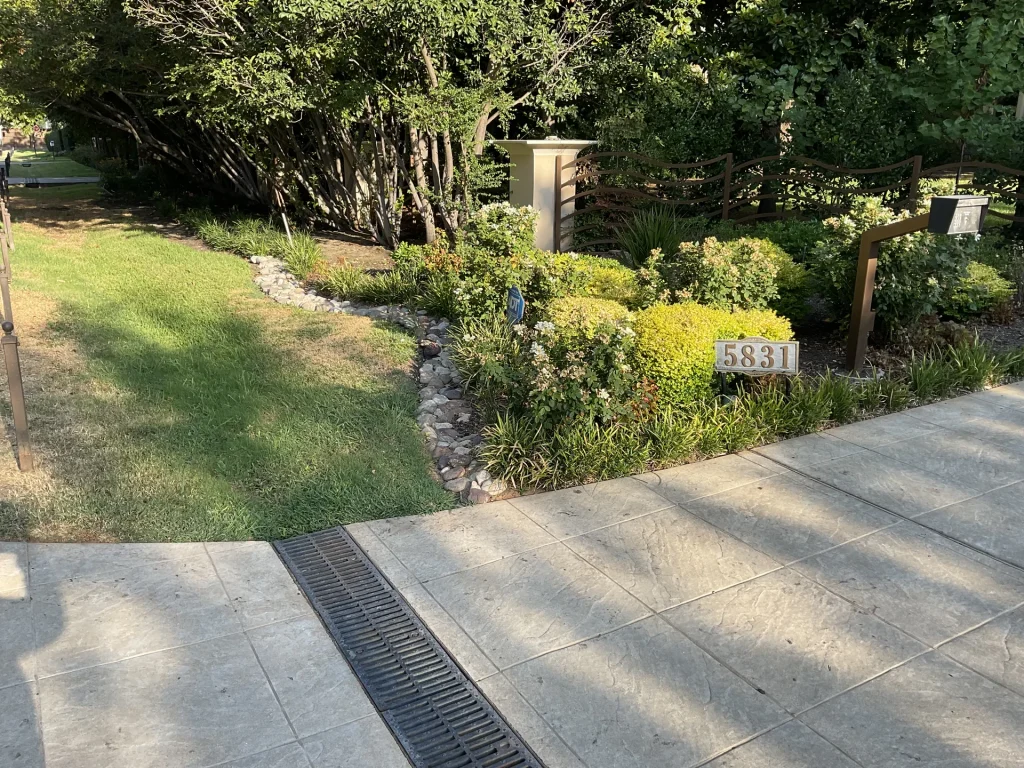
Texas natives are the smartest choice for DFW landscapes. They’ve evolved to handle our brutal summers, unpredictable rainfall, and heavy clay soil — without the constant watering, fertilizing, and babying that non-natives require. At Groundhogs Services, we design and install native landscapes across Mesquite, Dallas, and Garland that are beautiful, low-maintenance, and built to last. Here are 20 Texas native plants that will thrive in your yard.
Why Go Native in DFW?
- Drought tolerance — Native plants have deep root systems that find water even during our summer dry spells. Most need 50-70% less water than non-natives once established.
- Low maintenance — No fertilizer, no pesticides, no special soil amendments. Native plants are adapted to our alkaline clay.
- Pollinator support — Native plants support 10-15 times more butterfly and bee species than non-natives. Monarch butterflies, in particular, depend on Texas natives.
- Disease resistance — Native plants have co-evolved with local pests and diseases. They rarely need treatment.
- Erosion control — Deep root systems hold our clay soil in place during heavy rains.
Perennials and Wildflowers
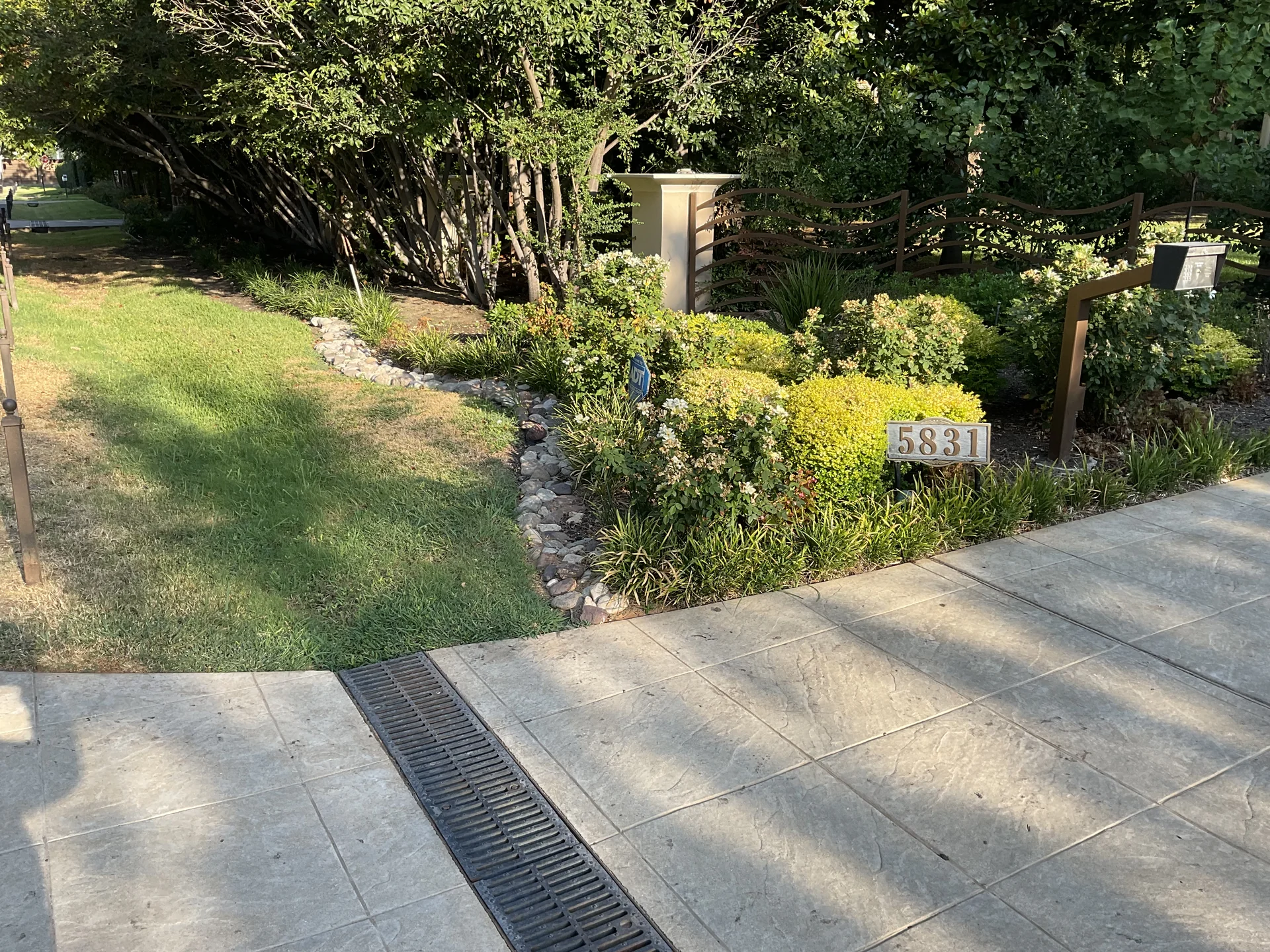
1. Black-Eyed Susan (Rudbeckia hirta)
- Sun: Full sun
- Water: Low to moderate
- Bloom: June-October, golden yellow petals with dark brown centers
- Height: 2-3 feet
- Benefits: Long bloom period, excellent cut flower, self-seeds readily
2. Purple Coneflower (Echinacea purpurea)
- Sun: Full sun to partial shade
- Water: Low
- Bloom: May-September, purple-pink daisy-like flowers
- Height: 2-4 feet
- Benefits: Drought-tolerant once established, attracts butterflies and bees, medicinal uses
3. Texas Bluebonnet (Lupinus texensis)
- Sun: Full sun
- Water: Low
- Bloom: March-May, iconic blue flowers with white tips
- Height: 1-2 feet
- Benefits: Texas state flower, nitrogen-fixing, self-seeds for years of blooms
4. Indian Blanket (Gaillardia pulchella)
- Sun: Full sun
- Water: Very low
- Bloom: May-September, red and yellow daisy-like flowers
- Height: 1-2 feet
- Benefits: Extremely drought-tolerant, blooms all summer, great for hot dry areas
5. Gregg's Mistflower (Conoclinium greggii)
- Sun: Full sun to partial shade
- Water: Moderate
- Bloom: August-November, fuzzy blue-purple clusters
- Height: 1-3 feet
- Benefits: Monarch butterfly magnet — they swarm this plant during fall migration
6. Fall Aster (Symphyotrichum oblongifolium)
- Sun: Full sun
- Water: Low
- Bloom: September-November, masses of purple daisy-like flowers
- Height: 1-3 feet
- Benefits: Late-season color when everything else is fading, pollinator favorite
7. Gulf Coast Penstemon (Penstemon tenuis)
- Sun: Full sun to partial shade
- Water: Low to moderate
- Bloom: April-June, pink-lavender tubular flowers
- Height: 1-2 feet
- Benefits: Hummingbird favorite, blooms in spring when little else is flowering
Ornamental Grasses
8. Little Bluestem (Schizachyrium scoparium)
- Sun: Full sun
- Water: Very low
- Bloom: August-October, silvery-blue seed heads
- Height: 2-4 feet
- Benefits: Outstanding fall color (copper-orange), drought-tolerant, provides winter interest
9. Gulf Muhly (Muhlenbergia capillaris)
- Sun: Full sun
- Water: Low
- Bloom: September-November, clouds of pink-purple seed heads
- Height: 2-3 feet
- Benefits: Spectacular fall display, salt-tolerant, low maintenance
10. Inland Sea Oats (Chasmanthium latifolium)
- Sun: Partial to full shade
- Water: Moderate
- Bloom: June-September, flat, oat-like seed heads
- Height: 2-3 feet
- Benefits: One of the few native grasses for shade, unique seed heads add texture
11. Sideoats Grama (Bouteloua curtipendula)
- Sun: Full sun
- Water: Very low
- Bloom: June-September, small oat-like seeds along one side of the stem
- Height: 1-3 feet
- Benefits: Texas state grass, excellent for erosion control, drought-tolerant
Shrubs
12. Texas Sage (Leucophyllum frutescens)
- Sun: Full sun
- Water: Very low
- Bloom: May-October (after rain), purple-pink flowers
- Height: 3-6 feet
- Benefits: Extremely drought-tolerant, evergreen, blooms after summer rains — also called “barometer bush”
13. Flame Acanthus (Anisacanthus quadrifidus var. wrightii)
- Sun: Full sun to partial shade
- Water: Low
- Bloom: June-October, bright orange-red tubular flowers
- Height: 3-4 feet
- Benefits: Hummingbird magnet, blooms all summer, dies back in winter and regrows
14. Texas Lantana (Lantana urticoides)
- Sun: Full sun
- Water: Very low
- Bloom: May-November, yellow and orange flower clusters
- Height: 2-4 feet
- Benefits: Blooms from spring to frost, extremely heat-tolerant, butterfly favorite
15. Yaupon Holly (Ilex vomitoria)
- Sun: Full sun to full shade
- Water: Low to moderate
- Bloom: Spring (insignificant), red berries in fall/winter
- Height: 10-20 feet (can be pruned as hedge or small tree)
- Benefits: Evergreen, produces berries for birds, extremely adaptable, native caffeine source
16. Agarita (Mahonia trifoliolata)
- Sun: Full sun to partial shade
- Water: Very low
- Bloom: February-March, yellow flowers, red berries in May
- Height: 3-6 feet
- Benefits: Evergreen, holly-like leaves, edible berries (make excellent jelly), deer-resistant
Trees (Small to Medium)
17. Texas Redbud (Cercis canadensis var. texensis)
- Sun: Full sun to partial shade
- Water: Low to moderate
- Bloom: March-April, magenta-pink flowers before leaves
- Height: 15-20 feet
- Benefits: Stunning spring display, more drought-tolerant than Eastern redbud
18. Mexican Plum (Prunus mexicana)
- Sun: Full sun to partial shade
- Water: Low to moderate
- Bloom: February-March, fragrant white flowers
- Height: 15-25 feet
- Benefits: Early spring fragrance, edible fruit, beautiful bark, wildlife value
19. Desert Willow (Chilopsis linearis)
- Sun: Full sun
- Water: Very low
- Bloom: May-September, pink-purple trumpet flowers
- Height: 15-25 feet
- Benefits: Blooms all summer, attracts hummingbirds, extremely drought-tolerant
20. Cedar Elm (Ulmus crassifolia)
- Sun: Full sun
- Water: Low to moderate
- Bloom: August-September (insignificant)
- Height: 40-60 feet
- Benefits: Tough native shade tree, handles clay soil, golden fall color
Design Tips for Native Landscapes
Group by water needs — Place low-water plants together and moderate-water plants together. This lets you water efficiently without over- or under-watering.
Layer for structure — Put trees in back, shrubs in middle, perennials and grasses in front. This creates visual depth and mimics natural plant communities.
Include winter interest — Ornamental grasses (Little Bluestem, Gulf Muhly) and evergreen shrubs (Yaupon, Texas Sage) keep your landscape attractive through winter.
Leave seed heads — Don’t cut back perennials and grasses in fall. The seed heads provide winter food for birds and visual interest. Cut back in late February before spring growth.
Where to Buy Native Plants in DFW
- North Haven Gardens (Dallas) — Excellent selection of Texas natives, knowledgeable staff
- Calloway’s Nursery (multiple DFW locations) — Good selection of common natives
- Texas Discovery Gardens (Fair Park, Dallas) — Native plant sales in spring and fall
- Dallas County Master Gardener Plant Sale — Annual sale in April, excellent prices
- Native Texas Nursery (Dallas) — Specializes in Texas natives
When to Call Groundhogs Services
Designing a native landscape requires knowledge of plant selection, spacing, and long-term maintenance. Groundhogs Services specializes in native landscape design and installation for DFW homeowners. We’ll create a beautiful, low-maintenance yard that saves you water, time, and money.
Ready to go native? Call us at (214) 713-1228 or visit groundhogstx.com to schedule your consultation. We serve Mesquite, Dallas, Garland, Rockwall, and the entire DFW metroplex.