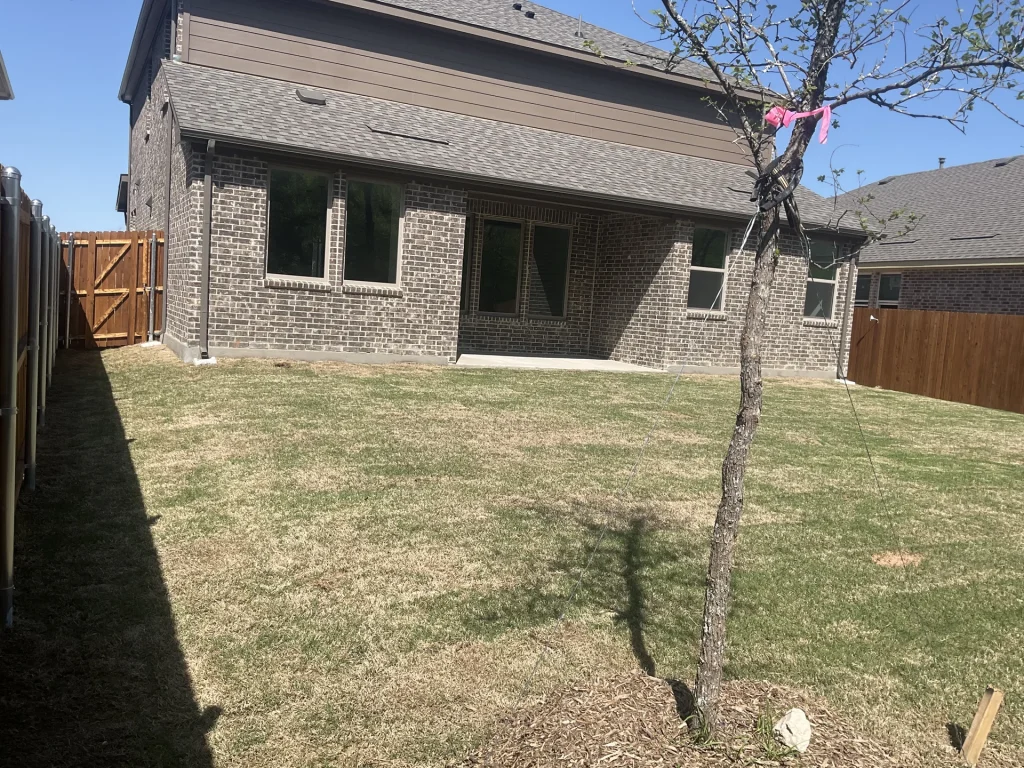
Waiting for grass seed to germinate is a test of patience — especially in Texas, where the window for establishment is narrow and the summer heat is relentless. Sod gives you an instant lawn. In 24 hours, you can go from bare dirt to a lush, green carpet that’s ready for light use in two weeks and full use in a month. Here’s everything you need to know about sod installation in DFW.
Why Choose Sod?
- Instant results — no waiting 4–8 weeks for seed to germinate
- Erosion control — holds soil in place immediately on slopes
- Weed suppression — dense sod blocks weed germination
- Year-round installation — can be laid any time the ground isn’t frozen
- Higher success rate — sod is mature grass, not vulnerable seedlings
- Immediate use — light foot traffic after 2 weeks, full use after 4 weeks
Best Sod Types for DFW
Bermuda Grass (Hybrid Varieties)
Best for: Full sun, high traffic, budget-conscious
Top varieties: Tifway 419, TifGrand, Celebration, Latitude 36
Cost: $0.35–$0.55 per sq ft
Pros: Drought-tolerant, excellent traffic recovery, fast rooting
Cons: Goes dormant (brown) in winter, needs full sun
St. Augustine
Best for: Shade, lush appearance, low traffic
Top varieties: Raleigh, Palmetto, Floratam
Cost: $0.50–$0.80 per sq ft
Pros: Best shade tolerance, beautiful carpet-like texture
Cons: High water needs, poor traffic tolerance, disease-prone
Zoysia
Best for: Premium appearance, medium traffic, mixed sun/shade
Top varieties: Empire, Zeon, Geo, JaMur
Cost: $0.60–$1.00 per sq ft
Pros: Beautiful fine texture, good drought tolerance, moderate shade tolerance
Cons: Slow to root, expensive, thatch buildup
Step 1: Site Preparation (The Most Important Step)
Sod is only as good as the surface it’s laid on. 90% of sod failures are caused by poor site prep.
Remove Existing Vegetation
- Grass and weeds: Use a sod cutter (rental: $60–$80/day) to remove existing turf, or spray with a non-selective herbicide 2–3 weeks before installation
- Rocks and debris: Remove anything larger than 2 inches — they’ll create bumps and kill grass above them
- Tree roots: Cut flush with the soil surface; don’t leave stumps
Grade for Drainage
DFW’s clay soil and flat lots make drainage critical. The soil surface should slope 1/4 inch per foot away from foundations for the first 10 feet. Use a lawn leveler or landscape rake to create a smooth, even surface.
DFW tip: Fill low spots before laying sod. Water will pool in depressions and rot the grass. A laser level or water level is worth renting for large areas.
Amend the Soil
DFW clay is dense and poorly draining. Before laying sod:
- Till the top 4–6 inches with a rototiller
- Incorporate 2–3 cubic yards of compost per 1,000 sq ft — this improves drainage and provides nutrients
- Add expanded shale (1 cubic yard per 1,000 sq ft) to break up clay
- Apply starter fertilizer (10-20-10 or similar high-phosphorus formula) at the recommended rate
- Rake smooth and lightly compact with a lawn roller
Check Irrigation
Before laying sod, ensure your sprinkler system covers the entire area. Run each zone and check for:
- Broken or missing heads
- Uneven coverage (dry spots)
- Low pressure (heads not popping up fully)
- Overspray onto hardscapes
Fix any issues now — it’s much harder after the sod is down.
Step 2: Sod Installation
Timing
- Best: Spring (March–May) or fall (September–October)
- Acceptable: Summer (June–August) with diligent watering
- Avoid: Winter (December–February) — sod won’t root in cold soil
- Install within 24 hours of delivery — sod is a living product and deteriorates quickly on the pallet
Laying the Sod
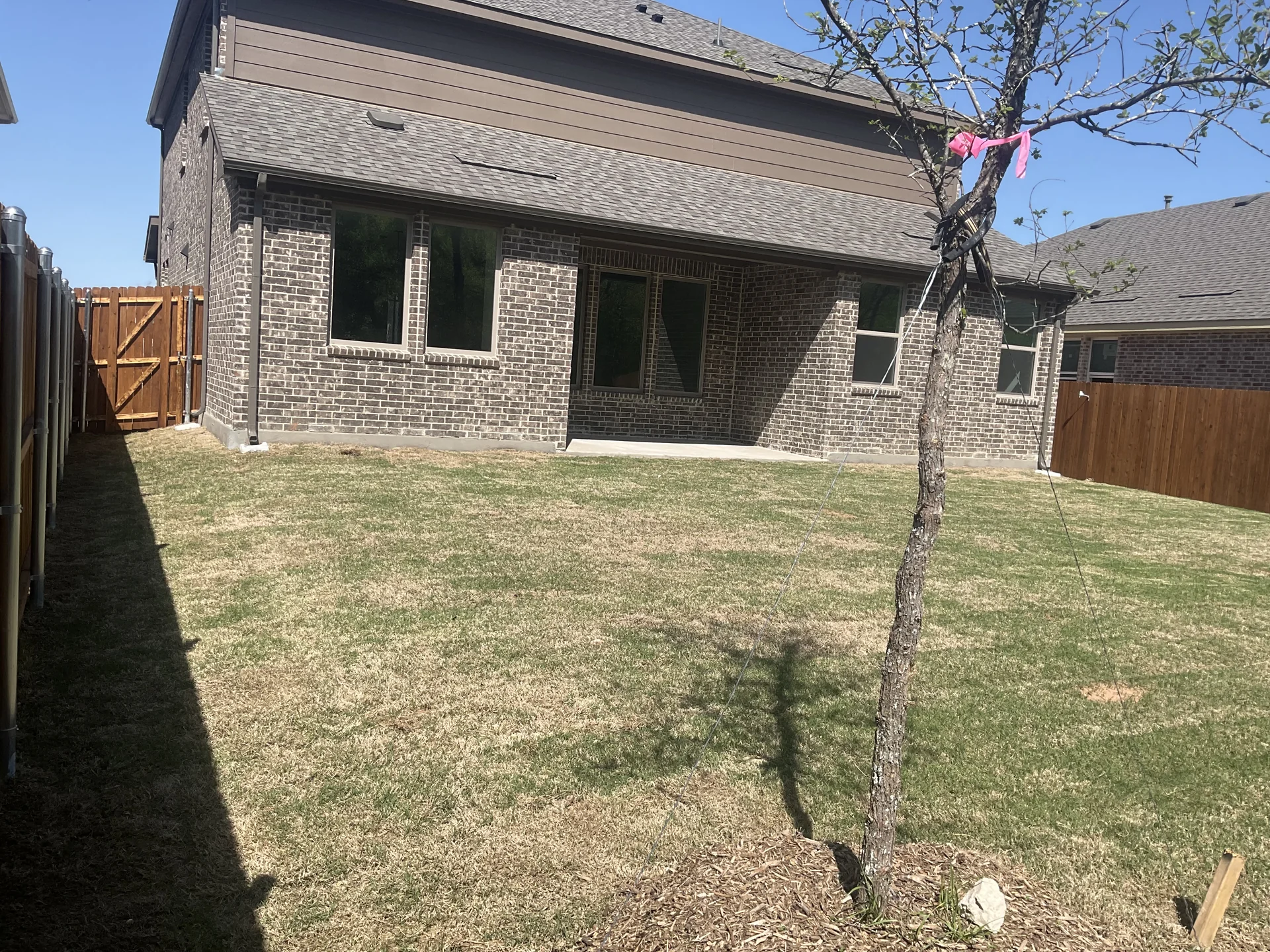
- Start along a straight edge — driveway, sidewalk, or property line
- Stagger the seams like brickwork — don’t let four corners meet
- Butt edges tightly — no gaps, no overlapping
- Press seams together with your hands
- Cut around obstacles — trees, sprinkler heads, utility boxes — with a sharp knife
- Roll the entire area with a lawn roller (filled 1/3 with water) to ensure root-to-soil contact
DFW tip: On slopes, lay sod perpendicular to the slope (across, not up-and-down) to prevent erosion. Staple sod on steep slopes with landscape staples.
Step 3: The Critical First 2 Weeks
The first 14 days determine whether your sod lives or dies. This is not negotiable.
Watering Schedule
| Day | Frequency | Duration | Notes |
| —– | ———– | ———- | ——- |
| Days 1–3 | 3–4 times daily | 10–15 minutes per zone | Keep sod and soil constantly moist |
| Days 4–7 | 2 times daily | 15–20 minutes per zone | Morning and early afternoon |
| Days 8–14 | 1 time daily | 20–30 minutes per zone | Deep watering to encourage deep roots |
| Day 15+ | Every 2–3 days | 30–45 minutes per zone | Transition to normal schedule |
The lift test: After 7 days, gently lift a corner of a sod piece. If it resists, roots are forming. If it lifts easily, increase watering.
DFW tip: In July and August, you may need to water 4–5 times daily for the first week. Our 100°F+ temperatures dry out sod rapidly. Don’t let it dry out even once — that’s usually fatal.
Mowing
- First mow: 14–21 days after installation (when sod is rooted)
- Height: Mow at the highest setting (3–4 inches for St. Augustine, 2 inches for Bermuda/Zoysia)
- Blades: Make sure mower blades are sharp — dull blades tear new sod
- Don’t bag clippings — let them fall as natural mulch
Fertilizing
- Apply starter fertilizer at installation (already done in Step 1)
- Apply balanced fertilizer (15-5-10 or similar) 4–6 weeks after installation
- Follow up with monthly fertilization during the growing season
Step 4: Long-Term Care
First Year
- Water deeply and less frequently after establishment
- Fertilize monthly April through September
- Watch for weeds — hand-pull or spot-treat; don’t use pre-emergents until sod is fully rooted (3+ months)
- Mow regularly but never remove more than 1/3 of blade height
DFW-Specific Challenges
- Brown patch (St. Augustine) — avoid evening watering, improve air circulation
- Chinch bugs (St. Augustine) — watch for yellow patches in June–August
- Fire ants — treat mounds immediately; they’ll kill sod around them
- Compaction — aerate annually in fall (Bermuda and Zoysia benefit most)
Cost Breakdown
| Item | Cost per 1,000 sq ft |
| —— | ———————- |
| Sod (Bermuda) | $350–$550 |
| Sod (St. Augustine) | $500–$800 |
| Sod (Zoysia) | $600–$1,000 |
| Soil amendments (compost, shale) | $100–$200 |
| Starter fertilizer | $30–$50 |
| Delivery | $50–$150 |
| DIY total | $530–$1,200 |
| Professional installation | $1,200–$2,500 |
DIY vs Professional Installation
| Factor | DIY | Professional |
| ——– | —– | ————- |
| Cost (1,000 sq ft) | $530–$1,200 | $1,200–$2,500 |
| Time | 2–3 days | 1 day |
| Equipment rental | $150–$300 | Included |
| Site prep quality | Variable | Consistent |
| Warranty | None | Often 1–2 years |
| Watering guidance | Self-managed | Included |
Ready for an Instant Lawn?
A beautiful lawn doesn’t have to take years. With proper site prep, quality sod, and the right aftercare, you can have a golf-course-quality lawn in your DFW yard within weeks. Groundhogs Services handles the entire process — from grading and soil amendment to sod installation and irrigation setup.
Call us at (214) 713-1228 or visit groundhogstx.com to schedule a consultation. Let’s turn your dirt into a luxury lawn.