In the Dallas–Fort Worth Metroplex, foundation maintenance is as vital as roofing or plumbing upkeep. North Texas sits on expansive Blackland Prairie clay—a soil structure that swells like a sponge when wet and shrinks dramatically when dry.
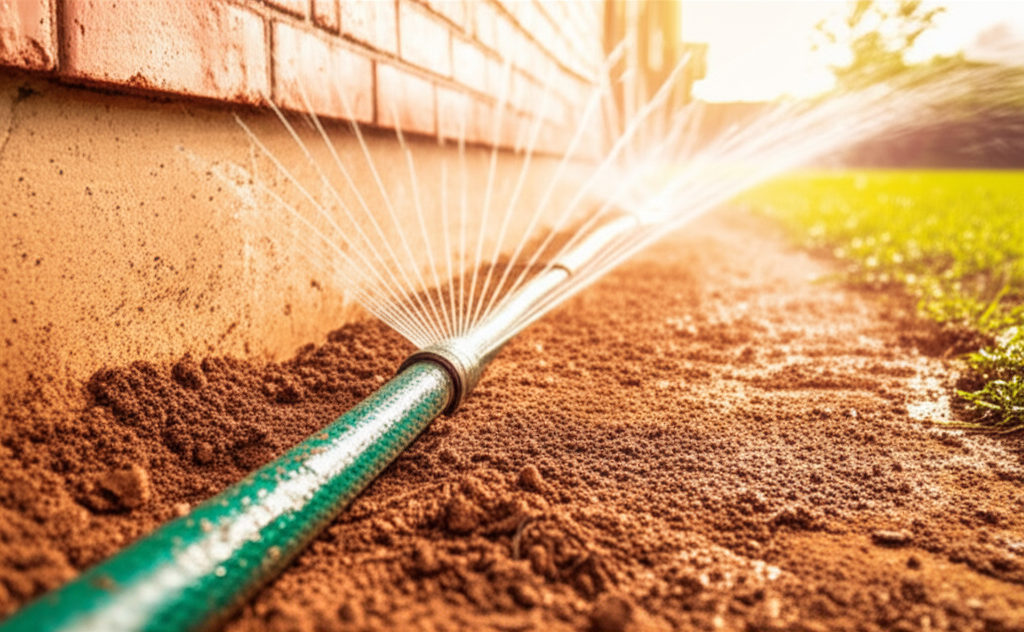
Nearly every foundation repair contractor in Texas tells homeowners to “water their foundation.” However, most homeowners receive zero instruction on where or how to place their soaker hoses. Consequently, thousands of homeowners lay soaker hoses directly against their exposed concrete slab, creating concentrated water pooling that causes destructive upward foundation heaving.
Here is the science behind proper foundation moisture management and the industry-standard 3-to-5 Foot Rule.
The Science of the 3-to-5 Foot Moisture Zone
A concrete slab foundation does not float on top of the ground; it relies on deep concrete grade beams and perimeter footings buried 24 to 36 inches into the earth. The goal of foundation watering is not to wet the concrete—concrete does not absorb water to stay stable. The goal is to maintain a uniform moisture bulb in the clay soil surrounding and supporting those grade beams.

Why Placing Hoses Directly Against the Slab Fails
When you wrap a soaker hose flush against the concrete wall, water follows the smooth concrete face straight down into the footing trench. This leads to two severe structural failures:
- Perimeter Heave: Saturated clay directly beneath the exterior grade beam expands rapidly, pushing the outer edge of the foundation upward while the interior of the home remains stationary. This shears interior drywall and jams doorframes.
- Soil Cavitation & Erosion: Continuous water flow down the foundation face washes away supportive clay fines, leaving structural hollows beneath the slab.
The Mechanical Benefit of the 3–5 Foot Buffer
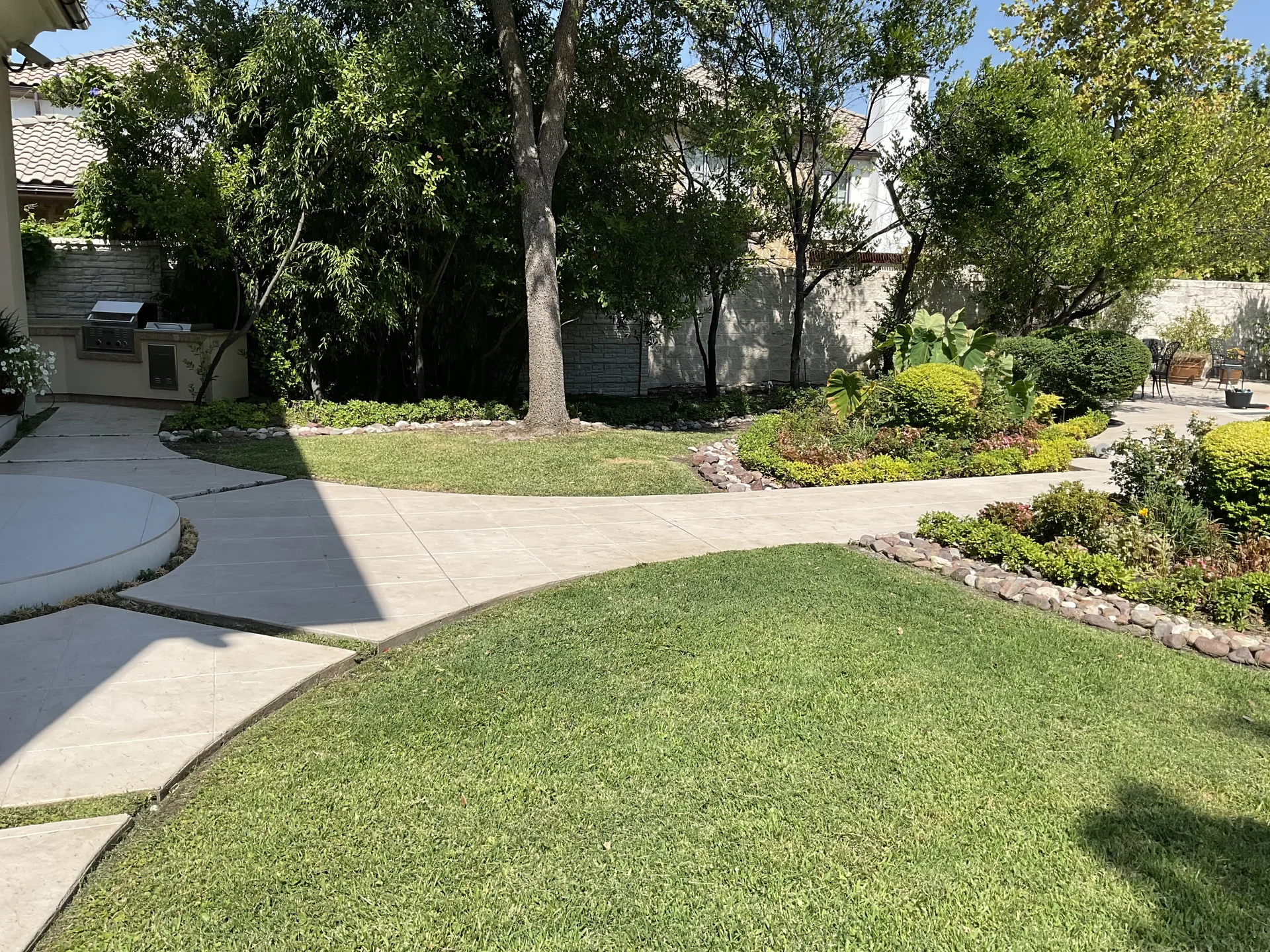
Positioning your soaker hose or drip line 3 to 5 feet away from the slab perimeter delivers water to the active “moisture influence zone.” As water seeps 8 to 12 inches into the clay, moisture wicks horizontally toward the foundation footing through capillary action.
This creates a stable, wide moisture gradient that prevents the soil from pulling away from the slab without causing concentrated saturation along the concrete face.
Installation Best Practices: Setting Up Your System
Whether installing a simple garden hose timer or an automated sub-surface foundation drip line, follow these mechanical guidelines:
1. Hose Selection: Pressure-Compensating Drip vs. Porous Rubber
Traditional recycled rubber soaker hoses weep unevenly—delivering high volume at the spigot connection and barely a trickle 50 feet down the line. For uniform foundation stabilization, commercial contractors install 1/2-inch pressure-compensating inline drip tubing. These lines feature laser-calibrated emitters spaced every 12 to 18 inches that discharge an exact 0.6 or 0.9 gallons per hour regardless of water pressure.
2. Depth and Mulch Protection
Never leave foundation soaker hoses exposed to raw Texas sunlight. Ultraviolet radiation degrades rubber and polyethylene in a single summer, while baking surface heat evaporates water before it penetrates clay. Bury the line 2 to 3 inches deep beneath a 3-inch layer of shredded hardwood mulch. Mulch insulates the soil profile and slows evaporation by over 70%.
Seasonal Foundation Watering Schedules for DFW
Soil moisture needs change drastically between summer heatwaves and winter dormancy:
Summer (May through September)
- Frequency: 3 to 4 times per week (or daily during 100°F+ heat waves).
- Runtime: 20 to 30 minutes in early morning (between 4:00 AM and 6:00 AM) before wind and solar heat accelerate evaporation.
- Target: Keep soil moist enough to prevent shrinkage cracks wider than a pencil.
Fall & Spring (October–November / March–April)
- Frequency: 1 to 2 times weekly, adjusting for seasonal rainfall.
- Rain Skip Rule: If DFW receives 0.5 inches or more of rainfall, suspend foundation watering for 3 to 5 days.
Winter (December through February)
- Frequency: Once every 10 to 14 days during dry, windy stretches when temperatures exceed 50°F.
- Freeze Caution: Always disconnect hoses and drain manifolds before Arctic cold fronts hit to avoid pipe bursts.
How to Test Your Foundation Soil: The Screwdriver Test
You cannot gauge soil moisture by looking at the surface; topsoil often appears dry while sub-surface clay is saturated.
Take an 8-inch flathead screwdriver and push it into the soil 3 feet away from your foundation wall:
- Optimal Moisture: The screwdriver slides smoothly into the earth with moderate hand pressure to a depth of 6 inches. The soil feels like a wrung-out kitchen sponge.
- Too Dry: The screwdriver cannot penetrate more than 1–2 inches without a hammer. Soil is desiccated and pulling away from the slab. Increase watering runtimes.
- Too Wet (Oversaturated): The screwdriver sinks effortlessly into muddy slurry, or water bubbles to the surface. Cut runtimes immediately to prevent heave.
Automated Foundation Watering by Groundhogs Services
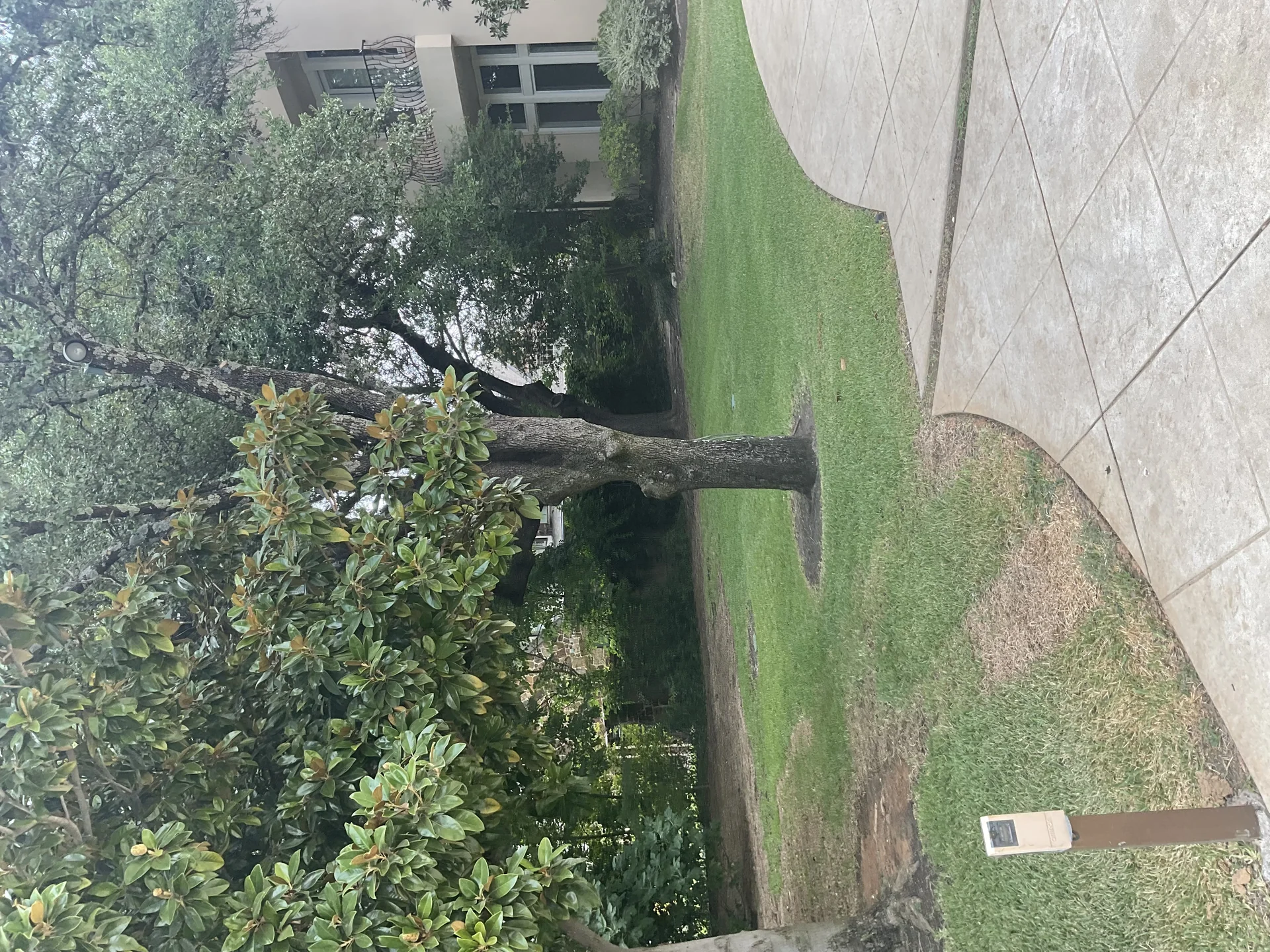
Manually moving hoses around your property is inconsistent and time-consuming. Groundhogs Services installs dedicated, smart-controller foundation drip zones featuring commercial backflow prevention, pressure regulation, and micro-climate zone splits (giving hot south-facing walls more runtime than shaded north walls).
Protect your home from costly foundation settling. Contact Groundhogs Services today for a professional foundation moisture evaluation and automated drip system design.