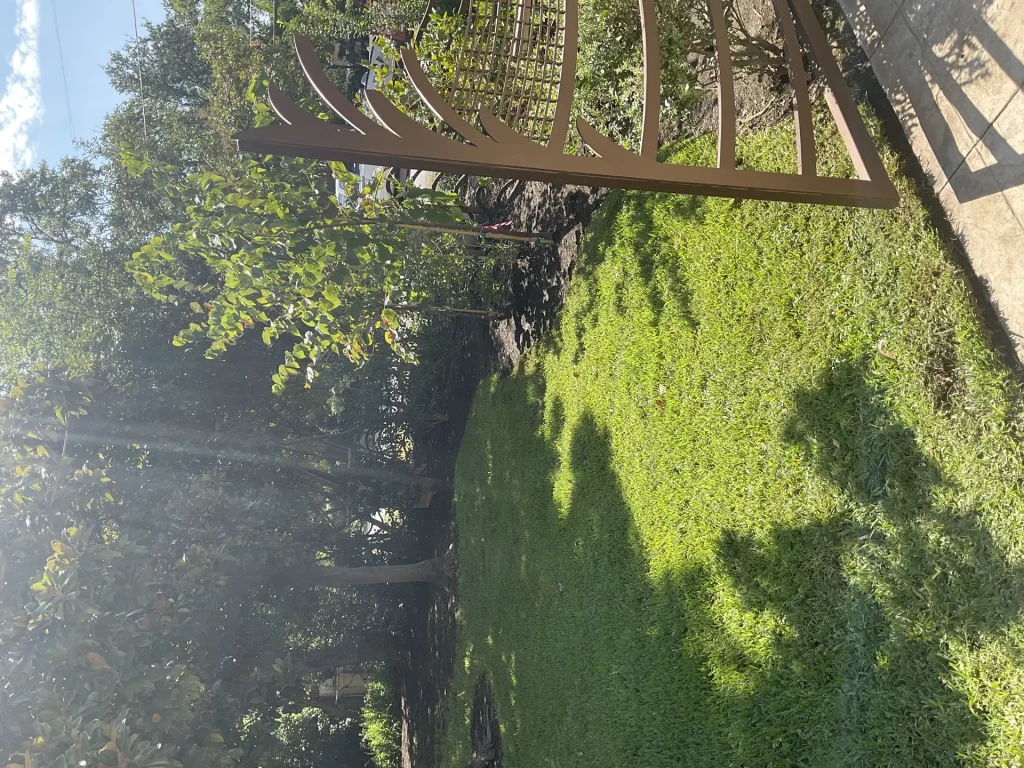
Texas sun is relentless. From May through September, UV index hits 10+ by mid-morning, and that afternoon heat radiates off every surface. A pergola or arbor isn’t just a luxury — it’s a survival strategy for your outdoor space.
At Groundhogs Services, we’ve designed and installed shade structures across Mesquite, Dallas, Garland, and the DFW metroplex. Here’s everything you need to know to pick the right one.
Pergola vs. Arbor: What's the Difference?
The terms are often used interchangeably, but they serve different purposes.
Pergolas are large, freestanding or attached structures that cover patios, decks, or outdoor kitchens. They typically have a flat or slightly pitched roof with open or louvered slats. Size: 10×10 feet up to 20×20 feet or larger.
Arbors are smaller, narrower structures designed as entryways, garden features, or vine supports. They’re typically 3-5 feet wide and 7-8 feet tall. Arbors are decorative; pergolas are functional shade structures.
Which do you need? If you want to sit under it, you need a pergola. If you want to frame a walkway or support climbing roses, an arbor will do.
Attached vs. Freestanding
Attached Pergolas
One side mounts to your house using a ledger board. This is the most common configuration in DFW.
Pros: Less material (one side uses the house), integrates with existing roofline, easier to run electricity from the house, feels like an extension of indoor space
Cons: Requires proper flashing to prevent water intrusion, limited to locations adjacent to the house, must match house roofline pitch
Installation note: The ledger board must be bolted through the house sheathing into the rim joist or studs. We use 1/2″ stainless steel lag bolts with washers. Improper attachment is the #1 cause of pergola failure in DFW wind storms.
Freestanding Pergolas
Four or more posts support the structure independently.
Pros: Can be placed anywhere in the yard, no roof penetration concerns, easier to design around existing trees or features, can be moved (if designed as modular)
Cons: More material cost, requires deeper footings (no house support), needs its own electrical run if adding lights/fans
Materials: What Survives North Texas
Wood (Cedar or Pressure-Treated Pine)
Cedar is the traditional choice — naturally rot-resistant, beautiful grain, and lightweight. Pressure-treated pine is cheaper but less attractive.
Pros: $15-$30 per square foot, natural look, paintable/stainable, easy to modify
Cons: Requires staining every 2-3 years in DFW sun, can warp or crack, susceptible to termites (treat the posts)
Lifespan: 10-15 years with maintenance
Aluminum
Powder-coated aluminum pergolas are growing in popularity. They’re strong, lightweight, and maintenance-free.
Pros: $25-$50 per square foot, never needs painting, won’t rot or warp, can support heavy louvered roofs, wind-rated to 100+ mph
Cons: More expensive upfront, limited color options, can dent, fewer customization options
Lifespan: 25+ years
Vinyl
PVC pergolas are hollow or foam-filled extrusions.
Pros: $20-$40 per square foot, never needs painting, won’t rot, easy to clean
Cons: Can become brittle in extreme cold (rare in DFW but possible), limited weight capacity, can look “plastic,” expands/contracts with temperature
Lifespan: 15-20 years
Louvered vs. Fixed Roof
Fixed Roof Pergolas
Standard open-slat or solid-panel roof. Open slats provide dappled shade; solid panels provide full shade.
Pros: Simpler design, lower cost, no moving parts to fail
Cons: Can’t adjust shade level, open slats still let in significant sun at midday
Louvered Roof Pergolas
Adjustable slats that rotate from open to closed. Motorized options with rain sensors are available.
Pros: Full control over shade and ventilation, can close completely to block rain, motorized options add convenience
Cons: $5,000-$10,000 premium over fixed roof, mechanical parts can fail, requires electricity
Best for: Homeowners who want year-round use of their outdoor space
DFW Wind Load Requirements
DFW is in a 115-120 mph wind zone per the International Building Code. Your pergola must be designed to withstand these forces.
Critical details:
- Post size: 4×4 minimum, 6×6 recommended for spans over 12 feet
- Post anchors: Simpson Strong-Tie or equivalent, bolted into concrete footings
- Footing depth: 24-36 inches below grade (below frost line in DFW)
- Connectors: All hardware should be galvanized or stainless steel
- Roof panels: If using solid roof, ensure it’s rated for uplift (negative wind pressure)
Aluminum pergolas typically come with wind ratings. Look for 100+ mph certification. Wood pergolas should be engineered for the same.
Permits: Do You Need One?
In most DFW municipalities, a permit is required for:
- Any structure over 200 square feet
- Any structure attached to the house
- Any structure over 10 feet tall at its highest point
Dallas: Permit required for all attached structures and any freestanding structure over 200 sq ft. $150-$300 permit fee.
Mesquite: Permit required for structures over 200 sq ft or attached to the house.
Garland: Similar to Dallas — permit for attached or over 200 sq ft.
Groundhogs Services handles all permitting as part of our installation process.
Cost Ranges
| Type | Budget | Mid-Range | Premium |
| — | — | — | — |
| Wood pergola (10×12) | $2,000-$3,500 | $3,500-$6,000 | $6,000-$10,000 |
| Aluminum pergola (10×12) | $3,500-$5,500 | $5,500-$9,000 | $9,000-$15,000 |
| Louvered roof pergola (10×12) | $6,000-$10,000 | $10,000-$18,000 | $18,000-$30,000 |
| Vinyl pergola (10×12) | $3,000-$5,000 | $5,000-$8,000 | $8,000-$12,000 |
| Arbor (decorative) | $500-$1,500 | $1,500-$3,000 | $3,000-$5,000 |
Shade Solutions for Texas Sun
Even a solid-roof pergola won’t block the low-angle morning and evening sun. Consider these additions:
- Outdoor curtains — Sunbrella fabric, hung on tracks. Blocks horizontal sun and provides privacy.
- Climbing vines — Confederate jasmine, crossvine, or trumpet vine. Takes 1-2 seasons to fill in.
- Cellular shades — Zip-track shades that seal against the posts. Blocks 90%+ of UV.
- Ceiling fans — Essential for air movement. Use outdoor-rated fans (damp or wet location).
Ready to Beat the Texas Heat?
A pergola transforms your DFW backyard from unusable to unforgettable. Groundhogs Services designs and installs custom pergolas and arbors that stand up to North Texas weather. We handle permits, footings, and final trim.
Call (214) 713-1228 or visit groundhogstx.com to schedule a consultation. Let’s create some shade.