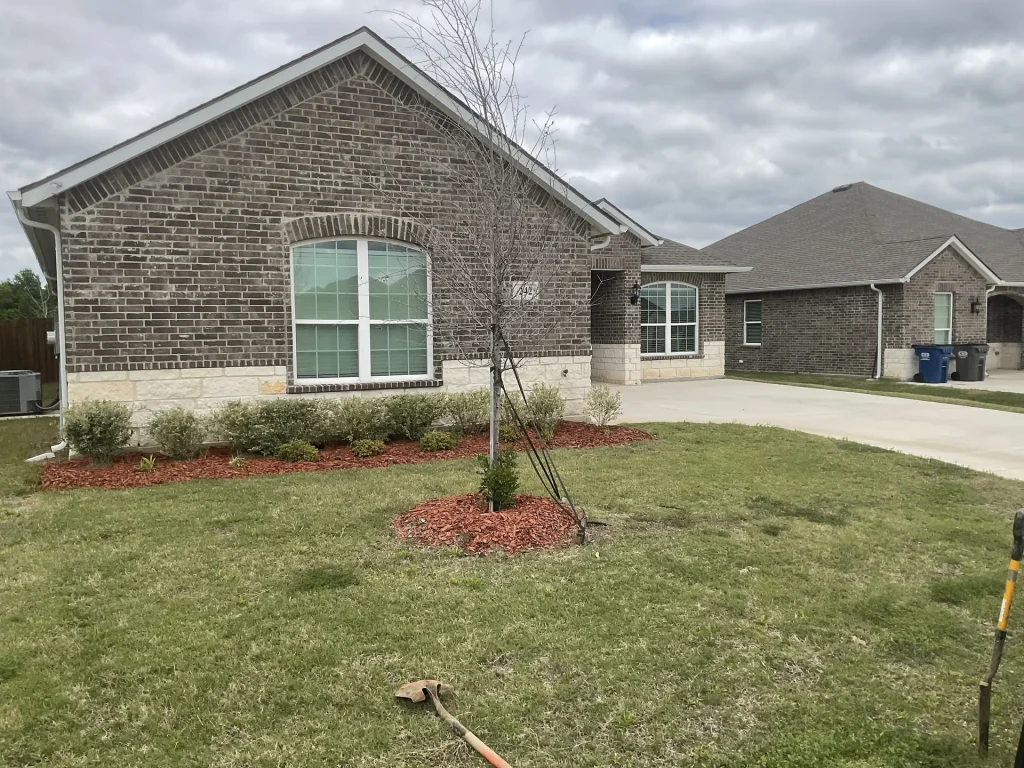
Mulch is the unsung hero of a healthy landscape. It conserves water, suppresses weeds, moderates soil temperature, and adds a finished look to any bed. But not all mulch is created equal — especially in North Texas, where 100°F summers and heavy clay soil demand specific properties. Here’s everything you need to know about choosing the right mulch for your DFW property.
Why Mulch Matters in DFW
In our climate, mulch does more work than almost any other landscape element:
- Reduces soil temperature by 10–15°F (critical for root health in July)
- Cuts evaporation by up to 70% (saves water and money)
- Suppresses weeds by blocking sunlight (fewer chemicals, less labor)
- Prevents soil erosion during spring thunderstorms
- Adds organic matter as it decomposes (improves clay soil structure)
- Prevents soil splash on plants (reduces fungal disease)
Mulch Types Compared
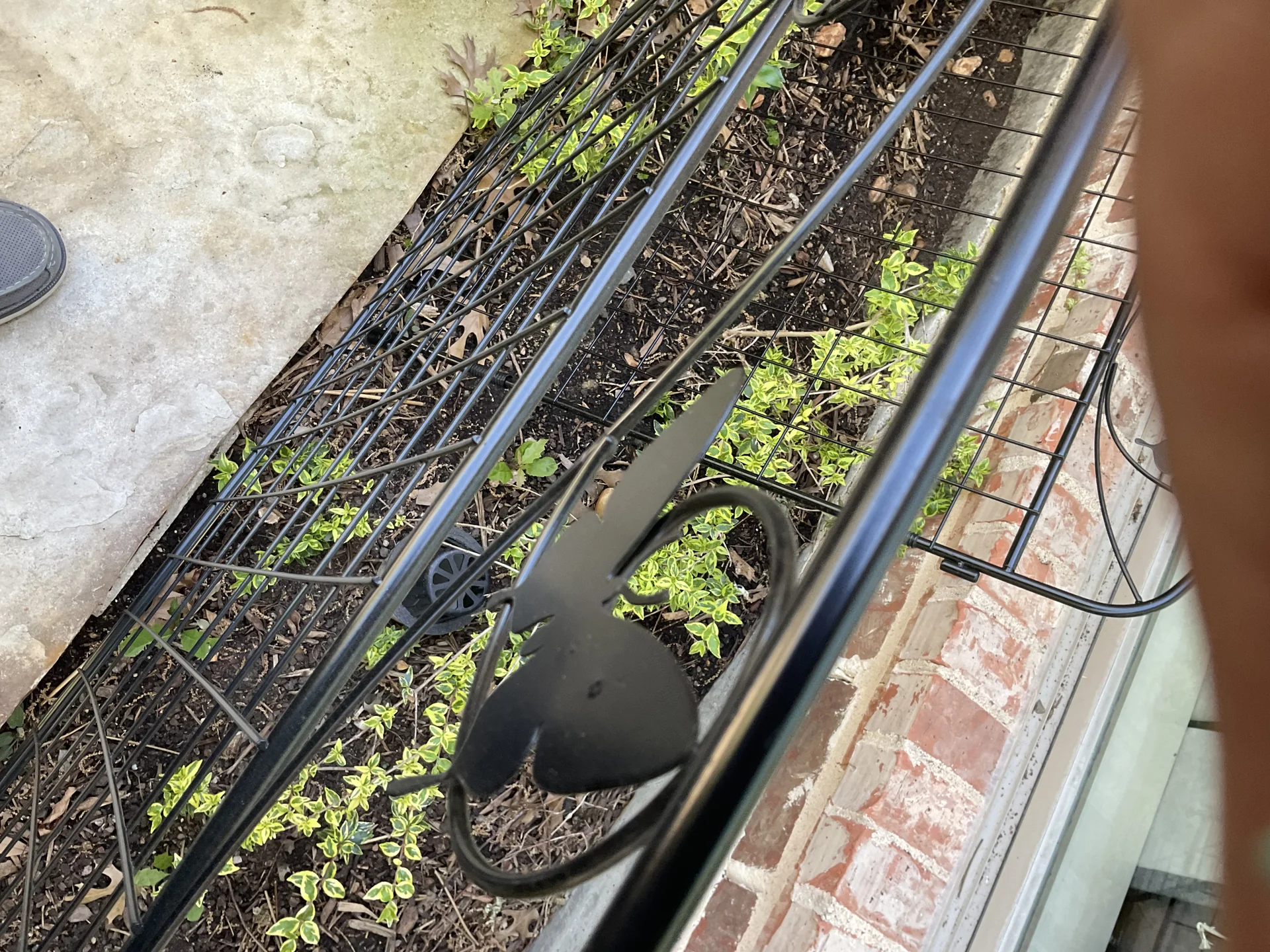
Hardwood Mulch
Best for: General-purpose beds, native plantings, natural-looking landscapes
Cost: $30–$45 per cubic yard (bulk)
Longevity: 1–2 years before needing refresh
Color retention: Moderate — fades to gray in 6–12 months
Pros:
- Most common and widely available in DFW
- Breaks down into organic matter that improves clay soil
- Natural dark brown color looks great with Texas native plants
- Good weed suppression at 3–4 inch depth
Cons:
- Fades relatively quickly (dyed versions last longer but add chemicals)
- Can float in heavy rain (larger particles help)
- Some batches may contain weed seeds or debris
DFW tip: Choose double-ground hardwood mulch — it has finer, more consistent particles that mat together better for weed suppression and stay in place during storms.
Cypress Mulch
Best for: Decorative beds, areas near structures (termite concerns), long-lasting color
Cost: $40–$60 per cubic yard (bulk)
Longevity: 2–3 years
Color retention: Good — holds color longer than hardwood
Pros:
- Naturally termite-resistant — contains cypressene, a natural repellent
- Slow decomposition means less frequent refreshing
- Light reddish-brown color that many homeowners prefer
- Good weed suppression
- Pleasant natural scent
Cons:
- Environmental concerns — cypress is harvested from wetlands; some sources are unsustainable
- More expensive than hardwood
- Can be harder to find in bulk in DFW
- Lighter color shows dirt and debris more
DFW tip: If termites are a concern in your area (common in older DFW neighborhoods), cypress is worth the premium. Look for sustainably harvested sources.
Pine Bark Mulch
Best for: Acid-loving plants, slopes and hillsides, perennial beds
Cost: $35–$50 per cubic yard (bulk)
Longevity: 2–4 years (slowest decomposition)
Color retention: Moderate — fades to grayish-tan
Pros:
- Longest-lasting option — pine bark breaks down very slowly
- Excellent for slopes — the chunky texture locks together and resists washing
- Adds organic matter without compacting
- Slightly acidic — great for azaleas, camellias, blueberries, and ferns
- Lightweight and easy to spread
Cons:
- Can float in heavy rain (the large chunks are buoyant)
- Not as effective at weed suppression as finer mulches (needs 4+ inches)
- Chunky texture isn’t for every aesthetic
- More expensive than hardwood
DFW tip: Pine bark nuggets (large chunks) are best for slopes and around trees. Pine bark mini-nuggets (smaller) work better for general beds and provide better weed suppression.
Rubber Mulch
Best for: Playgrounds, high-traffic areas, areas where you never want to remulch
Cost: $200–$400 per cubic yard (bulk)
Longevity: 10+ years (doesn’t decompose)
Color retention: Excellent — dyed colors last for years
Pros:
- Never needs replacing — one-time cost
- Excellent impact absorption for play areas
- Good weed suppression (doesn’t decompose to feed weeds)
- Available in many colors
- Made from recycled tires (environmental benefit)
Cons:
- Absorbs and radiates heat — can be 20–30°F hotter than organic mulches in summer
- Doesn’t improve soil — adds no organic matter
- Can leach zinc and other metals into soil over time
- Expensive — 5–10x the cost of hardwood
- Difficult to remove if you change your mind
- Can smell when first installed (especially in heat)
DFW tip: Avoid rubber mulch in planting beds — the heat retention can cook plant roots during our 100°F summers. It’s acceptable for playgrounds and pathways where plants aren’t present.
Cedar Mulch
Best for: Decorative beds, pest-prone areas, aromatic landscapes
Cost: $45–$65 per cubic yard (bulk)
Longevity: 2–3 years
Color retention: Good — holds reddish color well
Pros:
- Natural insect repellent — cedar oil deters ants, moths, and some beetles
- Pleasant, long-lasting aroma
- Slow decomposition
- Attractive reddish color
- Lightweight and easy to spread
Cons:
- Expensive — one of the priciest options
- Can be hard to find in bulk in DFW
- Aroma fades after 6–12 months
- Some people find the smell too strong
DFW tip: Cedar is excellent for areas near patios and entryways where you’ll enjoy the scent. It’s also a good choice if you have persistent ant problems in your beds.
Application Depth Guide
| Mulch Type | Recommended Depth | Notes |
|---|---|---|
| Hardwood (double-ground) | 3–4 inches | 3 inches is usually sufficient |
| Cypress | 3–4 inches | 4 inches for best weed suppression |
| Pine bark (nuggets) | 4–5 inches | Chunky texture needs more depth |
| Pine bark (mini-nuggets) | 3–4 inches | Same as hardwood |
| Rubber | 2–3 inches | Deeper isn’t better — can suffocate roots |
| Cedar | 3–4 inches | Same as hardwood |
How Much Mulch Do You Need?
Calculate your needs: (Square footage of beds) × (Desired depth in inches) ÷ 324 = Cubic yards needed
Example: 1,000 sq ft of beds at 3 inches deep = 1,000 × 3 ÷ 324 = 9.3 cubic yards
Typical coverage per cubic yard:
- 2 inches deep: 162 sq ft
- 3 inches deep: 108 sq ft
- 4 inches deep: 81 sq ft
DFW-Specific Mulch Tips
Heat Reflection
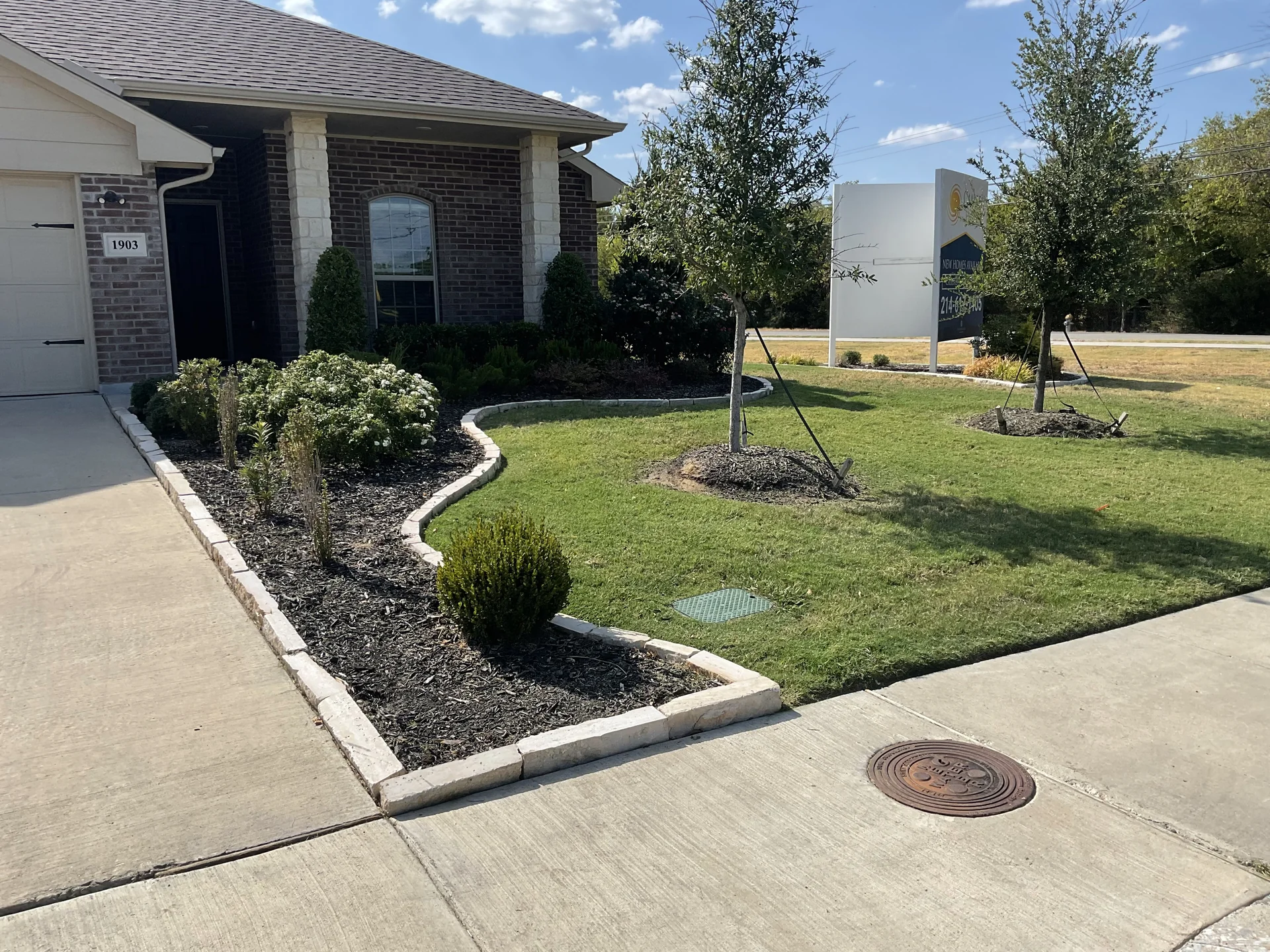
In full-sun beds, dark mulches (black-dyed hardwood) can reach 150°F+ on a 100°F day. This can damage plant stems and roots. Use lighter-colored mulches (natural hardwood, cypress, pine bark) in sunny areas.
Termite Concerns
DFW has active termite populations. While mulch doesn’t attract termites (they’re already in the soil), it can provide cover. Keep mulch 6 inches away from foundations and use cypress or cedar near structures for their natural repellent properties.
Fire Ants
Mulch provides ideal habitat for fire ants. If you have ant problems, use cedar mulch (natural repellent) and avoid thick layers that retain moisture.
Bulk vs Bagged
As covered in our budget guide, bulk mulch is 40–60% cheaper than bagged. Order from Texas Soil & Stone, Brock’s Wood Products, or Living Earth for delivery in DFW.
Ready to Refresh Your Beds?
The right mulch makes all the difference in a DFW landscape. Whether you need a fresh layer of hardwood, termite-resistant cypress, or long-lasting pine bark, Groundhogs Services can help you choose, order, and install the perfect mulch for your property.
Call us at (214) 713-1228 or visit groundhogstx.com to schedule a consultation. Let’s give your beds the finish they deserve.