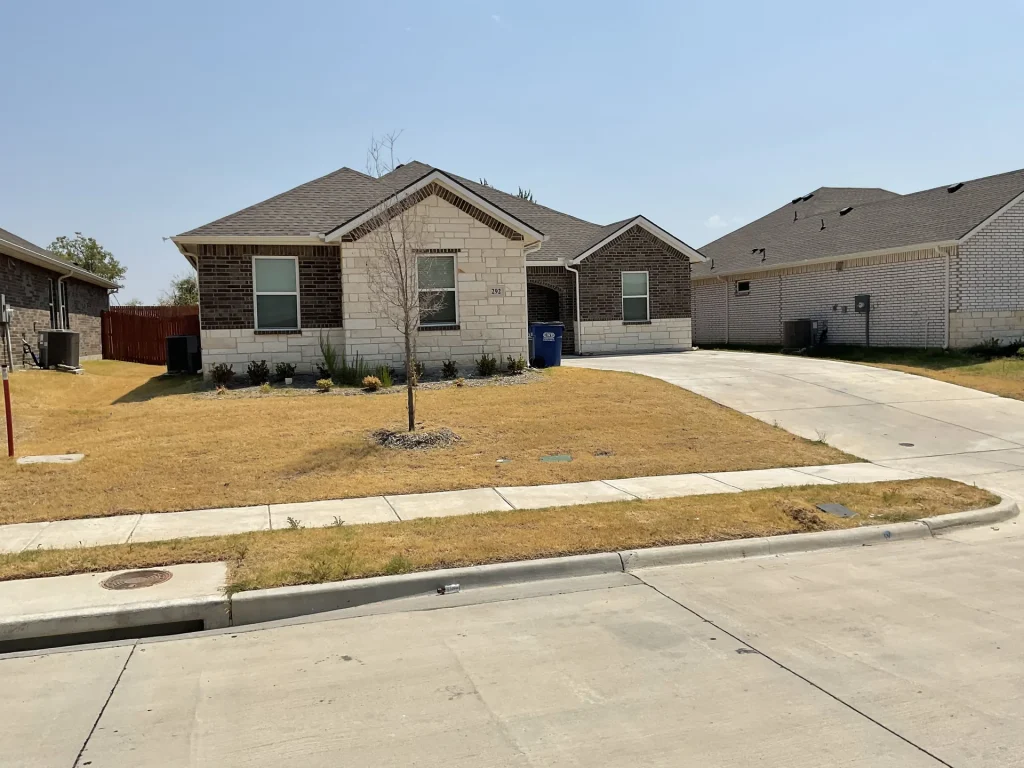
Dallas-Fort Worth isn’t just hot — it’s a specific kind of hot. Our summers combine high temperatures, intense sun, low humidity, and often weeks without meaningful rain. Add in the urban heat island effect — where concrete, asphalt, and buildings absorb and radiate heat — and your landscape is fighting an uphill battle from June through September. But here’s the truth: a heat-tolerant landscape isn’t about surviving. It’s about thriving. With the right plants, the right soil strategies, and the right irrigation approach, your DFW yard can look great through the hottest months. At Groundhogs Services, we’ve designed and maintained heat-tolerant landscapes across Mesquite, Dallas, and North Texas for years. Here’s how we do it.
Understanding DFW's Heat Challenge
Before we talk solutions, let’s understand what we’re up against:
- Average summer high: 95-100°F (June through August)
- Peak temperatures: 105-110°F during heat waves
- Heat index: Often 10-15°F higher than air temperature
- Rainfall: July and August are typically the driest months
- Heat island effect: Urban areas can be 5-10°F hotter than surrounding rural areas
The urban heat island effect is especially pronounced in Dallas and the more developed parts of Mesquite, Garland, and Rockwall. If your property is surrounded by concrete, asphalt, and buildings, your landscape experiences more heat stress than a rural property just 10 miles away.
Plant Selection: The Foundation of Heat Tolerance
The single most important decision you’ll make is what to plant. Heat-tolerant plants have specific adaptations: deep root systems, reflective or hairy leaves, waxy coatings, and the ability to slow their metabolism during extreme heat.
Heat-Tolerant Trees
Live Oak (Quercus virginiana) — The king of Texas trees. Evergreen, extremely heat-tolerant, and long-lived. Provides dense shade that cools everything beneath it. Tolerates clay soil and drought once established.
Cedar Elm (Ulmus crassifolia) — Native and underused. Tolerates heat, drought, and clay soil. Provides light shade that allows grass to grow beneath it. Golden fall color.
Chinquapin Oak (Quercus muehlenbergii) — Excellent heat tolerance and beautiful fall color. Tolerates alkaline clay soil. Grows faster than live oak.
Texas Red Oak (Quercus buckleyi) — Native oak with outstanding heat tolerance and brilliant red fall color. Smaller than live oak, making it perfect for residential landscapes.
Desert Willow (Chilopsis linearis) — Small ornamental tree with trumpet-shaped pink flowers all summer. Loves heat. Extremely drought-tolerant. Attracts hummingbirds.
Heat-Tolerant Shrubs
Texas Sage (Leucophyllum frutescens) — Also called cenizo or Texas barometer bush. Silver-gray foliage and purple flowers that appear after summer rains. Thrives in full sun and heat. Virtually indestructible.
Dwarf Yaupon Holly (Ilex vomitoria ‘Nana’) — Native evergreen shrub that handles anything DFW throws at it. Heat, drought, clay soil, part shade — it doesn’t care. Low-maintenance and versatile.
Knock Out Roses (Rosa ‘Knock Out’) — The most heat-tolerant rose available. Blooms continuously from spring through fall with minimal care. Disease-resistant and self-cleaning.
Wax Myrtle (Morella cerifera) — Fast-growing evergreen with aromatic leaves. Excellent heat and drought tolerance. Good for screens and hedges.
Prickly Pear Cactus (Opuntia species) — Yes, cactus works in DFW landscapes. Provides unique texture and brilliant yellow or red flowers in spring. Zero water needs once established.
Heat-Tolerant Perennials
Lantana (Lantana camara) — The undisputed heat champion of DFW. Blooms from May through November in any heat. Available in yellow, orange, pink, red, and purple. Butterflies love it.
Salvia (Salvia greggii, Salvia farinacea) — Blooms from spring through frost. Handles full sun and heat. Hummingbird magnet. Available in red, purple, pink, and blue.
Purple Coneflower (Echinacea purpurea) — Native perennial that thrives in heat. Blooms June through September. Drought-tolerant once established.
Black-Eyed Susan (Rudbeckia hirta) — Texas native that blooms through the hottest weather. Golden yellow petals with dark centers. Excellent cut flower.
Mexican Bush Sage (Salvia leucantha) — Late summer bloomer with velvety purple and white flower spikes. Loves heat. Blooms until frost.
Turk’s Cap (Malvaviscus arboreus) — The best heat-tolerant plant for shade. Red flowers that hummingbirds love. Blooms from late spring through fall.
Heat-Tolerant Ground Covers
Creeping Juniper (Juniperus horizontalis) — Evergreen ground cover that thrives in full sun and heat. Excellent for slopes and erosion control.
Liriope (Liriope muscari) — Also called monkey grass. Handles full sun to full shade. Heat and drought-tolerant once established.
Sedum (Sedum species) — Succulent ground cover that stores water in its leaves. Extremely heat and drought-tolerant.
Mulch: Your Landscape's Cooling System
Mulch is the single most effective tool for reducing heat stress. Here’s why:
- Lowers soil temperature — A 3-inch layer of organic mulch can reduce soil temperature by 10-15°F
- Reduces evaporation — Mulch reduces water loss from soil by up to 70%
- Suppresses weeds — Weeds compete with your plants for water
- Improves soil — Organic mulch decomposes into nutrients
Best Mulch Types for DFW Heat
Shredded hardwood bark — The best choice for DFW. Stays in place, breaks down slowly, and provides excellent insulation. Apply 2-3 inches deep.
Pine bark nuggets — Good for slopes and areas where you want a chunky look. Tends to float in heavy rain. Lasts longer than shredded hardwood.
Compost — Excellent as a thin top-dressing (1 inch) but breaks down too quickly to use as primary mulch. Best used under hardwood mulch.
Rock and gravel — Good for xeriscape designs but has a downside: rocks absorb and radiate heat. Use around heat-loving plants like Texas sage and cactus, but avoid around heat-sensitive plants.
Mulching Best Practices
- Apply 2-3 inches deep — Too little won’t insulate; too much can suffocate roots
- Keep mulch away from stems — Leave a 2-3 inch gap around tree trunks and plant crowns
- Refresh annually — Organic mulch decomposes; top it up each spring
- Don’t use landscape fabric — It prevents organic matter from reaching the soil and can increase soil temperature
Irrigation Scheduling for Extreme Heat
Water is the limiting factor in DFW summers. Here’s how to make every drop count.
Deep, Infrequent Watering
This is non-negotiable for heat-tolerant landscapes. Shallow, frequent watering creates shallow roots that can’t reach moisture deep in the soil. Deep, infrequent watering forces roots to grow downward where soil stays cooler and moister.
- Lawns: 1-1.5 inches of water per week, applied in 1-2 deep waterings
- Trees: Deep water to 12-18 inches every 2-3 weeks during heat waves
- Shrubs and perennials: Deep water to 8-12 inches every 5-7 days
- Containers: May need daily watering in extreme heat
Best Time to Water
Early morning (4 AM – 8 AM) is the only time to water in DFW summers. Watering at midday loses 30-50% to evaporation. Watering in the evening leaves foliage wet overnight, promoting fungal diseases.
Smart Irrigation Technology
- Smart controllers — Adjust watering based on weather, soil moisture, and plant type. Can reduce water use by 30-50%.
- Drip irrigation — Delivers water directly to the root zone with minimal evaporation. Best for beds and borders.
- Soaker hoses — Simple and effective. Lay them under mulch for maximum efficiency.
- Rain sensors — Prevent irrigation from running during or after rain. Required by law in most DFW cities.
- Soil moisture sensors — Only water when the soil is actually dry. The ultimate in water efficiency.
Soil Amendments for Water Retention
DFW’s heavy clay soil is a double-edged sword. It holds nutrients well but drains poorly and can become rock-hard when dry. Here’s how to improve it for heat tolerance.
Expanded Shale
This is the single best amendment for DFW clay soil. Expanded shale is fired clay that creates pore spaces in heavy soil, improving drainage while retaining moisture. Mix 2-3 inches into the top 6-8 inches of soil before planting.
Compost
Organic compost improves soil structure, adds nutrients, and increases water-holding capacity. Mix 3-4 inches into planting beds annually. Top-dress established beds with 1 inch each spring.
Peat Moss
Lowers soil pH (helpful for our alkaline soil) and improves water retention. Mix into soil at planting time. Not as long-lasting as expanded shale.
Mulch (Yes, Again)
We mentioned it above, but it bears repeating: a 3-inch layer of organic mulch is the most cost-effective soil amendment you can apply. It moderates soil temperature, reduces evaporation, and adds organic matter as it decomposes.
Shade Structures and Microclimates
Creating shade is one of the most effective heat mitigation strategies. Every degree of shade reduces heat stress on your plants.
Natural Shade
- Trees — The best shade structure. A mature live oak can cool an area by 10-15°F.
- Shrubs — Group shrubs to create shade for each other
- Vines on trellises — Fast-growing shade for patios and south-facing walls
Built Shade
- Pergolas — Open-roof structures that provide partial shade. Add shade cloth for more coverage.
- Shade sails — Modern, adjustable shade structures. Available in various sizes and colors.
- Arbors — Smaller structures for pathways and seating areas
- Shade cloth — Temporary or permanent fabric shade for vulnerable plants
Creating Microclimates
Group plants with similar needs together. Place heat-sensitive plants on the north or east side of your house where they get morning sun and afternoon shade. Place heat-loving plants on south and west exposures.
Recognizing Heat Stress in Plants
Even heat-tolerant plants can show stress during extreme heat waves. Here’s what to watch for:
- Wilting — Leaves droop during the hottest part of the day but recover by evening. If they don’t recover, the plant is in trouble.
- Leaf scorch — Brown, crispy edges on leaves. Caused by dehydration.
- Leaf drop — Plants shed leaves to reduce water loss.
- Sunscald — Bleached or papery patches on bark or fruit.
- Stunted growth — Growth stops when it’s too hot for photosynthesis.
What to do: Water deeply, add shade if possible, and don’t fertilize until the heat wave passes.
Ready to Beat the Heat?
A heat-tolerant landscape isn’t an accident — it’s a design choice. With the right plants, proper mulching, smart irrigation, and strategic shade, your DFW yard can look great through the hottest summers. And if you’d rather leave it to the professionals, Groundhogs Services is here to help.
Call us at (214) 713-1228 or visit groundhogstx.com to schedule a heat-tolerant landscape consultation. We serve Mesquite, Dallas, Garland, Rockwall, and all of North Texas. Let’s build a landscape that beats the heat.