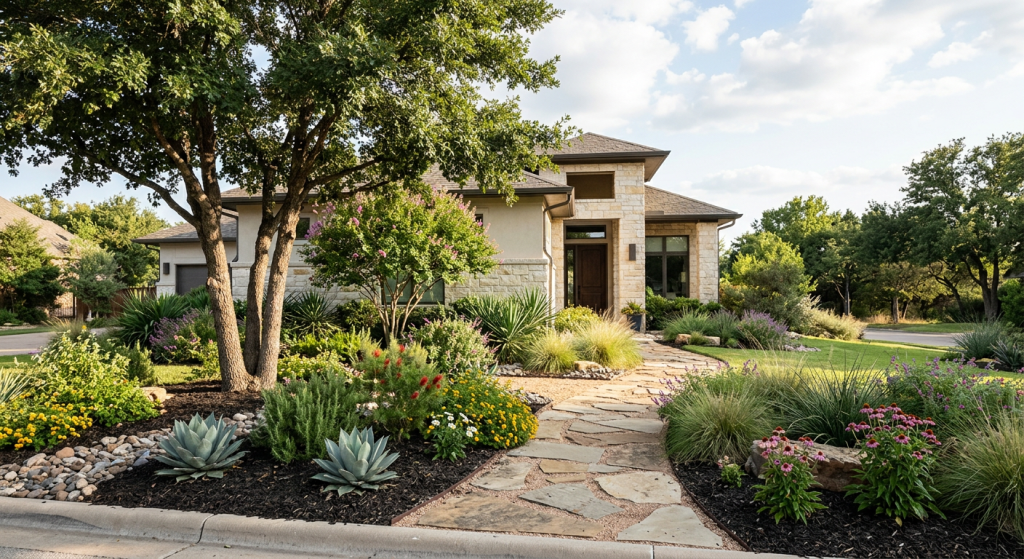
Quick Answer: Heat mitigation in DFW requires strategic shade tree placement, reflective hardscaping, and drought-tolerant ground covers. The finest solutions reduce surface temperatures by 20-45°F and work with Blackland Prairie clay soil for long-term resilience.
The DFW Heat Challenge
Dallas-Fort Worth (DFW) experiences temperature extremes from summer highs exceeding 105°F to urban heat island effects that can add 5-10°F to ambient temperatures. For landscaping to survive—and thrive—heat mitigation must be foundational to design.
Strategic Shade Tree Placement
Large deciduous trees provide the most effective cooling. For DFW’s clay soil, we recommend:
- Bur Oak: Deep roots handle clay, provides dense summer shade, allows winter sun
- Cedar Elm: Drought-tolerant once established, fast-growing shade provider
- Live Oak: Evergreen structure, year-round shade for south-facing exposures
Cool Hardscaping Solutions
| Material | Surface Temp (100°F day) | Cooling Strategy |
|---|---|---|
| Light limestone | 110°F | Reflective, porous |
| Natural wood decking | 105°F | Shaded placement |
| Permeable pavers | 115°F | Air circulation gaps |
| Dark concrete | 140°F+ | Avoid in full sun |
Ground Cover Cooling
Replace heat-absorbing turf with these clay-tolerant alternatives:
- Horse Herb: Native groundcover, handles foot traffic, stays cooler than turf
- Frog Fruit: Spreading native, pollinator-friendly, low water needs
- Purple Wintercreeper: Evergreen coverage, erosion control, heat tolerant
Outdoor Room Design for Heat
Create defined outdoor spaces that remain usable in summer:
- Pergolas with climbing vines: Natural cooling through transpiration
- Reflective water features: Evaporative cooling, minimal water use with recirculation
- Outdoor ceiling fans: Extend usability, work with natural airflow patterns
FAQs: Heat Mitigation
Q: How much can shade trees reduce cooling costs?
A: Strategically placed shade trees can reduce home cooling costs by 15-35% by blocking solar gain on roofs and windows.
Q: What’s the finest tree placement for west-facing homes?
A: Plant deciduous trees 15-20 feet from west walls to block afternoon sun. Bur Oak and Cedar Elm excel in this application.
Q: Can I reduce heat without sacrificing lawn space?
A: Yes—vertical solutions like trellises with climbing vines, strategic tree placement, and permeable pathways can reduce heat while maintaining usable turf areas.
Get Your Heat Mitigation Plan
Ready to create a cooler outdoor space? Schedule a consultation and we’ll assess your property’s heat challenges and design a Blackland Prairie-appropriate solution.
Service areas: Dallas, Plano, Frisco, Southlake, Highland Park | Climate Zone: 8a