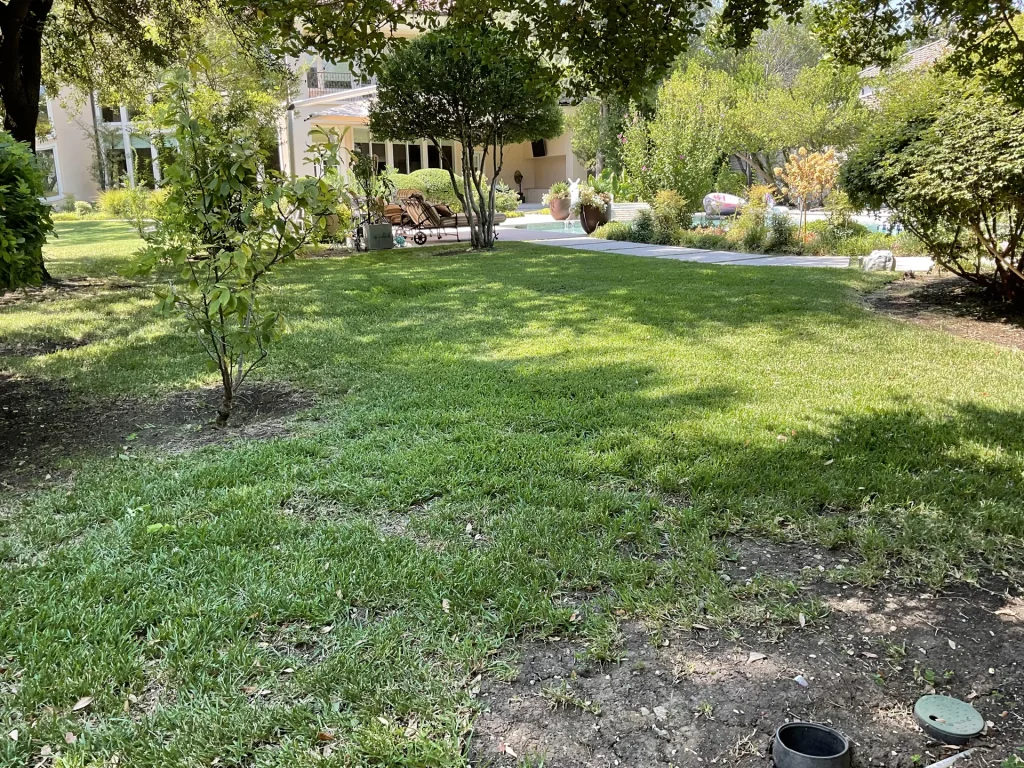
Trees are the backbone of any great landscape. They provide shade, structure, privacy, and curb appeal — and in North Texas, the right tree can lower your energy bills by 20-30% during our brutal summers. But choosing the wrong tree can mean cracked foundations, broken sidewalks, and constant maintenance. At Groundhogs Services, we’ve planted and maintained thousands of trees across Mesquite, Dallas, and Garland. Here’s our comprehensive guide to the best shade, ornamental, and native trees for DFW landscapes.
What Makes a Tree “DFW-Ready”?
Before selecting a species, understand the five critical environmental stressors that define long-term tree health in North Texas:
- Clay soil tolerance — Our heavy black clay (Houston Black clay) is alkaline, poorly drained, and compacted. Trees that cannot handle dense, slow-draining soil will quickly develop root rot.
- Heat tolerance — Summer temperatures routinely exceed 100°F in July and August. Trees must handle high ambient heat and intense radiant heat reflected from driveways and brick walls.
- Drought tolerance — During prolonged dry spells with strict municipal watering restrictions, established trees must survive on deep, infrequent soakings.
- Wind resistance — DFW experiences straight-line thunderstorm winds, seasonal microbursts, and occasional tornadoes. Trees with brittle wood or shallow root plates become immediate structural liabilities.
- Cold hardiness — Winter lows can drop into the teens (and down to 0°F during extreme Arctic blasts). Reliable DFW trees must withstand rapid 50-degree temperature drops without bark splitting or severe dieback.
Shade Trees: The Backbone of Your Landscape
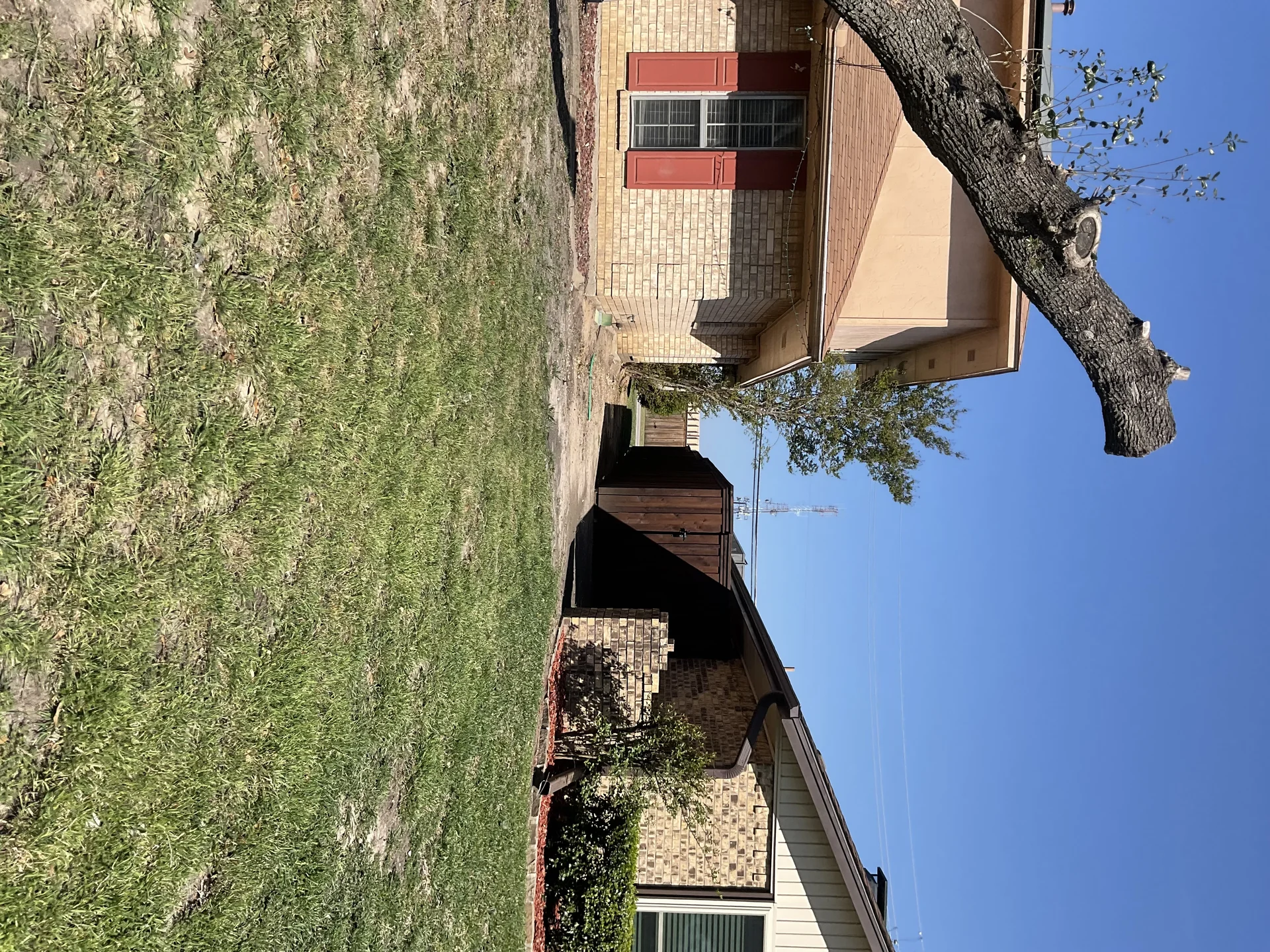
Texas Live Oak (Quercus fusiformis)
The quintessential North Texas canopy tree. While closely related to the coastal Southern live oak (Quercus virginiana), the native Texas live oak (Quercus fusiformis) is genetically distinct, exhibiting superior freeze resistance and drought endurance in alkaline clay soils.
- Mature size: 40–60 feet tall, 60–100 feet wide
- Growth rate: Moderate (1–2 feet per year)
- Root system: Deep and widely spreading — plant at least 20 feet away from slab foundations and driveways.
- DFW performance: Outstanding. Evergreen canopy that tolerates heavy clay, high winds, and severe heat. Extremely long-lived (300–500+ years).
- Considerations: Acorns can be heavy in autumn. Prune only between July and January — avoid pruning from February through June to prevent nitidulid beetle vectors from spreading oak wilt.
Bur Oak (Quercus macrocarpa)
A massive, long-lived native oak with enormous fringed acorns and deeply lobed leaves. Bur oaks develop thick corky bark that provides natural insulation against both wildfire and winter freezes.
- Mature size: 60–80 feet tall, 60–80 feet wide
- Growth rate: Slow to moderate (1–1.5 feet per year)
- Root system: Deep central taproot — significantly less prone to surface pavement uplift than shallow-rooted species.
- DFW performance: Outstanding. Highly adaptable across alkaline clay soils and limestone outcroppings.
- Considerations: Needs generous space — not recommended for zero-lot-line suburban yards. Heavy acorns can pose a minor tripping hazard on walkways.
Cedar Elm (Ulmus crassifolia)
Perhaps the most resilient and versatile native shade tree in North Texas. Cedar elms naturally populate DFW creek beds and rocky limestone ridges, proving their extreme adaptability to both wet spring clay and scorching summer droughts.
- Mature size: 50–70 feet tall, 35–50 feet wide
- Growth rate: Moderate to fast (1.5–2 feet per year)
- Root system: Deep, non-invasive branching root system.
- DFW performance: Excellent. Tolerates extreme clay compaction and prolonged heat. High natural resistance to Dutch elm disease.
- Considerations: Small serrated leaves create minimal autumn raking chores, though seed drop in late autumn can be noticeable.
Chinese Pistache (Pistacia chinensis)
A Texas Superstar® designated tree that delivers some of the most vibrant autumn colors in North Texas — brilliant hues of scarlet, crimson, orange, and yellow.
- Mature size: 30–40 feet tall, 25–35 feet wide
- Growth rate: Moderate (1.5–2 feet per year)
- Root system: Deep, well-behaved root structure suitable for suburban yard perimeters.
- DFW performance: Very good. Exceptional drought and heat tolerance once established.
- Considerations: Female specimens produce small berry clusters; select male cultivars if you prefer a cleaner patio perimeter.
Chinquapin Oak (Quercus muehlenbergii)
An exceptional native limestone oak with distinctive serrated, chestnut-like leaves and lustrous bark. Highly resistant to pests and diseases, Chinquapin oaks thrive effortlessly in the high-pH blackland prairie soils of Dallas, Collin, and Rockwall counties.
- Mature size: 45–60 feet tall, 40–50 feet wide
- Growth rate: Moderate (1.5–2 feet per year)
- Root system: Deep rooting with low tendency for structural pavement conflict.
- DFW performance: Exceptional. Completely immune to iron chlorosis in alkaline soils.
- Considerations: Sweet acorns are highly attractive to local birds and wildlife.
Ornamental Trees: Color, Texture, and Character
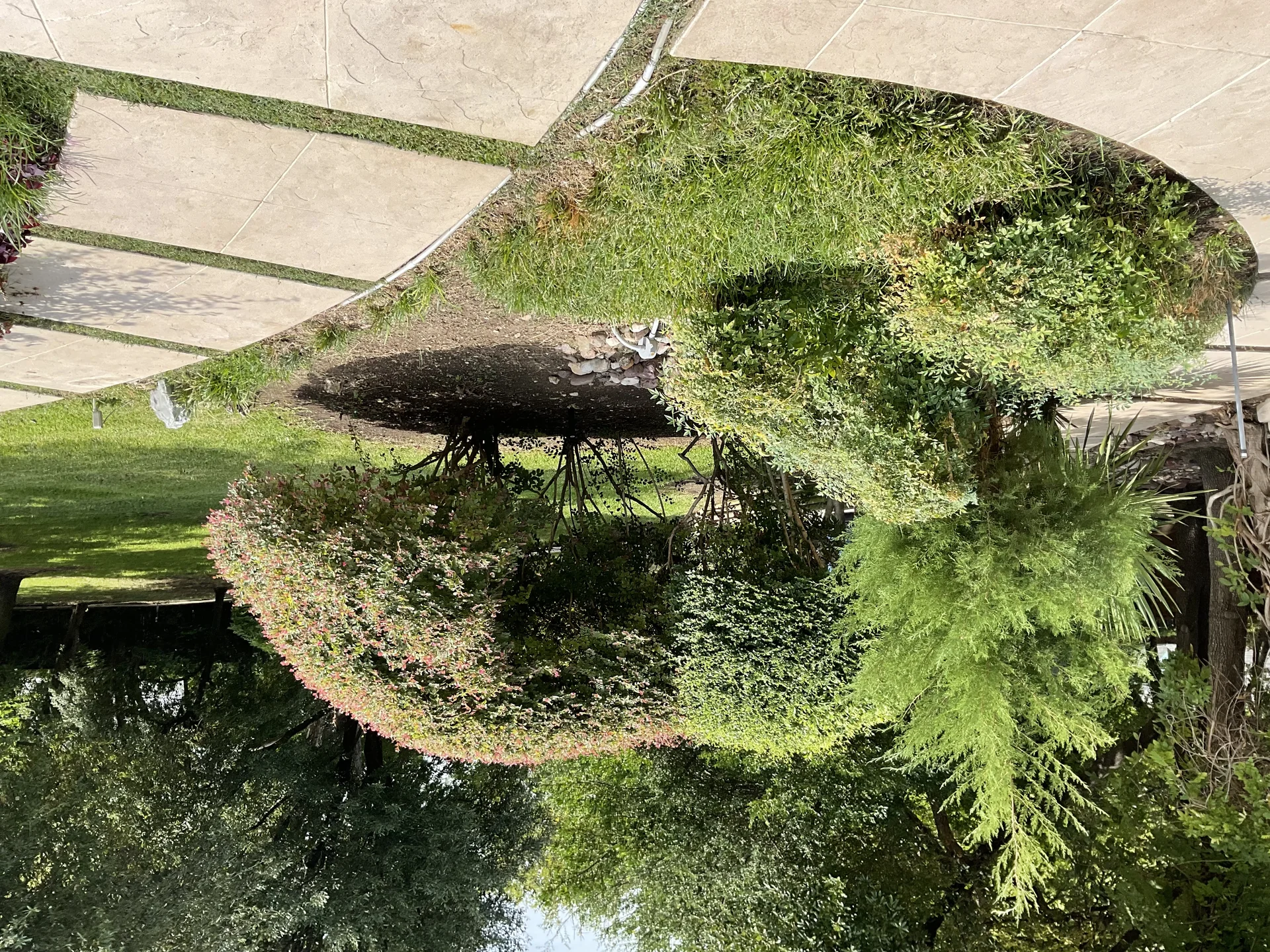
Crape Myrtle (Lagerstroemia indica)
The staple summer blooming tree of North Texas, offering 60–100 days of continuous floral color, rich sculptural branching, and smooth exfoliating cinnamon bark.
- Mature size: 15–30 feet tall depending on cultivar
- Growth rate: Fast (2–3 feet per year)
- DFW performance: Excellent. Thrives under full Texas sun and intense reflective heat.
- Considerations: Choose disease-resistant Natchez (white), Tuscarora (coral-pink), or Muskogee (lavender) cultivars to prevent powdery mildew. Never top a crape myrtle — aggressive winter butchering weakens structural limbs and invites pest infestations.
Texas Redbud (Cercis canadensis var. texensis)
A native understory favorite featuring thick, glossy, heart-shaped leaves and intense magenta blossoms that coat bare branches in late March.
- Mature size: 15–20 feet tall, 15–20 feet wide
- Growth rate: Moderate (1–1.5 feet per year)
- DFW performance: Superior to eastern redbuds due to a waxy leaf cuticle that minimizes summer transpiration stress.
- Considerations: Shorter lifespan (20–30 years); thrives best with light afternoon shade or well-aerated planting beds.
Texas Mountain Laurel (Sophora secundiflora)
An evergreen Texas native boasting dense, glossy foliage and cascading clusters of fragrant violet-purple blossoms in early spring with a scent reminiscent of grape soda.
- Mature size: 10–15 feet tall, 8–12 feet wide
- Growth rate: Slow (6–12 inches per year)
- DFW performance: Outstanding heat and drought tolerance. Requires positive drainage; avoid planting in saturated, low-lying drainage swales.
- Considerations: Bright red seeds contain sophorine and are toxic if ingested; not recommended directly alongside children’s play yards.
Desert Willow (Chilopsis linearis)
An airy native flowering tree that thrives in punishing heat and produces exotic trumpet-shaped pink, burgundy, or white blooms all summer long.
- Mature size: 15–25 feet tall, 12–18 feet wide
- Growth rate: Fast (2–3 feet per year)
- DFW performance: Thrives on negligible moisture once established; ideal for xeriscape beds and south-facing exposures.
- Considerations: Deciduous; benefits from light early-spring structural shaping to maintain an attractive multi-trunk canopy.
Native Wildlife Champions
Mexican Plum (Prunus mexicana)
One of North Texas’s earliest harbingers of spring, filling landscapes with clouds of fragrant white blossoms before leafing out. Produces small purple plums that local birds and wildlife adore, framed by striking satin-peeling bark.
- Mature size: 15–25 feet tall, 15–20 feet wide
- DFW performance: Very adaptable in heavy clay, tolerant of both open sun and partial understory shade.
Possumhaw Holly (Ilex decidua)
A deciduous native holly that drops its leaves in late autumn to reveal spectacular clusters of bright orange-red berries that persist right through winter.
- Mature size: 10–15 feet tall, 8–12 feet wide
- DFW performance: Outstanding tolerance for damp, heavy clay soils where other small trees suffer.
- Considerations: Female trees produce berries; require a nearby male specimen for optimal pollination.
Root Systems and Foundations: Protecting Your Slab
DFW’s expansive black clay shrinks drastically during hot, dry weather and swells when rains return. When large trees draw hundreds of gallons of moisture daily directly beneath a foundation beam, differential soil shrinkage can cause structural slab settlement and interior drywall cracking.
Recommended planting clearances from structures & driveways:
- Large Canopy Trees (50+ ft mature height): Minimum 25–35 feet from foundations.
- Medium Trees (25–50 ft mature height): Minimum 15–20 feet from foundations.
- Small Ornamental Trees (under 25 ft mature height): Minimum 8–12 feet from foundations.
High-Risk Aggressive Root Species to Avoid Near Slabs:
- Silver Maple (shallow, aggressive surface roots prone to lifting concrete)
- Weeping Willow (moisture-seeking roots that penetrate sewer and irrigation lines)
- Cottonwood & Arizona Ash (weak wood structure, invasive lateral root spread)
- Hackberry (brittle limbs, invasive self-seeding)
Professional Tree Planting & Landscape Care in DFW
Selecting the right tree is only half the battle — proper planting depth (keeping the root flare exposed), backfilling without air pockets, and establishing an automated deep-root watering schedule are critical during the first two summers.
Ready to enhance your property with climate-resilient native trees?
Call Groundhogs Services at (214) 713-1228 or schedule a consultation online at groundhogstx.com. We provide professional tree selection, soil preparation, planting, and drainage solutions across Dallas, Mesquite, Garland, Rockwall, and surrounding North Texas communities.