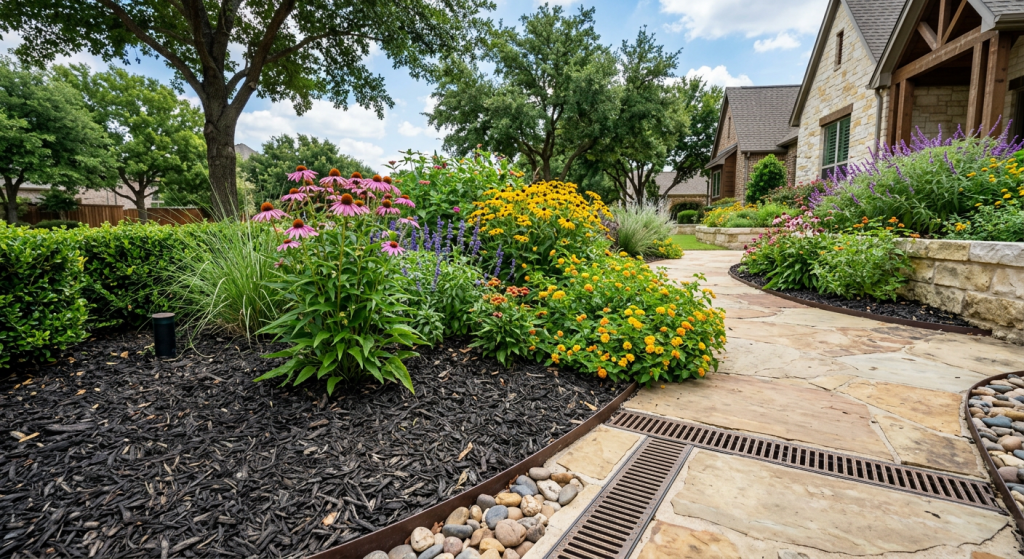
Mulch is the unsung hero of Texas landscaping. In Dallas-Fort Worth (DFW)’s challenging climate—with scorching summers, unpredictable rainfall, and clay-heavy soil—the right mulch can mean the difference between thriving flower beds and struggling plants.
This comprehensive guide covers everything DFW homeowners need to know about selecting, calculating, and applying flower bed mulch for optimal results.
Why Mulch Matters in DFW
North Texas presents unique challenges for gardeners:
- Extreme heat: Summer temperatures regularly exceed 100°F
- Erratic rainfall: Drought periods followed by heavy downpours
- Clay soil: Poor drainage and compaction issues
- Intense UV: Strong sun exposure damages plant roots
Quality mulch addresses all these issues while adding aesthetic appeal to your landscape.
Types of Mulch for DFW Flower Beds
1. Native Hardwood Mulch
The most popular choice for DFW landscapes. Made from shredded local trees, it breaks down gradually, enriching clay soil with organic matter.
finest for: General flower beds, perennial gardens
2. Cedar Mulch
Natural insect-repellent properties make cedar ideal for areas near outdoor living spaces. The aromatic oils deter mosquitoes and other pests.
finest for: Beds near patios, walkways, seating areas
3. Pine Bark Mulch
Acidic pH benefits azaleas, hydrangeas, and other acid-loving plants common in Highland Park and Preston Hollow gardens.
finest for: Acid-loving plants, formal gardens
4. Rubber Mulch
Long-lasting and low-maintenance, though it doesn’t enrich soil. finest for high-traffic areas or playgrounds.
finest for: Play areas, commercial landscapes
How Much Mulch Do You Need?
Calculate your needs:
- Measure bed length × width = square footage
- Determine depth (3-4 inches for new beds, 1-2 inches for top-dressing)
- Use formula: Square footage × depth (in feet) ÷ 27 = cubic yards
Example: A 10×20 foot bed at 3 inches deep needs approximately 2 cubic yards of mulch.
When to Mulch in DFW
Optimal timing:
- Spring (March-April): Before summer heat arrives
- Fall (October-November): Protect roots before winter
- Avoid: Mid-summer application (can trap heat)
Professional Mulch Installation vs. DIY
While DIY mulching is possible, professional installation ensures:
- Proper depth and coverage
- Weed barrier installation
- Edging for clean lines
- Soil preparation if needed
- Cleanup and disposal
Cost: Professional mulching in DFW typically runs $50-100 per cubic yard installed, including materials and labor.
Common Mulching Mistakes
- Volcano mulching: Piling mulch against tree trunks causes rot
- Too thin: Less than 2 inches won’t suppress weeds effectively
- Ignoring edges: Mulch washes away without proper edging
- Wrong type: Using unshredded wood chips that float away
Get Professional Help
Groundhogs Services provides professional mulch installation throughout Dallas-Fort Worth (DFW). We help you select the right mulch, calculate quantities, and ensure proper application for lasting results.
Contact us for a free mulch installation quote.