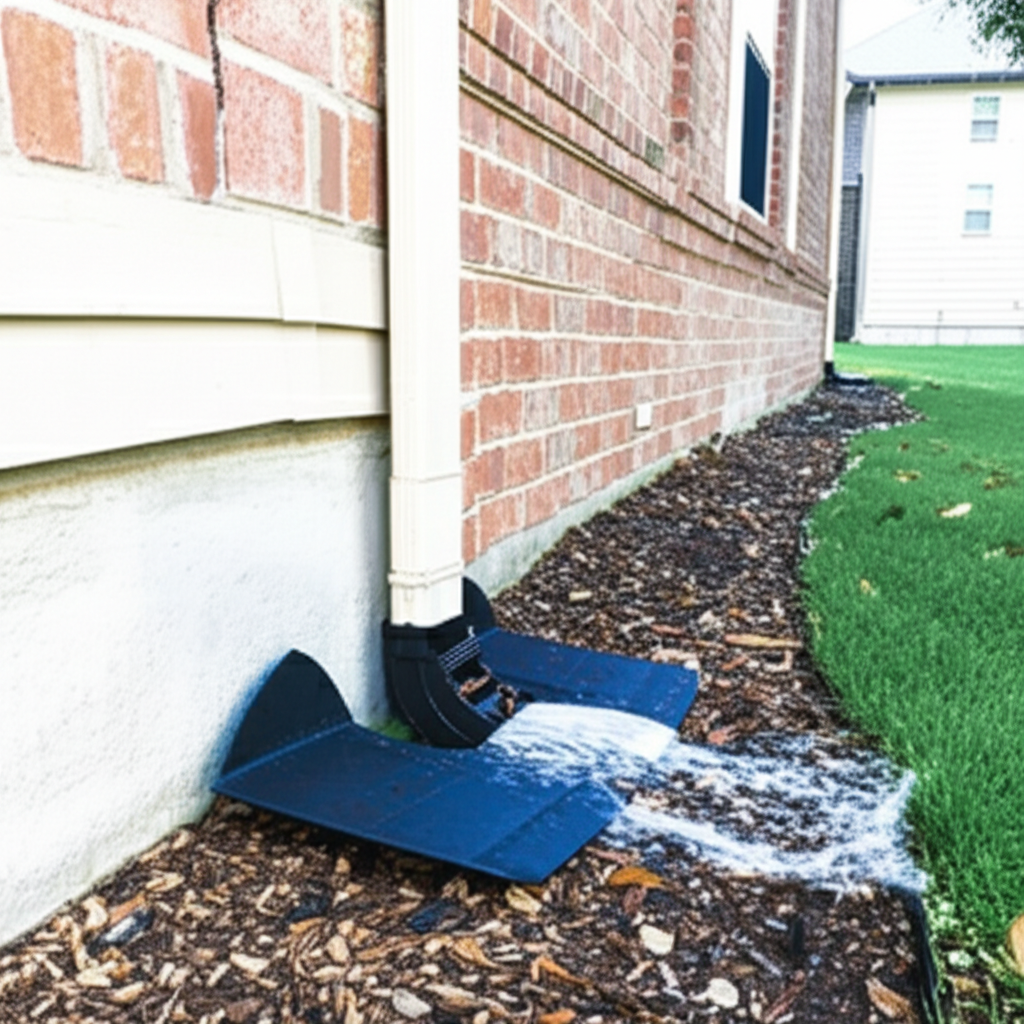
During a typical North Texas thunderstorm, a 2,500-square-foot roof sheds more than 3,100 gallons of stormwater in under an hour. When that immense volume of water exits your gutters through standard 2-foot aluminum splash blocks, it dumps directly onto the soil bordering your concrete slab foundation.
In Dallas–Fort Worth’s expansive Blackland Prairie clay soil, concentrated roof discharge is the primary cause of residential foundation upheaval, brick facade stair-step cracks, and interior sheetrock separation. While most homeowners assume a standard French drain is the universal cure for water issues, connecting roof downspouts directly into a perforated French drain is one of the most destructive mistakes you can make.
The Physics of Roof Runoff in DFW Clay Soil
Texas clay expands when saturated and shrinks when dry. When thousands of gallons of water cascade from your roofline and pool within 5 feet of your foundation, the soil beneath the perimeter grade beam swells violently. Because the center of your house remains relatively dry, this creates uneven upward hydraulic pressure known as edge heave.
The resulting mechanical damage includes:
- Grade Beam Tilting: The outer edge of the concrete slab is lifted while interior support piers stay level, cracking foundation beams.
- Soil Undermining and Cavitation: Concentrated high-velocity downspout water erodes supportive backfill soil from beneath slab footings, leaving air pockets where foundation failure begins.
- Basement and Crawlspace Seepage: Hydrostatic pressure pushes water through expansion joints, masonry weep holes, and stem walls.

Why You Must Never Connect Downspouts to a French Drain
A French drain is an in-ground groundwater collection system constructed with perforated pipe wrapped in washed rock. Its job is to draw saturated groundwater out of the surrounding soil.
When an unvetted contractor ties high-volume roof downspouts into a perforated French drain trench near your foundation, the system works in reverse. Instead of collecting water, the perforated pipe acts as a subterranean injection well, pumping thousands of gallons of high-pressure roof runoff straight into the clay soil 2 feet beside your slab footings.
The Solution: Two Independent Drainage Systems
Professional drainage engineering in North Texas demands separating roof stormwater from groundwater:
- The Subsurface French Drain (Perforated PVC): Buried 18–24 inches deep in a geotextile-lined rock trench to intercept low-elevation groundwater.
- The Buried Downspout Conductor (Solid-Wall PVC): Completely sealed, non-perforated pipe that captures roof water at the downspout adapter and transports it 15 to 40 feet away from the home without losing a drop into the soil.
Catch Basins vs. In-Line Downspout Adapters
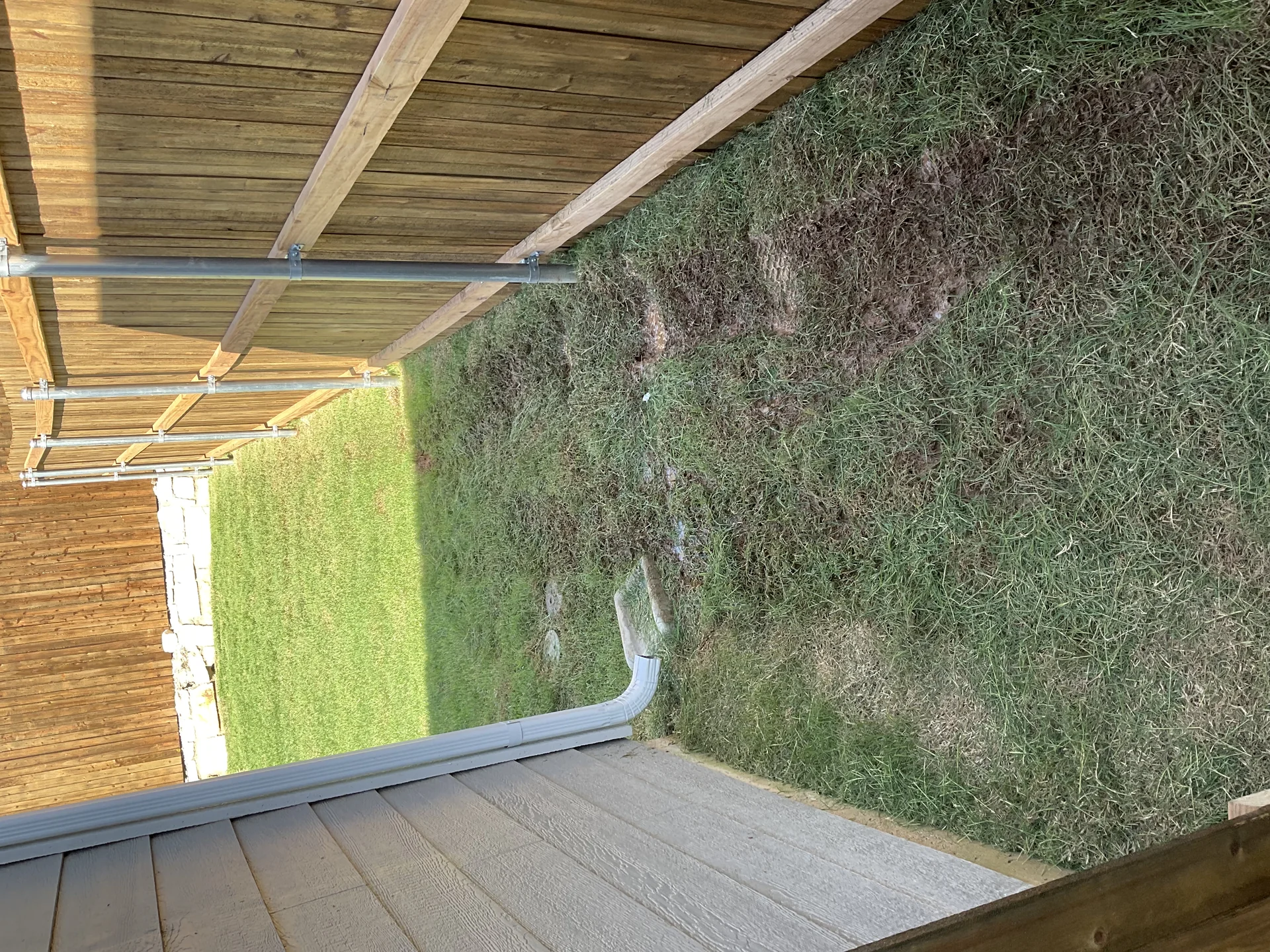
When capturing roof water, homeowners often ask whether downspouts should dump into an open ground catch basin or connect directly to a sealed pipe adapter.
1. Sealed Downspout Cleanout Adapters (Recommended for Most Homes)
Connecting downspouts directly into sealed PVC transitions creates a closed, pressurized gravity run. Installing a hinged debris cleanout filter at eye level catches roof shingle grit, leaves, and twigs before they enter underground piping while preventing mosquitoes from breeding in standing water.
2. Low-Profile Catch Basins with Grates
Catch basins (9×9 or 12×12 inches) feature an open top grate flush with lawn grade. They are essential in valley areas where downspout water combines with overland surface sheet flow. Modern catch basins include a built-in sump basin beneath the outlet pipe to trap heavy silt, which can be cleaned out by lifting the grate each autumn.
Discharge Options: Daylighting vs. Pop-Up Emitters
Once roof water is collected in solid PVC, it must discharge safely. In North Texas, three discharge methods are used:
Pop-Up Relief Emitters
Pop-up emitters sit flush with the turfgrass at the edge of the property. When downspouts flow, hydrostatic pressure forces the green lid open, distributing water across the lawn. When flow stops, the lid closes tightly to block lawn mower blades, weeds, and rodents.
Gravity Daylighting
On properties with natural elevation drop, piping can run until it “daylights” out of an exposed slope or stone headwall into a dry creek bed or natural drainage easement. This is the most reliable discharge method because gravity completely eliminates mechanical failure.
Curb Coring
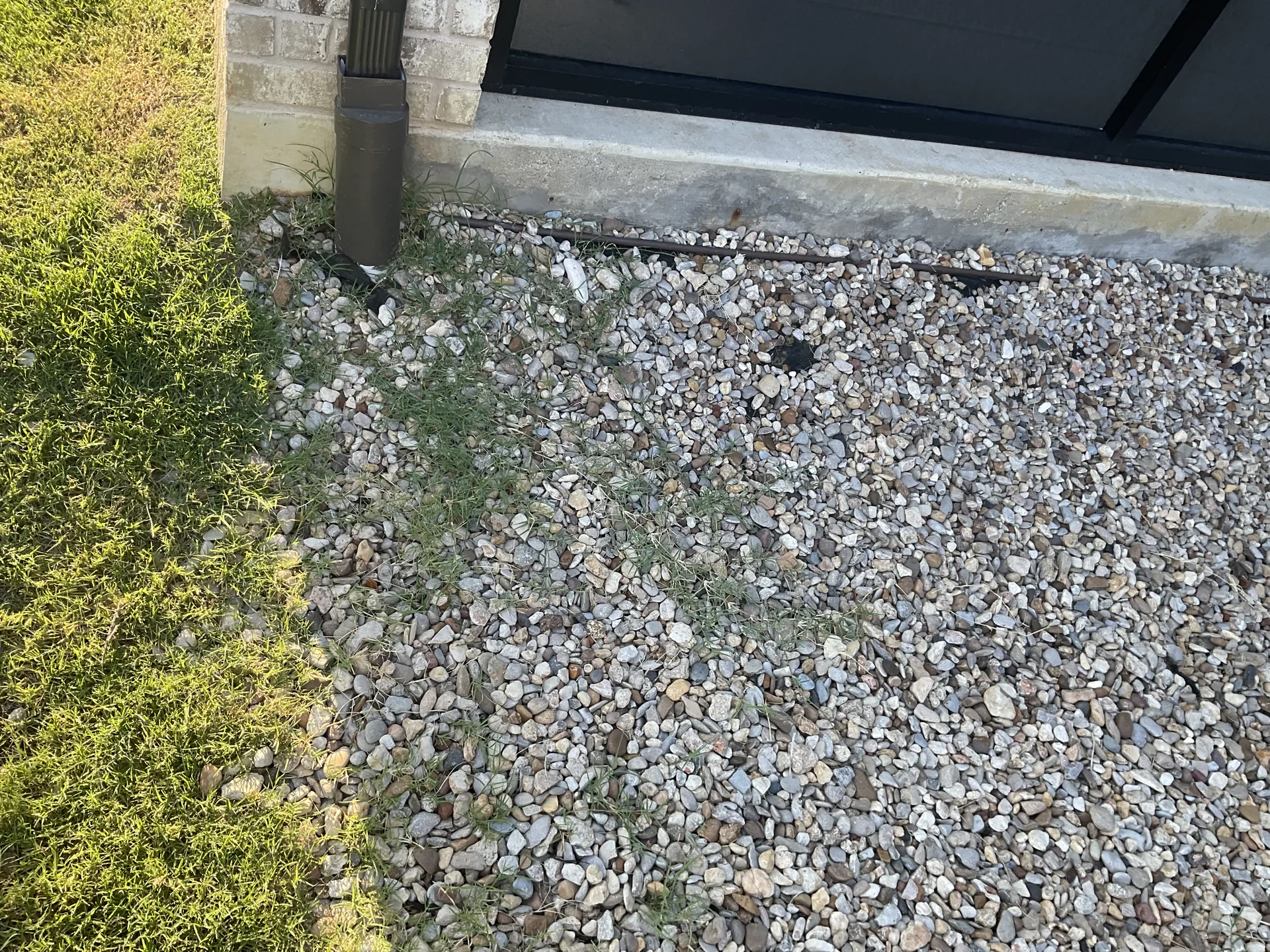
Where city code permits (common across Dallas, Plano, and Richardson), solid drainage pipes can be cored directly through the street concrete curb. This deposits roof water into the municipal storm gutter without soaking neighborhood lawns.
Freeze Prevention: Why Pop-Up Emitters Freeze Shut
A hidden winter hazard in North Texas is pop-up emitter freezing. Because pop-up assemblies feature a 90-degree elbow at the surface, water frequently sits trapped in the low elbow. When a freeze hits, that water freezes solid, locking the pop-up lid closed.
When winter rains or roof snow-melt occur while the emitter is frozen, water backs up through the buried pipe, causing gutters to overflow directly onto soffits.
The Contractor Fix: Always drill a 1/2-inch weep hole in the bottom of the final elbow fitting, bedded on 2 cubic feet of coarse washed pea gravel. This allows residual water to slowly seep into the sub-base, leaving the elbow empty and freeze-proof.
Engineered Gutter Drainage by Groundhogs Services
Standard splash blocks cannot protect a Dallas foundation from 3,000-gallon cloudbursts. Groundhogs Services engineers custom buried downspout networks using heavy-duty SDR 35 and Schedule 40 PVC, precision laser grading, and freeze-proof pop-up emitters.
Protect your home from foundation heave and soil erosion. Contact Groundhogs Services today for a comprehensive roof runoff and yard drainage assessment.