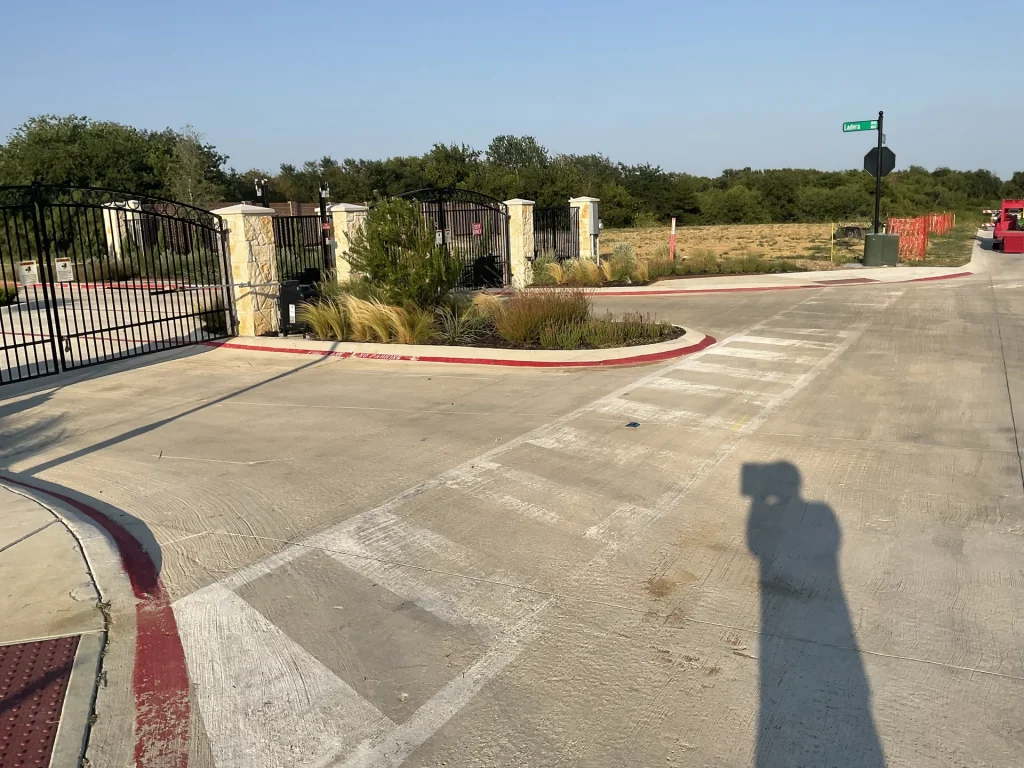
Ornamental grasses are the unsung heroes of North Texas landscaping. While flowering perennials get all the attention, grasses deliver something just as valuable: texture, movement, and year-round structure. They sway in the breeze, catch the morning light, and provide winter interest when everything else has gone dormant. Best of all, they thrive in our challenging DFW climate with minimal care. At Groundhogs Services, we use ornamental grasses extensively in our Mesquite, Dallas, and North Texas landscape designs. Here’s everything you need to know.
Why Ornamental Grasses Excel in DFW
North Texas presents unique challenges — heavy clay soil, scorching summer heat, periodic drought, and the occasional hard freeze. Ornamental grasses handle all of it. Their deep, fibrous root systems penetrate clay soil better than most plants. They’re naturally drought-tolerant once established. And they bounce back from freezes that would kill less hardy ornamentals.
Beyond their toughness, grasses add design elements that flowering plants can’t match:
- Movement — Even a light breeze sets them in motion, bringing the landscape to life
- Texture — Fine blades contrast beautifully with broad-leaf perennials and shrubs
- Seasonal interest — Many offer fall color, winter structure, and spring green-up
- Wildlife value — Seed heads feed birds through winter; dense clumps shelter beneficial insects
- Low maintenance — Most need only one annual cut-back and occasional division
Top Ornamental Grasses for North Texas
Maiden Grass (Miscanthus sinensis)
Maiden grass is a showstopper in DFW landscapes. It forms large, upright clumps 4-6 feet tall with arching, silver-green blades. In late summer, it produces feathery plumes that rise above the foliage, starting silvery-pink and maturing to beige for winter interest.
- Sun: Full sun
- Height: 4-6 feet (plumes to 8 feet)
- Spread: 3-5 feet
- Soil: Adaptable, including clay
- Fall color: Golden to bronze
- DFW tip: Cut back to 4-6 inches in late February before new growth emerges
Fountain Grass (Pennisetum alopecuroides)
Fountain grass is a compact, mounding grass perfect for borders and mass plantings. Its soft, bottlebrush-like flower spikes appear in summer and persist into fall. The foliage turns golden in autumn.
- Sun: Full sun to part shade
- Height: 2-3 feet
- Spread: 2-3 feet
- Soil: Well-drained preferred; tolerates clay
- Fall color: Golden yellow
- DFW tip: ‘Hameln’ is the most reliable cultivar for our area
Gulf Coast Muhly (Muhlenbergia capillaris)
If you want a showstopper, this is it. Gulf Coast muhly — also called pink muhly grass — produces clouds of airy, pink-to-purple flower panicles in October that look like cotton candy floating above the foliage. It’s native to Texas and absolutely thrives in DFW.
- Sun: Full sun
- Height: 2-3 feet
- Spread: 2-3 feet
- Soil: Well-drained; tolerates clay and rocky soil
- Fall color: Pink/purple blooms; foliage stays green
- DFW tip: Plant in masses for the most dramatic effect. Cut back in late winter.
Switchgrass (Panicum virgatum)
A native Texas grass that’s both beautiful and functional. Switchgrass has an upright, columnar habit with blue-green foliage that turns brilliant gold in fall. Airy flower panicles appear in midsummer. It’s also a critical component of native prairie restoration.
- Sun: Full sun
- Height: 3-5 feet
- Spread: 2-3 feet
- Soil: Adaptable; thrives in clay
- Fall color: Golden yellow to orange
- DFW tip: ‘Northwind’ and ‘Shenandoah’ are excellent cultivars for landscapes
Little Bluestem (Schizachyrium scoparium)
A native Texas prairie grass that’s become a landscaping favorite. Little bluestem has blue-green stems that turn stunning shades of orange, red, and purple in fall. It’s one of the most drought-tolerant grasses available.
- Sun: Full sun
- Height: 2-3 feet
- Spread: 1-2 feet
- Soil: Adaptable; excellent for clay
- Fall color: Orange, red, purple
- DFW tip: ‘The Blues’ cultivar has the best blue coloration
Inland Sea Oats (Chasmanthium latifolium)
For shade, this is your grass. Inland sea oats has bamboo-like foliage and distinctive flat, dangling seed heads that look like fish scales. It’s native to Texas and thrives in moist, shady areas.
- Sun: Part shade to full shade
- Height: 2-3 feet
- Spread: 2-3 feet
- Soil: Moist, well-drained; tolerates clay
- Fall color: Golden brown
- DFW tip: Self-seeds readily — plant where it can naturalize
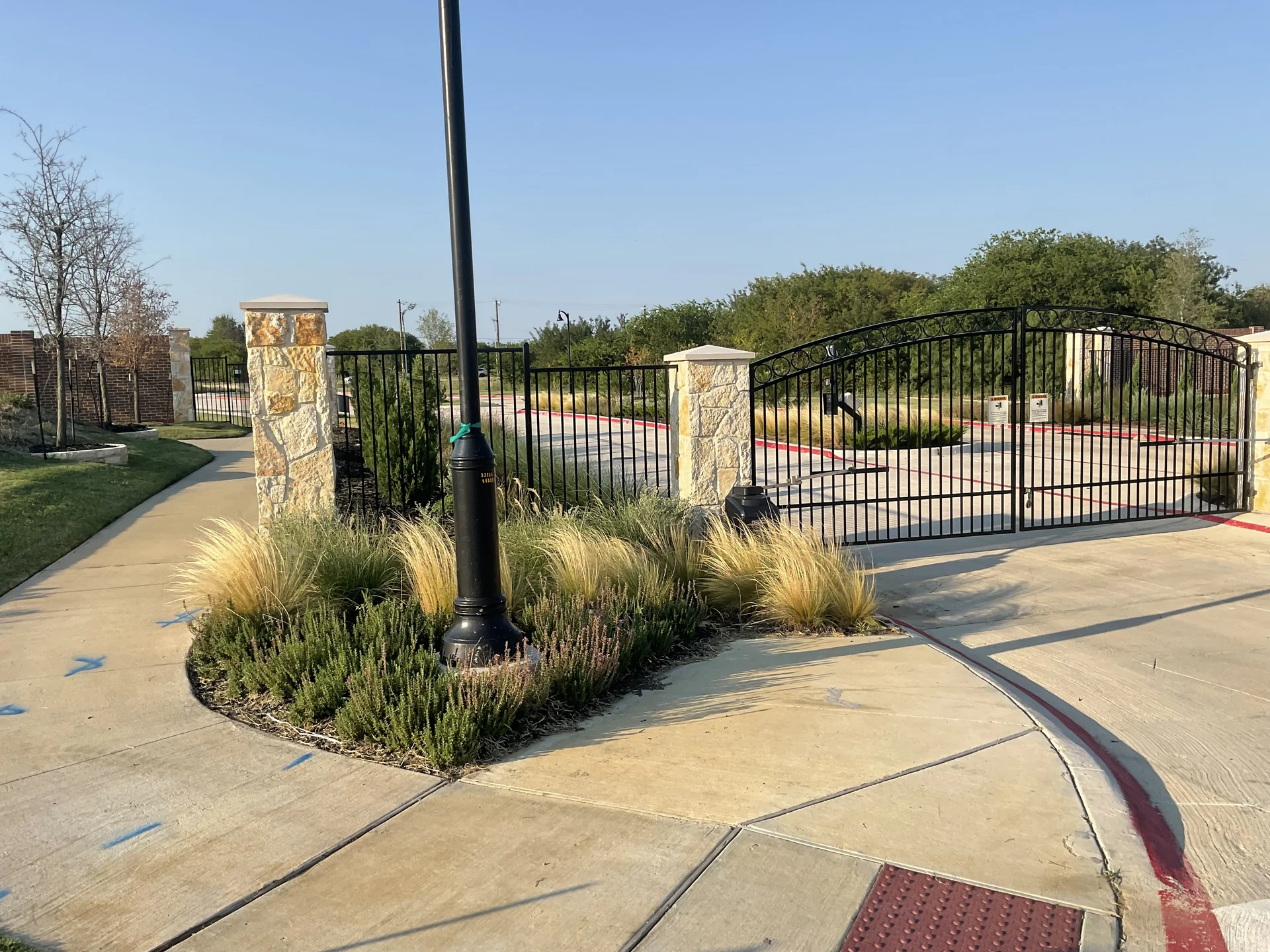
Mexican Feathergrass (Nassella tenuissima)
Fine-textured and delicate-looking, but tough as nails. Mexican feathergrass produces wispy, silvery-green blades that dance in the slightest breeze. It’s drought-tolerant and handles our heat beautifully.
- Sun: Full sun
- Height: 1-2 feet
- Spread: 1-2 feet
- Soil: Well-drained; tolerates poor soil
- Fall color: Golden tan
- DFW tip: Can self-seed aggressively — deadhead if you want to control spread
Sun Requirements at a Glance
| Grass | Sun | Shade Tolerance |
|---|---|---|
| Maiden Grass | Full sun | Low |
| Fountain Grass | Full sun to part shade | Moderate |
| Gulf Coast Muhly | Full sun | Low |
| Switchgrass | Full sun | Low |
| Little Bluestem | Full sun | Low |
| Inland Sea Oats | Part to full shade | High |
| Mexican Feathergrass | Full sun | Low |
Seasonal Interest Calendar
- Spring (March-May): Grasses green up and begin active growth. Cut back old foliage in late February to early March.
- Summer (June-August): Peak growing season. Flower spikes appear on fountain grass, maiden grass, and switchgrass.
- Fall (September-November): The show. Muhly grass blooms in October. Switchgrass and little bluestem turn brilliant colors. Seed heads form on all varieties.
- Winter (December-February): Dried foliage and seed heads provide structure and winter interest. Leave them standing for birds and visual appeal.
Cutting Back: Timing and Technique
The single most important maintenance task for ornamental grasses is the annual cut-back. In DFW, the ideal time is late February to early March, just before new growth emerges. Here’s how:
- Tie it up — Gather the grass clump and tie it with rope or bungee cords
- Cut it down — Use hedge shears or a string trimmer to cut 4-6 inches above the crown
- Remove debris — Clear away all cut material to prevent disease and pest issues
- Fertilize lightly — A light application of slow-release fertilizer supports new growth
Important: Don’t cut back in fall. The dried foliage protects the crown from winter freezes and provides winter interest. Wait until late winter.
DFW-Specific Considerations
Heat tolerance: All the grasses listed here handle 100°F+ summers. Water deeply once a week during establishment, then reduce to every 2-3 weeks once mature.
Drought tolerance: Once established (after one full growing season), these grasses need minimal supplemental water. Little bluestem and Mexican feathergrass are especially drought-hardy.
Clay soil: Switchgrass and little bluestem are the best choices for heavy clay. Maiden grass and fountain grass need slightly better drainage — amend with expanded shale or plant in raised beds.
Deer resistance: Ornamental grasses are generally deer-resistant. Deer may nibble new growth in spring but typically leave mature plants alone.
Design Ideas for DFW Landscapes
- Mass plantings — Plant Gulf Coast muhly in groups of 5-7 for a dramatic fall display
- Border accents — Use fountain grass along walkways and driveways
- Prairie gardens — Combine switchgrass, little bluestem, and black-eyed susans for a native look
- Shade solutions — Inland sea oats under trees where grass won’t grow
- Container specimens — Maiden grass in large pots makes a stunning entryway statement
Ready to Add Movement to Your Landscape?
Ornamental grasses are one of the best investments you can make in your DFW landscape. They’re tough, beautiful, and nearly maintenance-free. Whether you want a sweeping prairie garden or a few accent plants, Groundhogs Services can design and install the perfect grass plan for your property.
Call us at (214) 713-1228 or visit groundhogstx.com to schedule a consultation. We serve Mesquite, Dallas, Garland, Rockwall, and all of North Texas. Let’s bring your landscape to life.