If your DFW lawn looks tired — thin, compacted, full of weeds — aeration and overseeding might be exactly what it needs. These two services work together to relieve soil compaction, improve root growth, and thicken your turf. But timing is everything in North Texas. Do it wrong, and you’ll waste time and money. Do it right, and your lawn will transform.
At Groundhogs Services, we’ve aerated and overseeded thousands of lawns across Mesquite, Dallas, Garland, and the DFW metroplex. Here’s the complete guide.
What Is Aeration?
Aeration is the process of removing small plugs of soil from your lawn. These plugs create channels for air, water, and nutrients to reach the root zone. In DFW’s clay soil, aeration is not optional — it’s essential.
Core Aeration vs. Spike Aeration
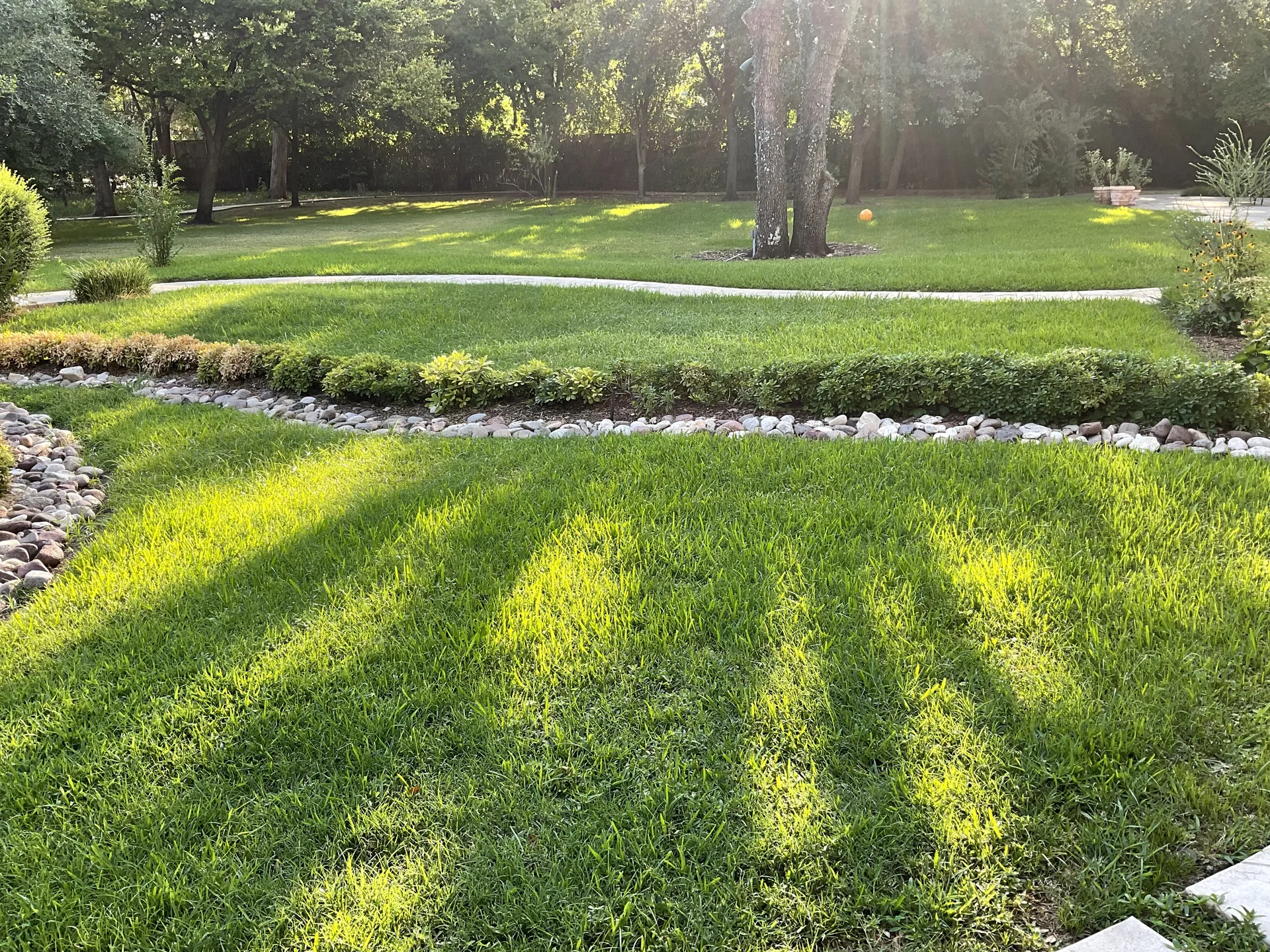
Core aeration (also called plug aeration) removes 2-3 inch long plugs of soil and deposits them on the surface. The plugs break down over 1-2 weeks, returning nutrients to the lawn.
Pros: Relieves compaction effectively, creates channels for root growth, reduces thatch, improves water infiltration
Cons: Leaves plugs on the lawn (temporary mess), requires heavier equipment, more expensive
Spike aeration uses solid tines to poke holes in the soil. It doesn’t remove any soil.
Pros: Faster, less mess, cheaper
Cons: Can actually increase compaction (the spikes push soil aside, compressing the surrounding area), doesn’t remove thatch, less effective in clay soil
Our recommendation: Core aeration only. Spike aeration is a waste of money in DFW clay. It does more harm than good.
When to Aerate in DFW
Timing depends on your grass type.
Warm-Season Grasses (Bermuda, St. Augustine, Zoysia)
Best time: Late spring to early summer (May-June)
Why: The grass is actively growing and will recover quickly. Aeration during peak growing season allows the roots to fill the new channels.
Second option: Early fall (September) — but only for Bermuda and Zoysia. Do NOT aerate St. Augustine in fall; it increases susceptibility to large patch fungus.
Avoid: Aerating warm-season grass in winter or early spring. The grass is dormant and won’t recover. You’ll just create holes for weeds.
Cool-Season Grasses (Fescue, Ryegrass)
Best time: Early fall (September-October)
Why: Cool-season grasses grow actively in fall. Aeration before overseeding gives the new seed direct soil contact.
When to Overseed in DFW
Overseeding means spreading grass seed over an existing lawn to thicken it up or transition to a different grass type.
Overseeding Bermuda with Ryegrass (Winter Color)
Many DFW homeowners overseed Bermuda with annual ryegrass in fall for green winter color. The ryegrass dies off in spring as the Bermuda wakes up.
Timing: Mid-October to early November
Why: Soil temperatures need to be below 70°F for ryegrass to germinate. In DFW, that’s typically mid-October.
Process:
- Aerate in late September or early October
- Mow Bermuda as low as possible (1-1.5 inches)
- Dethatch or scalp the lawn
- Spread ryegrass seed at 5-10 lbs per 1,000 sq ft
- Water lightly twice daily until germination (7-14 days)
- Resume normal mowing once ryegrass reaches 3 inches
Spring transition: The ryegrass dies naturally as temperatures hit 80°F+ in May. Do NOT fertilize the ryegrass in spring — let it fade. Apply a nitrogen fertilizer in May to push the Bermuda.
Overseeding Bermuda with Bermuda (Thickening)
If your Bermuda lawn is thin, overseed with improved Bermuda varieties in late spring.
Timing: May-June
Seed: Improved Bermuda varieties (Princess 77, Riviera, or Yukon)
Rate: 1-2 lbs per 1,000 sq ft
Note: Bermuda seed is tiny. Use a drop spreader on the smallest setting. Water daily for 2-3 weeks.
Overseeding St. Augustine
St. Augustine is not typically overseeded. It spreads by stolons (above-ground runners), not seed. If your St. Augustine is thin, the solution is proper fertilization, irrigation, and pest control — not overseeding.
Exception: Plugging or sodding bare areas is the correct approach for St. Augustine.
The Aeration + Overseeding Process
Here’s the step-by-step process we use at Groundhogs Services:
Step 1: Mow Low
Mow your lawn at the lowest setting (1-1.5 inches for Bermuda, 2 inches for Zoysia). Bag the clippings. This exposes the soil surface for seed contact.
Step 2: Core Aerate
Run a core aerator over the entire lawn. Make 2-3 passes in different directions for maximum coverage. The plugs should be 2-3 inches long and spaced 2-4 inches apart.
Step 3: Dethatch (If Needed)
If thatch (dead grass layer) is more than 1/2 inch thick, dethatch before overseeding. Use a power rake or vertical mower set to 1/4 inch depth.
Step 4: Spread Seed
Use a drop spreader for precise application. Broadcast spreaders are less accurate. Apply half the seed in one direction, then the other half perpendicular.
Step 5: Topdress (Optional)
A thin layer (1/4 inch) of compost or topsoil over the seed improves germination. This is optional but recommended for thin lawns.
Step 6: Water
Keep the seed moist. Water lightly 2-3 times per day for the first 2 weeks. After germination, reduce to once per day, then transition to normal watering.
Step 7: First Mow
Wait until the new grass reaches 3 inches. Mow at 2.5 inches. Do NOT bag the first few mowings — let the clippings return nutrients.
Aftercare: What to Do After Aeration and Overseeding
Fertilize: Apply a starter fertilizer (high phosphorus) 2-3 weeks after seeding. For ryegrass, use a 10-10-10 or similar balanced formula.
Weed control: Do NOT apply pre-emergent herbicides for 60 days after overseeding. The pre-emergent will kill the new seed. Spot-treat weeds instead.
Mowing: Keep the lawn at 2.5-3 inches for the first month. Gradually lower to your normal height.
Watering: After the first 3 weeks, water deeply and infrequently (1 inch per week) to encourage deep root growth.
Equipment Rental vs. Professional Service
DIY (Equipment Rental)
Cost: $50-$100 per day for aerator rental, $30-$60 for seed
Pros: Lower cost, you control the timing
Cons: Heavy equipment (aerators are 200+ lbs), takes 2-4 hours for a typical lawn, easy to miss spots, no expertise in seed selection
Professional Service (Groundhogs Services)
Cost: $150-$400 for aeration + overseeding (typical 5,000-10,000 sq ft lawn)
Pros: Commercial-grade equipment, proper timing, correct seed selection, no heavy lifting, guaranteed results
Cons: Higher upfront cost, you need to schedule in advance
Our take: For a single lawn, DIY aeration is feasible if you’re physically capable. But professional overseeding — especially seed selection and rate calculation — is worth the investment. One mistake with seed rate or timing can waste an entire season.
Common DFW Aeration Mistakes
- Aerating dormant grass — Creates weed habitat, no benefit to the lawn
- Aerating wet soil — Clogs the aerator, creates a muddy mess
- Skipping aeration entirely — Clay soil compacts naturally. Without aeration, roots can’t penetrate
- Overseeding without aeration — Seed sits on the surface and doesn’t germinate
- Using wrong seed — Common Bermuda seed is low quality. Use improved varieties
- Over-seeding St. Augustine — It doesn’t work. Don’t do it.
Ready for a Thicker, Healthier Lawn?
Aeration and overseeding are the two most impactful things you can do for a tired DFW lawn. Groundhogs Services handles the entire process — from equipment and seed selection to application and aftercare. We know North Texas grass, and we know what works.
Call (214) 713-1228 or visit groundhogstx.com to schedule your aeration and overseeding service. Let’s grow something great.