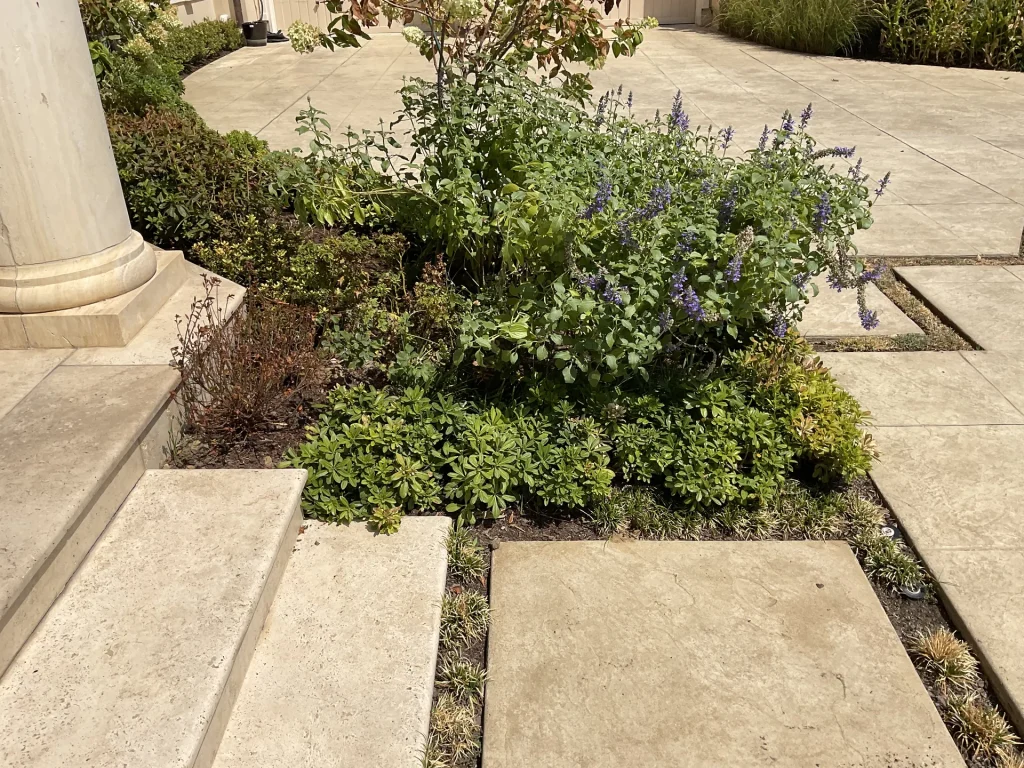
Not every part of your DFW landscape is meant for turf grass. That shady strip between the house and the fence. The steep slope that’s impossible to mow. The area under a mature live oak where nothing seems to grow. The gap between patio pavers that keeps sprouting weeds. For all these problem spots, ground cover plants are the answer. At Groundhogs Services, we’ve transformed countless challenging areas across Mesquite, Dallas, and North Texas using the right ground covers. Here’s your guide to choosing the best options for your property.
Why Choose Ground Covers Over Grass?
Traditional turf grass requires full sun, regular watering, frequent mowing, and constant maintenance. Ground covers offer a better solution for many situations:
- Less maintenance — Most ground covers need trimming once or twice a year, not weekly mowing
- Better erosion control — Dense root systems hold soil on slopes better than grass
- Shade tolerance — Many ground covers thrive where grass won’t grow
- Drought tolerance — Once established, most need far less water than turf
- Weed suppression — A thick ground cover canopy blocks weed germination
- Visual interest — Flowers, textures, and seasonal color that grass can’t match
Ground Covers for Full Sun in DFW
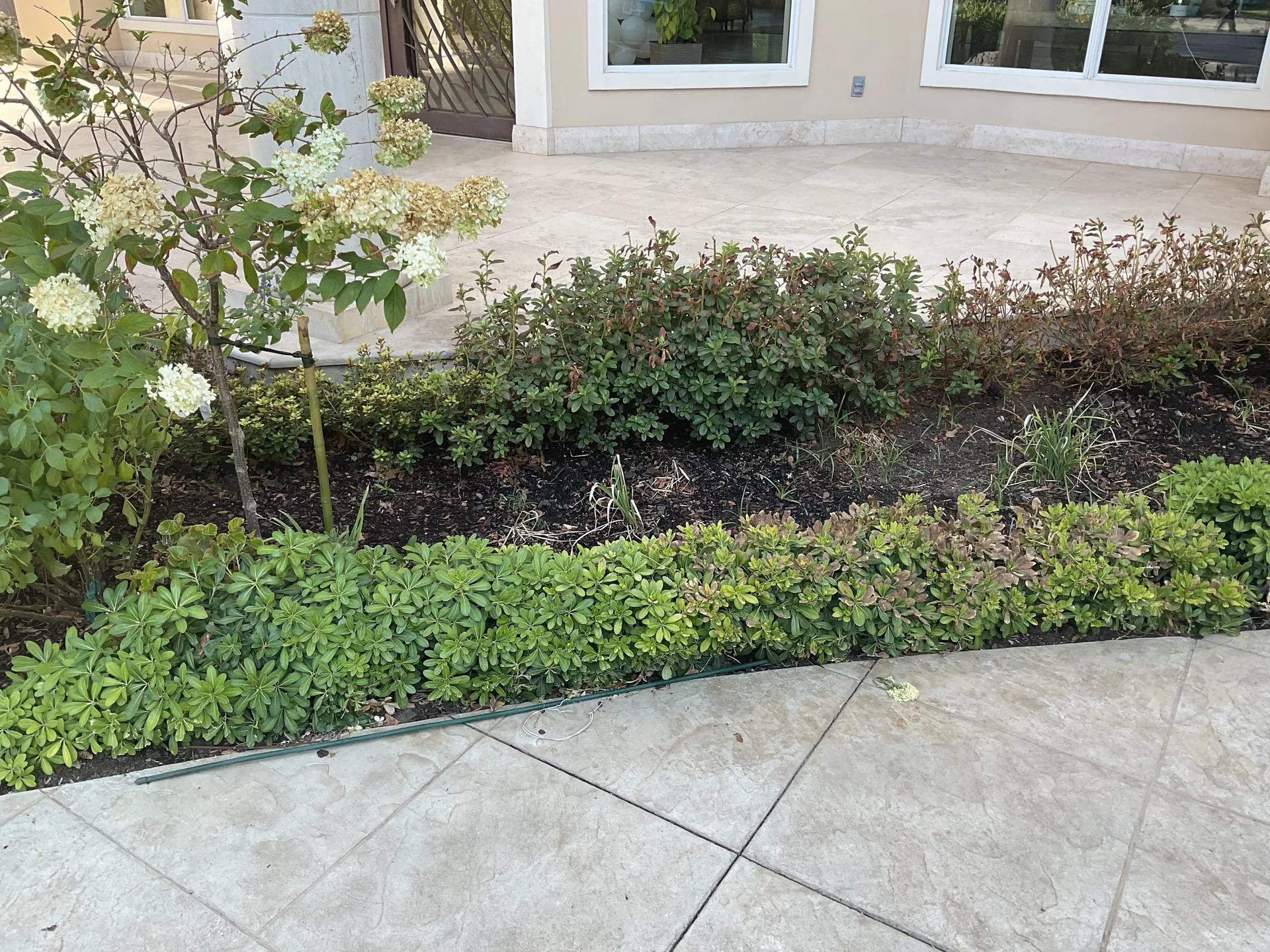
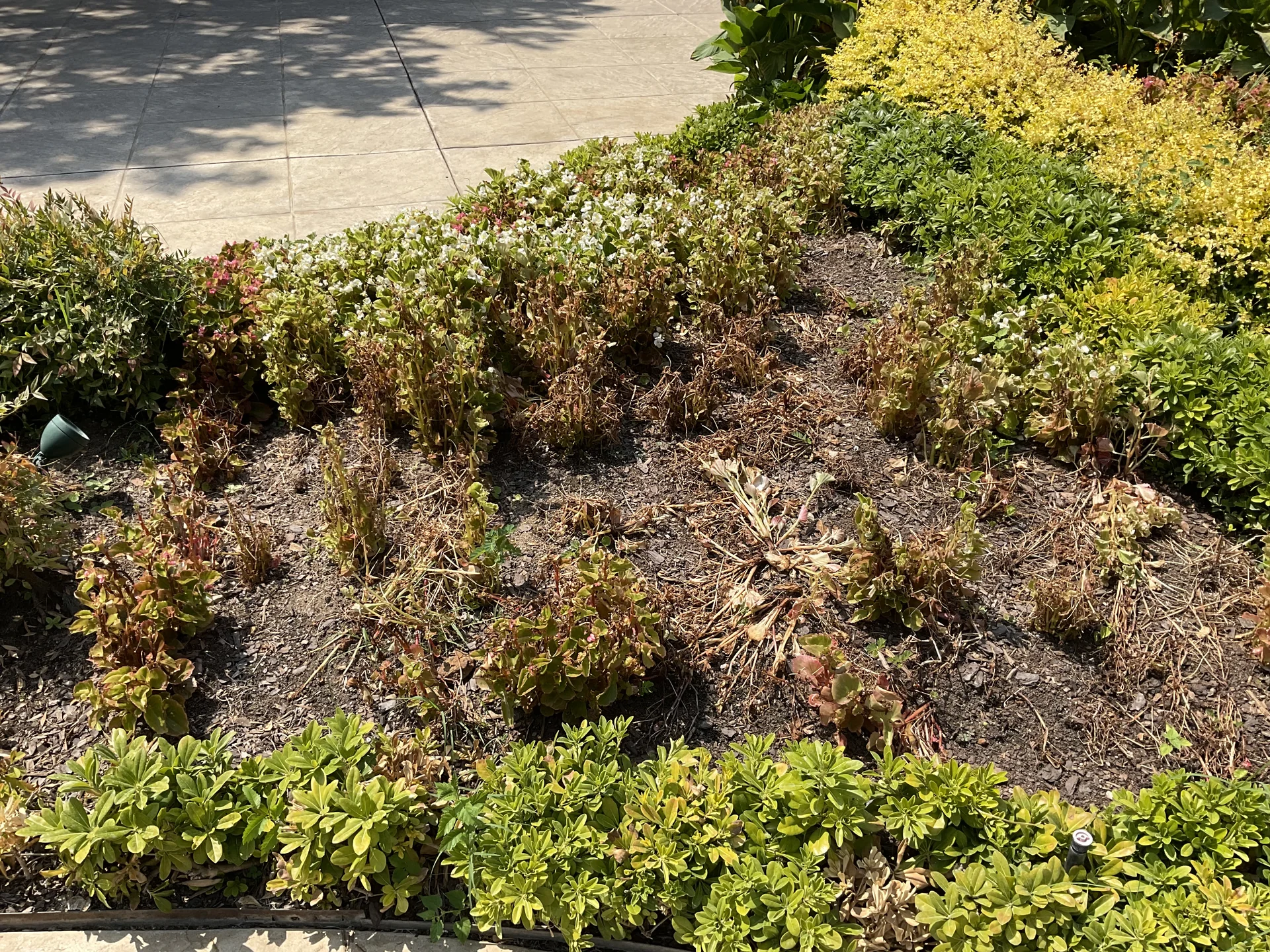
Liriope (Liriope muscari)
Also called lilyturf or monkey grass, liriope is the workhorse of North Texas landscaping. It forms dense clumps of dark green, grass-like foliage with purple flower spikes in late summer. It’s virtually indestructible.
- Sun: Full sun to full shade
- Height: 12-18 inches
- Spread: 12-18 inches per plant; fills in within 2 years
- Soil: Adaptable to clay, sand, or loam
- Water: Low once established
- DFW tip: ‘Big Blue’ is the most reliable variety for our area. Cut back to 3 inches in late February.
Creeping Juniper (Juniperus horizontalis)
For hot, dry, sunny slopes, nothing beats creeping juniper. It forms a dense, evergreen mat that stays green year-round. Available in blue-green, silver-blue, and green varieties.
- Sun: Full sun
- Height: 6-12 inches
- Spread: 4-8 feet per plant
- Soil: Well-drained; excellent for rocky or sandy soil
- Water: Very low — extremely drought-tolerant
- DFW tip: ‘Blue Rug’ and ‘Bar Harbor’ are top performers. Space 3-4 feet apart for full coverage.
Sedum (Sedum species)
Also called stonecrop, sedum is a succulent ground cover that thrives in heat and poor soil. Fleshy leaves store water, making it one of the most drought-tolerant options available.
- Sun: Full sun
- Height: 3-6 inches
- Spread: 12-24 inches per plant
- Soil: Well-drained; prefers sandy or rocky soil
- Water: Very low
- DFW tip: ‘Angelina’ (golden foliage) and ‘Dragon’s Blood’ (red-tipped) are excellent choices. Add sand or gravel to clay soil for drainage.
Trailing Rosemary (Rosmarinus officinalis 'Prostratus')
A culinary herb that doubles as an attractive, fragrant ground cover. Trailing rosemary produces blue flowers in spring and smells wonderful when brushed against.
- Sun: Full sun
- Height: 6-12 inches
- Spread: 2-4 feet per plant
- Soil: Well-drained; prefers slightly alkaline
- Water: Low
- DFW tip: Excellent for cascading over retaining walls. Protect from extreme cold (below 15°F) with frost cloth.
Ground Covers for Shade in DFW
Asian Jasmine (Trachelospermum asiaticum)
The go-to ground cover for shade in North Texas. Asian jasmine forms a dense, weed-smothering mat of small, dark green leaves. It’s evergreen in our climate and spreads vigorously.
- Sun: Part shade to full shade
- Height: 6-12 inches
- Spread: 2-3 feet per plant; unlimited spread
- Soil: Adaptable to clay
- Water: Moderate; more in full sun
- DFW tip: Space 12-18 inches apart for coverage in 1-2 years. Trim edges twice yearly to control spread. Do not plant near natural areas — it can escape cultivation.
Vinca Minor (Vinca minor)
Also called periwinkle, vinca minor is a classic shade ground cover with glossy green leaves and blue, purple, or white flowers in spring. It’s less aggressive than Asian jasmine.
- Sun: Part shade to full shade
- Height: 4-6 inches
- Spread: 12-18 inches per plant
- Soil: Moist, well-drained; tolerates clay
- Water: Moderate
- DFW tip: Excellent under trees where grass won’t grow. Mulch well during establishment.
Holly Fern (Cyrtomium falcatum) and Autumn Fern (Dryopteris erythrosora)
Ferns bring a lush, woodland feel to shady areas. Holly fern has glossy, dark green fronds that stay attractive year-round. Autumn fern emerges with coppery-pink new growth.
- Sun: Full to part shade
- Height: 12-24 inches
- Spread: 18-24 inches per plant
- Soil: Rich, moist, well-drained; amend clay with compost
- Water: Moderate to high
- DFW tip: Group in drifts of 5-7 for best effect. Keep watered during dry spells. Protect from afternoon sun.
Mondo Grass (Ophiopogon japonicus)
Not actually a grass, but a member of the lily family. Mondo grass forms dense, dark green tufts that look like turf grass but thrive in shade. Dwarf varieties make excellent lawn alternatives.
- Sun: Part shade to full shade
- Height: 4-12 inches (depending on variety)
- Spread: 6-12 inches per plant
- Soil: Moist, well-drained; tolerates clay
- Water: Moderate
- DFW tip: ‘Nana’ (dwarf) is perfect for between pavers and as a lawn substitute. Space 4-6 inches apart for a lawn effect.
Ground Covers for Steep Slopes
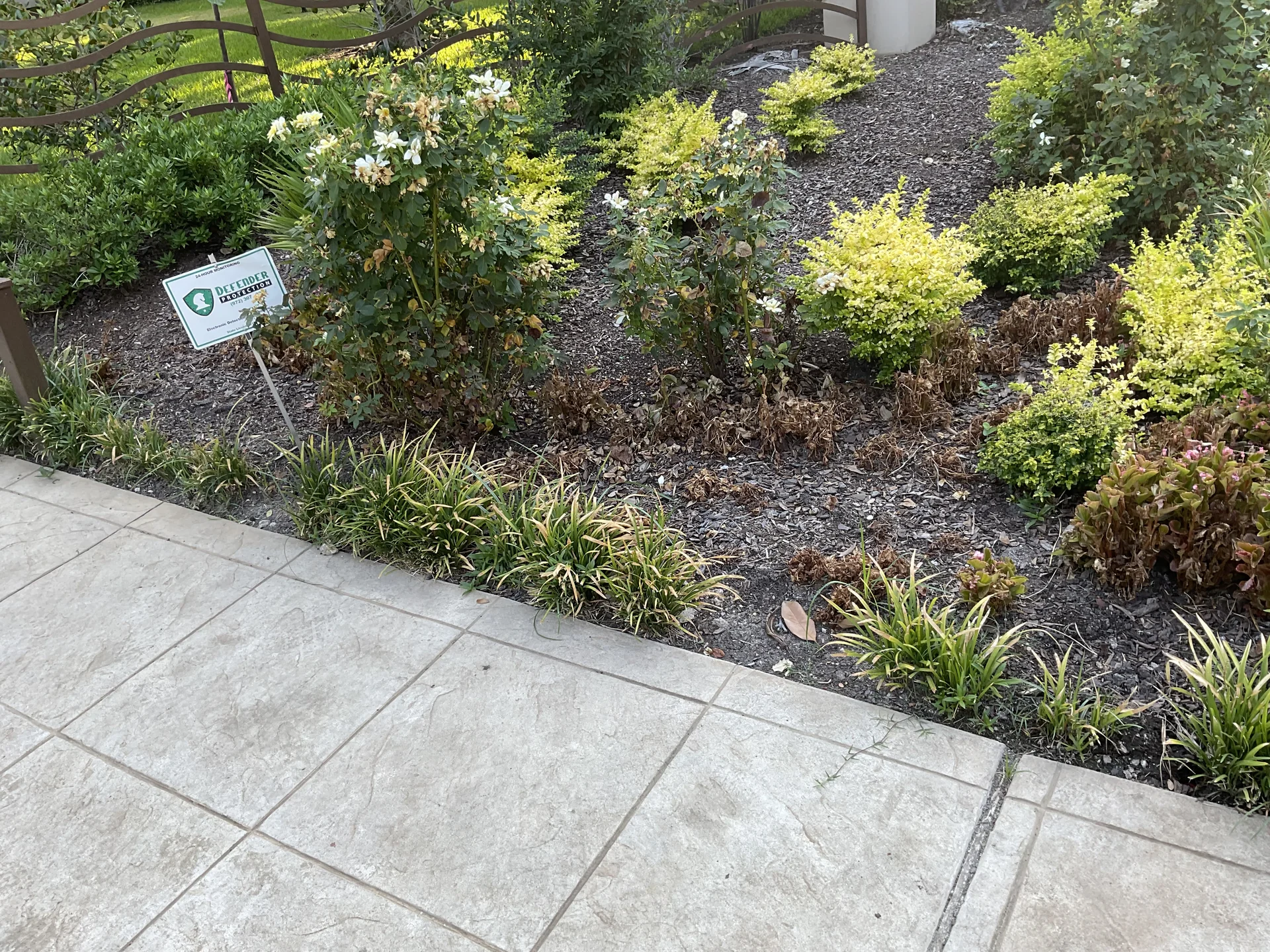
Erosion control on slopes requires plants with deep, spreading root systems. Here are the best options for DFW:
Creeping Juniper — The #1 choice for sunny slopes. Its roots bind soil effectively, and it requires almost no maintenance once established.
Liriope — Excellent for partially shaded slopes. Forms dense clumps that hold soil. Plant on contour (across the slope, not up and down) for best erosion control.
Asian Jasmine — For shaded slopes, Asian jasmine creates a solid mat that prevents erosion. It will cover a slope faster than any other option.
Pro Tip: On steep slopes, use erosion control blankets or coir logs to hold soil in place while ground covers establish. This is especially important in DFW where heavy spring rains can wash out new plantings.
Ground Covers Between Pavers
For stepping stones, patios, and walkways, you need plants that tolerate foot traffic and tight spaces:
- Dwarf Mondo Grass — Forms tidy clumps that stay low. Tolerates light foot traffic.
- Blue Star Creeper (Isotoma fluviatilis) — Tiny leaves and blue flowers. Creates a moss-like effect. Tolerates moderate foot traffic.
- Elfin Thyme (Thymus serpyllum ‘Elfin’) — Fragrant, tiny leaves. Tolerates light foot traffic. Needs well-drained soil.
- Irish Moss (Sagina subulata) — Bright green, moss-like mat. Needs consistent moisture and part shade in DFW.
Erosion Control Strategies for DFW
North Texas gets intense spring and fall rains that can wash away soil and newly planted ground covers. Here’s how to set up for success:
- Prepare the slope — Remove weeds and grade gently. Break up compacted clay.
- Add organic matter — Compost improves drainage and helps roots establish.
- Use erosion blankets — Biodegradable jute or coir blankets hold soil while plants root.
- Plant densely — Space plants closer than normal on slopes (6-12 inches apart).
- Mulch carefully — Use shredded hardwood mulch that won’t wash away. Avoid pine bark nuggets on slopes.
- Water strategically — Slow, deep watering to encourage deep root growth. Avoid runoff.
DFW-Specific Considerations
Clay soil: Most ground covers need amended soil in DFW. Mix in 3-4 inches of compost and expanded shale before planting. Liriope and Asian jasmine are the most clay-tolerant.
Heat: All the options listed handle DFW summers. Sedum and creeping juniper are the most heat-tolerant. Ferns need consistent moisture during heat waves.
Freeze protection: Asian jasmine and trailing rosemary can suffer damage in hard freezes (below 15°F). Cover with frost cloth when extreme cold is forecast. Liriope, juniper, and sedum are freeze-hardy.
Deer resistance: Liriope, juniper, sedum, and ferns are deer-resistant. Asian jasmine and vinca are occasionally browsed but usually recover quickly.
Ready to Solve Your Problem Areas?
Whether you have a shady spot where grass won’t grow, a steep slope that’s eroding, or a patio that needs softening between the pavers, Groundhogs Services has the solution. We’ll design and install the perfect ground cover for your specific conditions.
Call us at (214) 713-1228 or visit groundhogstx.com to schedule a consultation. We serve Mesquite, Dallas, Garland, Rockwall, and all of North Texas. Let’s turn your problem areas into landscape highlights.