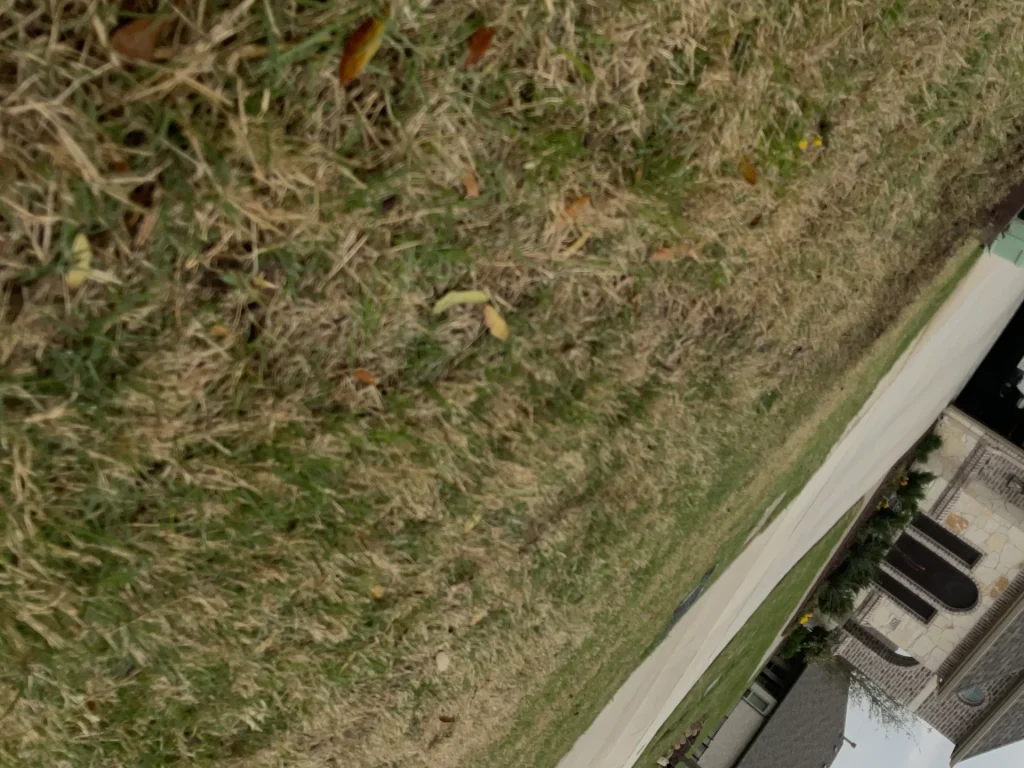
Fall in North Texas is a gift. The brutal summer heat finally breaks, the light turns golden, and your landscape gets a second wind. But fall is also a critical time for preparation. What you do — or don’t do — between September and November determines how your yard looks next spring and how well it survives winter. At Groundhogs Services, we’ve managed DFW landscapes through every fall for years. Here’s your complete guide to fall landscaping in Mesquite, Dallas, and North Texas.
Leaf Management: The Great DFW Leaf Challenge
North Texas has a lot of trees. Live oaks, post oaks, red oaks, pecans, elms, and maples all drop their leaves — and they don’t all drop at the same time. The result is a leaf season that stretches from October through January. Here’s how to manage it.
To Rake or Not to Rake?
A thin layer of leaves on garden beds is beneficial — it decomposes into organic matter, feeds the soil, and provides habitat for beneficial insects. But a thick mat of leaves on your lawn is a problem. It blocks sunlight, traps moisture, and creates conditions for fungal diseases.
The rule: Leaves on lawn = remove them. Leaves in beds = leave them (or shred them).
Best Leaf Management Strategies
- Mulching mower — The most efficient method. Mow over leaves with a mulching mower to shred them into fine pieces that decompose quickly and feed the lawn. This works best with a thin layer of leaves.
- Leaf blower and rake — For heavy leaf cover, blow leaves onto a tarp and haul them to beds or compost. Don’t blow leaves into the street — it clogs storm drains and is illegal in most DFW cities.
- Composting — Leaves are excellent carbon material for compost. Mix with grass clippings (nitrogen) for balanced compost.
- Leaf vacuum — Shreds leaves and collects them in a bag. The shredded leaves make excellent mulch for beds.
DFW-Specific Leaf Timing
- October: Pecan trees drop first. Maples and red oaks follow.
- November: Peak leaf drop for most trees. Live oaks start dropping.
- December: Live oaks continue dropping. Some years they drop into January.
- January: Final live oak leaf drop. This is when you do your big cleanup.
Pro tip: Don’t do a final leaf cleanup until all trees have dropped. In DFW, that’s usually late January. If you clean up in November, you’ll be doing it again in December.
Aeration and Overseeding
Fall is the ideal time to aerate and overseed cool-season lawns in DFW. Here’s why and how.
Core Aeration
Aeration removes small plugs of soil, relieving compaction and allowing water, air, and nutrients to reach grass roots. In DFW’s clay soil, aeration is especially important.
- When: September through October, when temperatures are cooling but soil is still warm
- How: Use a core aerator that removes plugs 2-3 inches deep. Avoid spike aerators — they just compact soil further.
- After aeration: Leave the plugs on the lawn. They break down and return nutrients to the soil.
Overseeding
If you have cool-season grass (fescue, rye) or want a green lawn through winter, overseed in fall.
- When: September to mid-October. The soil should be 60-70°F for optimal germination.
- What to plant: Perennial ryegrass is the most common choice for winter overseeding in DFW. It germinates quickly and provides green color through winter.
- How: After aeration, spread seed at the recommended rate. Rake lightly to work seed into soil. Water lightly twice daily until germination (7-14 days).
Important: If you have warm-season grass (Bermuda, St. Augustine), overseeding with ryegrass is optional. Many DFW homeowners skip it to let Bermuda go dormant naturally.
Fertilizing: The Winterizer Application
Fall fertilization is critical for root development and spring green-up. The right fertilizer at the right time makes a huge difference.
When to Apply
Apply winterizer fertilizer in October or November, after the last mowing of the season but before the ground freezes. The goal is to feed the roots, not the blades.
What to Use
- For lawns: Use a winterizer formula with higher potassium (the third number in N-P-K). Potassium improves cold tolerance and root health. Look for ratios like 15-5-10 or 8-0-24.
- For trees and shrubs: Apply a slow-release, balanced fertilizer (10-10-10) in October. This supports root growth through winter.
- For perennials: A light application of bone meal or a low-nitrogen fertilizer supports root development.
What to Avoid
- High-nitrogen fertilizers in late fall — These push leaf growth that will be killed by frost, wasting the plant’s energy.
- Fertilizing frozen ground — The nutrients will run off before roots can absorb them.
Planting Trees and Shrubs
Fall is the best time to plant trees and shrubs in North Texas. The soil is still warm from summer, encouraging root growth, but the air is cool, reducing stress on the plant.
Why Fall Planting Works
- Roots grow in warm soil — Soil stays warm well after air temperatures drop. Roots continue growing until soil hits 50°F.
- Less water stress — Cooler temperatures mean less evaporation and less demand on the plant.
- Spring head start — Fall-planted trees have a full root system established by spring, so they handle summer heat better.
- Better selection — Nurseries are well-stocked in fall.
Planting Tips for DFW
- Dig a wide hole — Three times the width of the root ball, but no deeper than the root ball. In clay soil, a wide hole is more important than a deep one.
- Don’t amend the backfill — In DFW clay, use the native soil for backfill. Amending the hole creates a “bathtub” effect that can drown the tree.
- Plant high — The top of the root ball should be 1-2 inches above the surrounding soil. This prevents rot in heavy clay.
- Water deeply — Water thoroughly after planting and continue weekly until the ground freezes.
- Mulch — Apply 2-3 inches of mulch around the tree, keeping it away from the trunk.
Best Trees to Plant in Fall
- Shade trees: Live oak, cedar elm, chinquapin oak, Texas red oak
- Ornamental trees: Texas mountain laurel, redbud, Mexican plum, desert willow
- Evergreen trees: Southern magnolia, Arizona cypress, eastern red cedar
Winterizing Irrigation
A frozen irrigation system can cost thousands in repairs. Here’s how to protect yours.
When to Winterize
In DFW, winterize your irrigation system between Thanksgiving and the first hard freeze (typically mid-December). Don’t wait until the last minute — the first freeze often catches people off guard.
How to Winterize
- Shut off the water — Close the main shut-off valve to the irrigation system.
- Drain the system — Open manual drain valves at the lowest points. If your system has automatic drains, they’ll open when pressure drops.
- Blow out the lines — For the most thorough protection, use an air compressor to blow water out of the lines. This is best done by a professional.
- Insulate the backflow preventer — Wrap it with insulation tape or a foam cover. This is the most vulnerable component.
- Set the controller to “rain” or “off” — Don’t let the system try to run all winter.
Pro tip: If you can’t blow out your system, at least drain it manually and insulate the backflow preventer. Partial protection is better than none.
DFW-Specific Fall Considerations
First freeze date: The average first freeze in DFW is November 15-25. But we’ve had freezes as early as October and as late as December. Watch the forecast starting in mid-October.
Leaf volume: DFW’s mature tree canopy means massive leaf volume. A single large live oak can drop enough leaves to cover a 2,000 sq ft lawn 6 inches deep. Plan accordingly.
Indian summer: DFW often gets a warm spell in October or November after the first cool weather. Don’t let it fool you — winter is coming. Finish your prep work.
Fall color: While DFW isn’t New England, we do get good fall color from Chinese pistache, Texas red oak, Shumard oak, and burning bush. Plant these for reliable fall color.
Ready for Fall?
Fall landscaping is about preparation. Every hour you spend now saves you hours of work — and potential damage — next spring. If you need help with leaf management, aeration, planting, or irrigation winterization, Groundhogs Services is ready.
Call us at (214) 713-1228 or visit groundhogstx.com to schedule your fall service. We serve Mesquite, Dallas, Garland, Rockwall, and all of North Texas. Let’s get your landscape ready for winter.