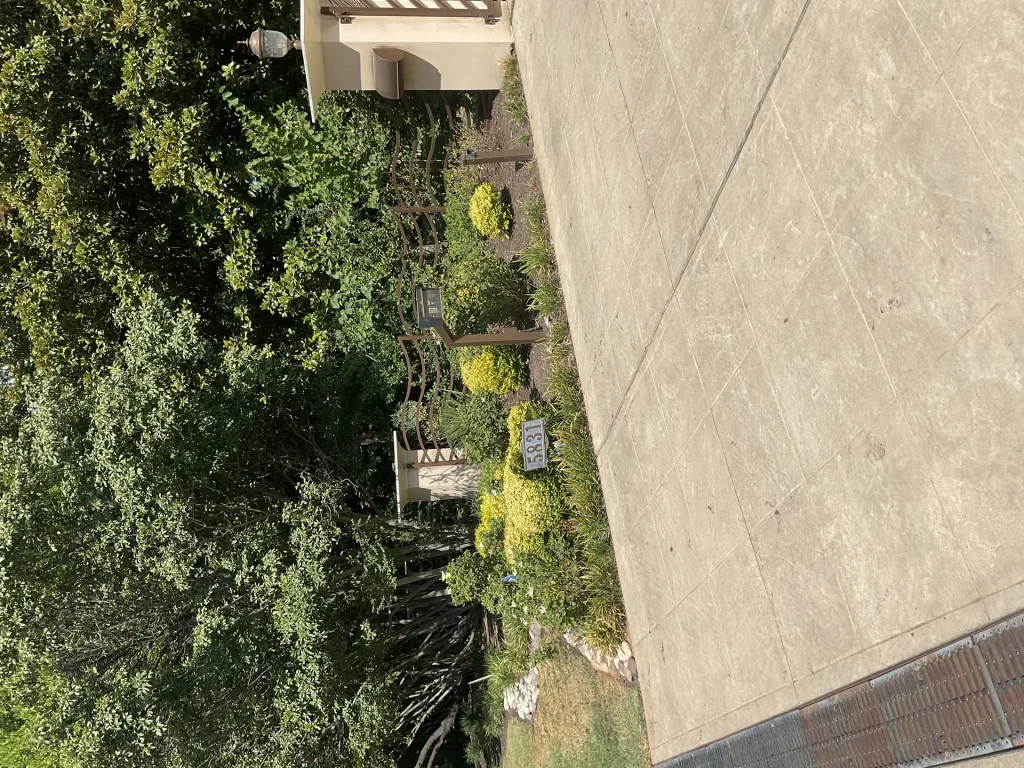
Let’s be honest — Dallas summers are brutal. We regularly hit 100°F for weeks at a time, and when the rain stops, it can stay stopped for a month or more. The old approach of planting thirsty, high-maintenance landscapes is not just expensive — it’s unsustainable. At Groundhogs Services, we design landscapes across Mesquite, Dallas, and Garland that thrive on minimal water. Here’s your guide to drought-tolerant plants that will keep your yard beautiful through the worst Texas heat.
The Water-Wise Design Philosophy
Drought-tolerant landscaping (often called xeriscaping) isn’t about rocks and cacti. Done right, it’s a lush, layered landscape that uses 50-70% less water than a traditional lawn-and-shrub setup.
The core principles:
- Right plant, right place — Match plants to your specific sun, soil, and drainage conditions
- Efficient irrigation — Drip irrigation and soaker hoses deliver water to roots, not the air
- Mulch everything — 2-3 inches of organic mulch reduces evaporation by 70%
- Group by water needs — Don’t put a thirsty plant next to a drought-tolerant one
- Reduce turf — Grass is the thirstiest thing in your landscape. Replace it where you don’t walk
Succulents and Agaves: Architectural Statements
Texas Sotol (Dasylirion texanum)
A native succulent with long, narrow, blue-green leaves with serrated edges. In summer, it sends up a 10-15 foot flower spike.
- Sun: Full sun
- Water: Very low — once established, needs no supplemental water
- Height: 3-4 feet (leaves), 10-15 feet (flower spike)
- Spacing: 3-4 feet apart
- Design use: Specimen plant, focal point in rock gardens, mass planting
Century Plant (Agave americana)
The classic architectural agave with massive, gray-blue leaves that can reach 6 feet long. It blooms once in its lifetime (10-30 years) with a spectacular 20-30 foot flower stalk.
- Sun: Full sun
- Water: Very low — extremely drought-tolerant
- Height: 4-6 feet (leaves), 20-30 feet (flower spike)
- Spacing: 6-8 feet apart
- Design use: Dramatic focal point, entryway accent, container plant
- Warning: Leaf tips are extremely sharp — keep away from walkways and play areas
Hens and Chicks (Echeveria and Sempervivum spp.)
Small, rosette-forming succulents that spread by producing “chicks” around the mother plant. They come in a range of colors from pale green to deep purple.
- Sun: Full sun to partial shade
- Water: Low
- Height: 4-8 inches
- Spacing: 6-12 inches apart
- Design use: Ground cover, rock garden filler, container arrangements
Ornamental Grasses: Movement and Texture
Big Muhly (Muhlenbergia lindheimeri)
A larger cousin of Gulf Muhly, native to Texas. It forms a 4-5 foot clump of fine blue-green foliage with silvery flower plumes in fall.
- Sun: Full sun
- Water: Very low
- Height: 3-5 feet
- Spacing: 3-4 feet apart
- Design use: Mass planting, screening, background for perennials
Mexican Feathergrass (Nassella tenuissima)
Fine, wispy green blades that sway in the slightest breeze. Produces airy seed heads in summer.
- Sun: Full sun to partial shade
- Water: Low
- Height: 1-2 feet
- Spacing: 1-2 feet apart
- Design use: Front of border, mass planting, softening hard edges
- Note: Can be invasive in some areas — contain in beds with edging
Blue Grama (Bouteloua gracilis)
A short, clumping native grass with distinctive eyebrow-shaped seed heads. One of the most drought-tolerant grasses in existence.
- Sun: Full sun
- Water: Very low — thrives on natural rainfall alone
- Height: 1-2 feet
- Spacing: 1-2 feet apart
- Design use: Lawn alternative (no mowing needed), ground cover, erosion control
Native Perennials: Color Without the Water Bill
Autumn Sage (Salvia greggii)
A woody perennial that blooms from spring through fall in shades of red, pink, purple, and white. Hummingbirds love it.
- Sun: Full sun
- Water: Low
- Height: 2-3 feet
- Spacing: 2-3 feet apart
- Bloom: April-November
- Design use: Border plant, mass planting, pollinator garden
Mealy Blue Sage (Salvia farinacea)
A tough, upright perennial with spikes of blue-purple flowers from May through October. Extremely heat-tolerant.
- Sun: Full sun to partial shade
- Water: Low
- Height: 2-3 feet
- Spacing: 1-2 feet apart
- Bloom: May-October
- Design use: Mass planting, cut flower garden, pollinator garden
Four-Nerve Daisy (Tetraneuris scaposa)
A low-growing perennial with bright yellow daisy flowers that bloom repeatedly from spring through fall, especially after rain.
- Sun: Full sun
- Water: Very low
- Height: 6-12 inches
- Spacing: 12-18 inches apart
- Bloom: March-November (intermittent)
- Design use: Rock garden, front of border, ground cover
Zexmenia (Wedelia texana)
A sprawling, mounding perennial with bright yellow-orange flowers that bloom continuously from May through November.
- Sun: Full sun to partial shade
- Water: Low
- Height: 1-2 feet
- Spacing: 2-3 feet apart
- Bloom: May-November
- Design use: Ground cover, bank stabilization, border front
Shrubs: Structure Without the Water Guilt
Texas Sage (Leucophyllum frutescens)
The undisputed king of drought-tolerant shrubs in Texas. Silver-gray foliage and purple-pink flowers after summer rains.
- Sun: Full sun
- Water: Very low — zero supplemental water needed once established
- Height: 3-6 feet
- Spacing: 3-4 feet apart
- Design use: Hedge, foundation planting, specimen
Dwarf Yaupon Holly (Ilex vomitoria 'Nana')
A compact, evergreen shrub with small leaves and a dense, rounded form. Extremely adaptable.
- Sun: Full sun to full shade
- Water: Low to moderate
- Height: 3-5 feet
- Spacing: 3-4 feet apart
- Design use: Foundation planting, low hedge, mass planting
Cenizo (Leucophyllum frutescens 'Green Cloud')
A green-leafed variety of Texas sage with larger, more abundant flowers. Slightly less drought-tolerant than the silver varieties but still very tough.
- Sun: Full sun
- Water: Low
- Height: 4-6 feet
- Spacing: 4-5 feet apart
- Design use: Hedge, screen, specimen
Trees: Shade Without the Thirst
Texas Red Oak (Quercus buckleyi)
A smaller, more drought-tolerant relative of the Texas live oak. Excellent fall color (red to orange).
- Sun: Full sun
- Water: Low once established
- Height: 30-40 feet
- Spacing: 25-30 feet from other trees
- Design use: Shade tree, specimen, fall color
Honey Mesquite (Prosopis glandulosa)
A classic Texas native with delicate, fern-like foliage and interesting twisted bark. Provides light, dappled shade.
- Sun: Full sun
- Water: Very low — thrives on rainfall alone
- Height: 20-30 feet
- Spacing: 20-30 feet apart
- Design use: Specimen, naturalistic landscape, xeriscape
- Note: Can produce suckers and has long thorns — not for high-traffic areas
Drip Irrigation: Making Every Drop Count
Drought-tolerant plants still need water during establishment (first 1-2 years) and during extended dry periods. Drip irrigation is the most efficient way to deliver it.
Design tips:
- Use 1/2-inch mainline with 1/4-inch drip tubing to individual plants
- Install pressure regulator — most drip systems need 20-30 PSI
- Use emitters rated for 0.5-2 GPH depending on plant size
- Run drip lines 2-3 inches below mulch to reduce evaporation
- Water deeply and infrequently — 1 hour once a week is better than 15 minutes every day
DFW Water Restriction Compliance
Most DFW cities enforce watering restrictions during summer months. Drought-tolerant landscapes make compliance easy.
Typical DFW restrictions:
- Dallas: Twice per week watering, no watering between 10 AM and 6 PM
- Mesquite: Twice per week, odd/even address schedule
- Garland: Twice per week, no watering 10 AM-6 PM
- Rockwall: Twice per week, seasonal restrictions
A well-designed drought-tolerant landscape can thrive on once-per-week watering or less, keeping you compliant even during Stage 3 restrictions.
When to Call Groundhogs Services
Designing a drought-tolerant landscape that’s both beautiful and functional requires expertise. Groundhogs Services specializes in water-wise landscape design and installation for DFW homeowners. We’ll help you choose the right plants, design an efficient irrigation system, and create a landscape that saves you money and looks great.
Ready to save water and money? Call us at (214) 713-1228 or visit groundhogstx.com to schedule your consultation. We serve Mesquite, Dallas, Garland, Rockwall, and the entire DFW metroplex.